
33 Types of Sugar and How to Use Them
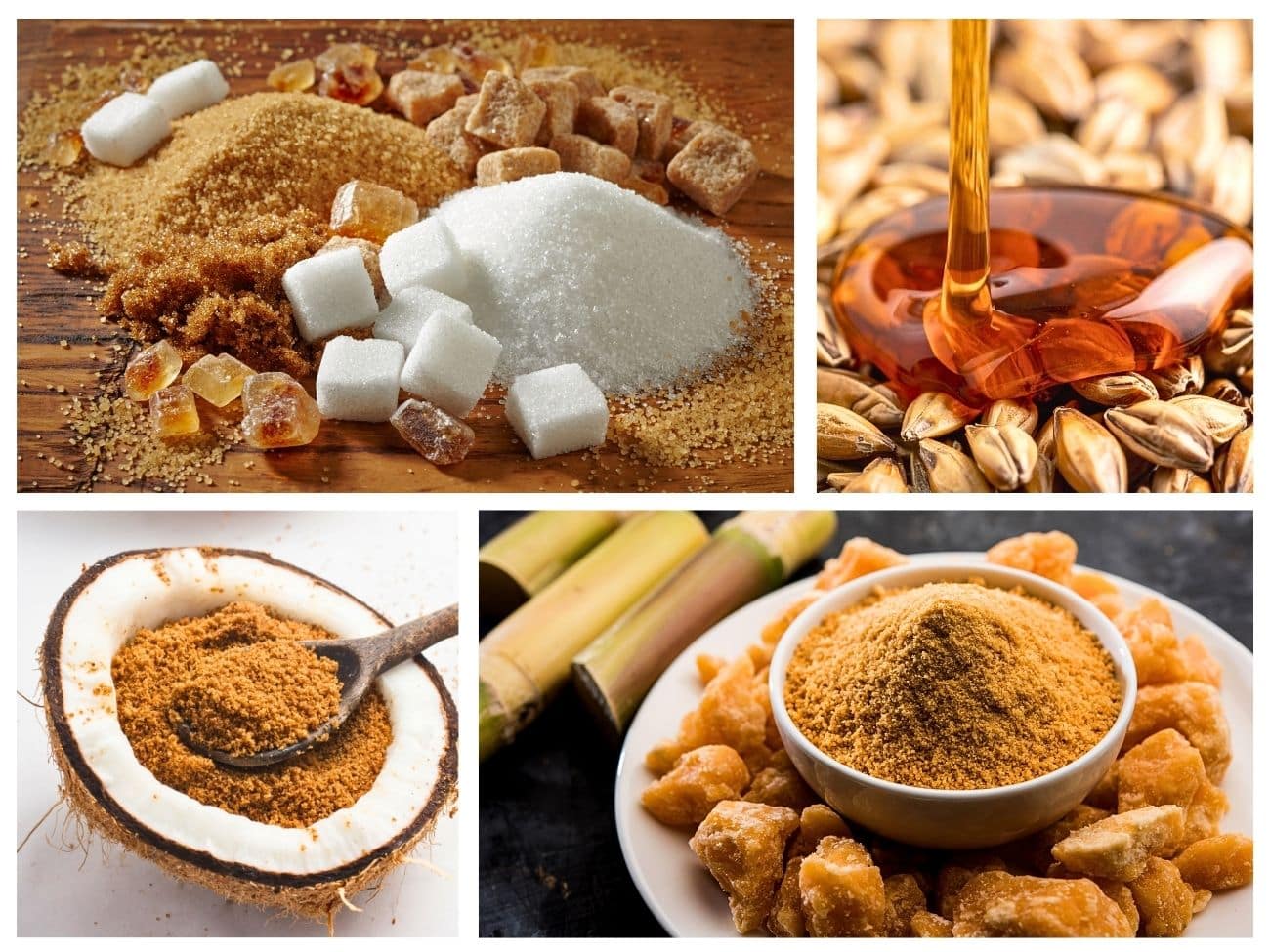
Sugar is one of those ingredients most people use every day without giving it much thought, a cup here, a spoonful there, and yet the moment you start looking closely, it turns out to be one of the most varied and fascinating categories in the entire pantry. It comes from sugarcane and beet, yes, but also from coconut palms, maple trees, and the sap of tropical flowers.
It can be raw and mineral-rich, stripped back to pure white neutrality, or concentrated into something dark and almost savory with complexity. Crystal size alone turns out to matter enormously in baking, and beyond the home kitchen, an entire parallel world of professional sugars exists, engineered for specific purposes that standard granulated simply can’t achieve.
This guide breaks it all down — by source, by granulation, by molasses content, and by professional application — so that whatever you’re making (or baking), you’ll know exactly which sugar you need and why.
Quick Reference: Common Sugars and Their Uses
I’d place this immediately after the introduction, with the full ingredient descriptions below it.
| Name | Defining characteristic | Common uses | Substitution caution |
|---|---|---|---|
| White Granulated Sugar | Medium-sized crystals with a clean, neutral flavor. | Cakes, cookies, sauces, preserves, and everyday baking. | Caster sugar can often replace it by weight, but other sugars may change moisture, texture, and flavor. |
| Caster / Superfine Sugar | Smaller crystals that dissolve more quickly than regular granulated sugar. | Meringues, mousses, delicate cakes, and drinks. | Regular granulated sugar works in many recipes, but may not dissolve as readily. |
| Confectioners’ / Icing Sugar | Finely powdered sugar, usually containing a small amount of anti-caking starch. | Frostings, glazes, fillings, and dusting desserts. | Not a direct substitute for granulated sugar in most baked goods. |
| Light Brown Sugar | Moist sugar with a mild molasses flavor. | Cookies, banana bread, crumbles, sauces, and glazes. | Dark brown sugar usually works as a substitute, but produces a stronger flavor and darker color. |
| Dark Brown Sugar | Contains more molasses than light brown sugar, giving it a deeper flavor and color. | Gingerbread, sticky puddings, rich cakes, and barbecue sauces. | Light brown sugar can usually replace it, but the finished dish will be milder. |
| Turbinado / Demerara Sugar | Large golden crystals with a light molasses or caramel flavor. | Toppings for muffins, scones, cookies, porridge, and drinks. | The large crystals make these better suited to toppings than to recipes where sugar must dissolve completely. |
| Muscovado Sugar | Moist, minimally refined cane sugar with an intense molasses flavor. | Gingerbread, chocolate desserts, fruitcakes, marinades, and sauces. | Can often replace brown sugar by weight, but expect a much stronger molasses flavor. |
| Coconut Sugar | Granulated sugar made from coconut palm sap, with caramel-like notes. | Cakes, cookies, puddings, drinks, and Southeast Asian dishes. | Can often replace brown sugar, but may produce a slightly different flavor and texture. |
| Date Sugar | Ground dried dates rather than extracted sugar crystals. | Oatmeal, granola, muffins, and baked toppings. | Does not dissolve completely and may create a grainier texture; it is not always a straightforward 1:1 baking substitute. |
| Molasses | A dark, strongly flavored syrup produced during sugar refining. | Gingerbread, dark breads, baked beans, sauces, and marinades. | Blackstrap molasses is much more bitter and should not automatically replace regular baking molasses. |
| Golden Syrup | A thick amber syrup with a mild caramel-like flavor. | Flapjacks, treacle tart, toffee, and confectionery. | Corn or glucose syrup can reproduce some of its functional properties but not its distinctive flavor. |
| Corn Syrup | A mild glucose-based syrup that helps prevent sugar crystallization. | Caramels, marshmallows, fudge, pecan pie, and candy making. | It is not a direct replacement for dry sugar because it also adds liquid to a recipe. |
A note on substitutions: These are general guidelines rather than guarantees that two sugars will behave identically. When substituting in baking, consider differences in moisture, crystal size, sweetness, and flavor. Replacing a dry sugar with a liquid sweetener usually requires additional adjustments to the recipe.
Plant-Sourced Traditional Sugars
Sugar types sorted primarily by their source ingredient.
1. Cane Sugar
Sugarcane is the source of roughly 80% of the world’s sugar supply, and the white granulated sugar it produces is the baseline against which every other sweetener is measured. Neutral, clean, and entirely predictable, it’s what a recipe means when it simply says “sugar” without further qualification.
2. Beet Sugar
Sugar beet thrives in the temperate climates of Europe, North America, and Russia where sugarcane simply won’t grow, and once refined it produces a pure sucrose that’s chemically identical to cane sugar in taste and behavior. That means it works just as well across the full range of baking and cooking applications: creaming with butter, dissolving into syrups and glazes, caramelizing into toffee, and providing structure in cakes and pastries.
Some bakers still insist on cane sugar specifically for meringues, though the science doesn’t clearly support that preference. For everyday baking, sweetening drinks, making preserves, or cooking savory dishes, beet sugar performs exactly as you’d expect: reliably and without any character of its own.
3. Agave Syrup
Made from the core of the agave plant, the same plant behind tequila and mezcal, agave syrup is a thin, mild, faintly floral liquid sweetener that’s considerably sweeter than sugar by volume, meaning you use less of it. Its real advantage over granulated sugar is that it dissolves instantly in cold liquids, making it genuinely useful in cold cocktails, iced drinks, and dressings where dissolved sugar would take too long or clump.
It also finds its way into desserts and savory dishes and even seafood preparations where a liquid sweetener integrates more smoothly. One thing worth knowing: agave browns significantly faster than regular sugar in the oven, so if you’re substituting agave syrup it in baked goods, lowering the temperature by about 15°C (25°F) is a good idea
4. Date Sugar
Date sugar is made from dried, ground dates rather than extracted sugar crystals. It retains the fruit’s fiber and has a warm, caramel-like sweetness that works well with oatmeal, granola, and spiced baked goods. Try sprinkling it over porridge or adding it to a muffin topping, where its slightly grainy texture is less noticeable than it would be in a smooth icing or sauce.
Because it contains fruit solids, date sugar does not dissolve completely and can leave a gritty texture even after baking. It also absorbs moisture, so replacing white or brown sugar may change the consistency of a batter and the texture of the finished bake. Some manufacturers suggest equal-quantity substitutions alongside adjustments to other ingredients, but that is not a universal 1:1 swap. For predictable results, use a recipe developed for date sugar or follow the product’s baking guidance rather than substituting it without further changes.
5. Coconut Sugar
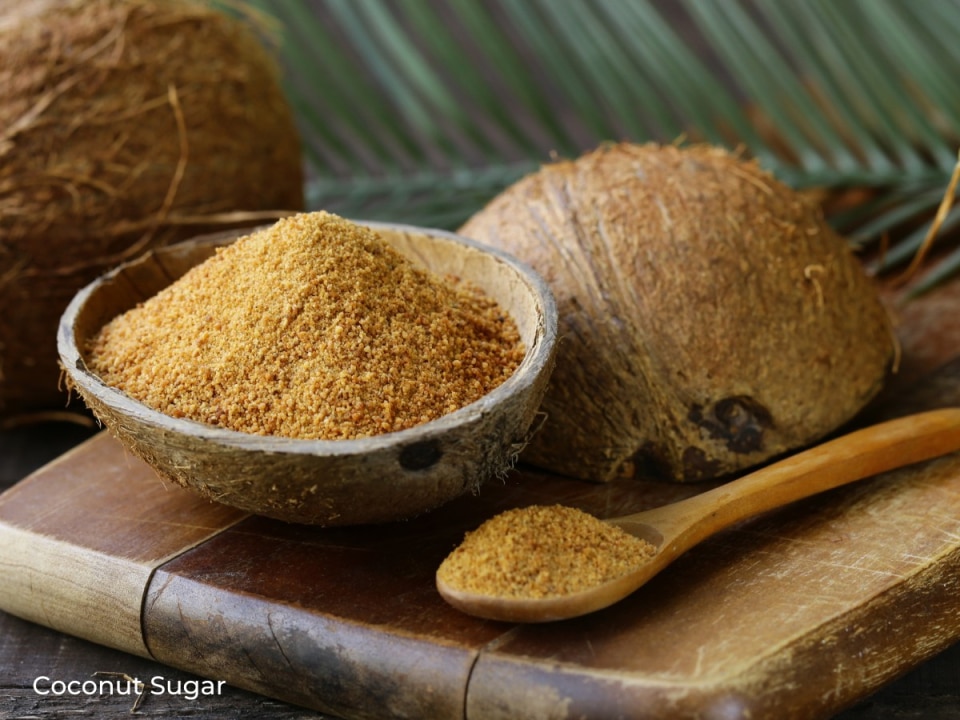
Coconut sugar comes from the sap of coconut palm flower buds, boiled down and dried into granules or blocks. Its warm caramel and butterscotch notes give it a more pronounced flavor than white sugar.
Coconut sugar works well in baking, coffee, and Southeast Asian desserts, and substitutes for brown sugar in a 1:1 ratio in most recipes, though expect a slightly drier crumb and a subtly different flavor in the finished result. It’s one of the more naturally produced sweeteners widely available in Western markets, and it shows in the flavor.
6. Palm Sugar
Palm sugar covers a range of sugars made from different palm species across Southeast and South Asia, and the flavor varies accordingly from mildly sweet and floral to deeply caramelized and almost smoky. It’s sold as soft paste, hard blocks, or granules depending on the region, and hard blocks need to be grated or melted before they’ll incorporate into a sauce or batter.
In Thai cooking it’s an essential balancing ingredient in curries, satay sauces, and pad thai, where its sweetness rounds out saltiness and acidity in a way that refined sugar simply doesn’t. It’s one of those ingredients that doesn’t have a great substitute when a recipe specifically calls for it.
7. Maple Sugar
Maple sugar is maple syrup cooked all the way down until every drop of water has evaporated, leaving behind a dry, granular sugar with an intensely concentrated maple flavor that makes the syrup taste almost subtle by comparison. A little goes a long way as the flavor is rich, woody, and distinctly caramel-like, assertive enough to define whatever you’re making.
It substitutes for regular sugar in a 1:1 ratio in baked goods, rubs, granola, and confectionery, but works best when maple is supposed to be the star of the dish rather than a quiet background note.
Granulated & Baking Sugars
Distinguished primarily by crystal size and baking behavior.
8. White Granulated Sugar
White granulated sugar is what most recipes mean when they simply say “sugar” — medium-sized crystals, clean neutral flavor, and completely predictable behavior in the kitchen. It creams well with butter, dissolves reliably in liquids, and caramelizes at around 160°C, making it the dependable workhorse of baking and cooking alike.
White sugar provides structure, browning, and moisture retention in baked goods, and its neutrality is the result of extensive refining that removes virtually all molasses, minerals, and color, leaving behind pure sucrose. It’s not always the best choice where dissolving speed matters though as caster sugar will outperform it in meringues, mousses, and delicate sponges where undissolved crystals would affect the final texture.
9. Caster Sugar (Superfine Sugar)
Caster sugar is granulated sugar ground to a finer crystal size, and that seemingly small difference has real consequences in the kitchen. The smaller crystals dissolve faster and more completely, making it the preferred choice for meringues, mousses, cold drinks, and delicate sponge cakes where undissolved sugar grains would compromise the texture. It also creams with butter more quickly and incorporates into egg foams without deflating them.
In most everyday baking the two are interchangeable, but where dissolving speed genuinely matters, caster sugar is noticeably the better tool. If you don’t have any on hand, blitzing regular granulated sugar in a food processor for a few seconds gets you close enough for most applications.
10. Confectioners’ Sugar (Powdered/Icing Sugar)
Ground to a fine powder and usually blended with a small amount of cornstarch to prevent caking, confectioners’ sugar behaves very differently from granulated forms in the kitchen. It dissolves almost instantly, which makes it ideal for frostings, creams, glazes, and dusting finished pastries, but that same fineness makes it unsuitable as a direct substitute in most baked goods, where granulated sugar’s crystal structure contributes to texture and spread.
Always sift before using, as lumps are common and won’t dissolve out on their own once mixed into a frosting or glaze. The cornstarch addition is small but worth knowing about as it can affect delicate sauces or cream fillings if you’re using large quantities, and some recipes specifically call for pure icing sugar without it for that reason.
11. Coarse Sugar
Coarse sugar, also called decorating sugar or sanding sugar, has much larger crystals than standard granulated sugar, and that size is entirely the point. The crystals resist dissolving at oven temperatures, holding their shape and sparkle on the surface of baked goods rather than disappearing into the crumb.
Sprinkled over cookies, muffins, scones, and pastries before baking, they create a crunchy, glittering finish that also provides satisfying textural contrast. It’s strictly a finishing and decorating ingredient rather than a functional baking sugar. You’d never cream it into butter or use it in a batter, but for surface texture and visual appeal it’s hard to replicate with anything else. Colored sanding sugar is the same product with food coloring added, useful for decorating without changing flavor or texture.
12. Pearl Sugar
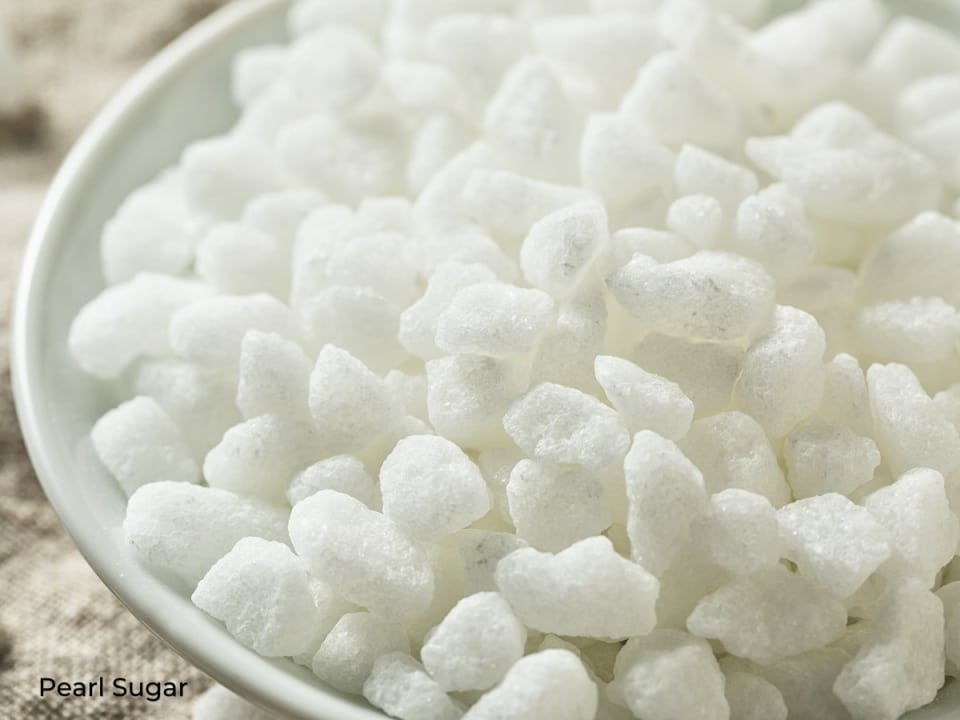
Pearl sugar is compressed white sugar formed into small, hard, opaque pellets that are genuinely resistant to melting at typical baking temperatures, and that heat stability is what makes it so useful. In Belgian liège waffles, the pellets caramelize against the hot iron rather than dissolving into the batter, creating those distinctive pockets of intense sweetness and crunch that define the style.
It also appears as a topping on Scandinavian pastries and enriched breads, where it provides a clean, sweet crunch without the sparkle of sanding sugar. Belgian-style pearl sugar comes in larger pellets than the Scandinavian variety and the two behave slightly differently, so it’s worth checking which a recipe calls for. Unlike coarse sanding sugar, pearl sugar is dense and opaque, and its behavior in heat is genuinely distinct from any other granulated sugar type.
Molasses-Rich & Specialty Sugars
These sugar types are distinguished by retained molasses, flavor, color, or specialized culinary use.
13. Raw Sugar
Raw sugar sits between fully refined white sugar and the minimally processed unrefined sugars like jaggery or rapadura — partially clarified and crystallized from sugarcane juice, but not fully stripped of its molasses layer. The result is a golden-brown crystal with a mild caramel flavor and a subtle warmth that white sugar doesn’t have.
It works well for sweetening coffee, sprinkling over oatmeal, and as a general-purpose sugar where a little extra color and warmth are welcome. It substitutes for white sugar in a 1:1 ratio in most recipes, though the mild molasses note will come through slightly in more delicate bakes. Worth knowing: most products sold as “raw sugar” in Western supermarkets are actually re-granulated and more accurately described as partially refined rather than truly raw. Turbinado and demerara are both raw sugars with their own distinct characteristics, covered separately below.
14. Turbinado Sugar
Turbinado is a minimally processed cane sugar with large, golden crystals and a delicate caramel flavor from a light coating of residual molasses. The crystal size is the key thing: it holds its structure in the oven rather than melting away, which makes it one of the best finishing sugars for baked goods.
Scattered over muffins, scones, and pastries before baking, it produces a satisfying crunch and a warm visual texture that finer sugars can’t replicate. It can be used in general baking and drinks too, but that surface crunch is where it really earns its place. Demerara is the closest substitute in most topping applications, though the two have slightly different crystal sizes and moisture levels.
15. Light Brown Sugar
Light brown sugar is white sugar with around 3.5% molasses added back in, giving it a pale golden color, a faintly moist texture, and a mild caramel warmth that makes it considerably more interesting than plain white without being as assertive as dark brown. It’s the more versatile of the two brown sugars for everyday baking, adding depth without dominating — chocolate chip cookies, banana bread, crumbles, marinades, and glazes all benefit from its subtle character.
The molasses content also adds moisture, which is why cookies and cakes made with it tend to come out softer and chewier than those made with white sugar. It swaps 1:1 for dark brown sugar in most recipes, though light brown sugar the result will always deliver a noticeably milder flavor and color.
16. Dark Brown Sugar
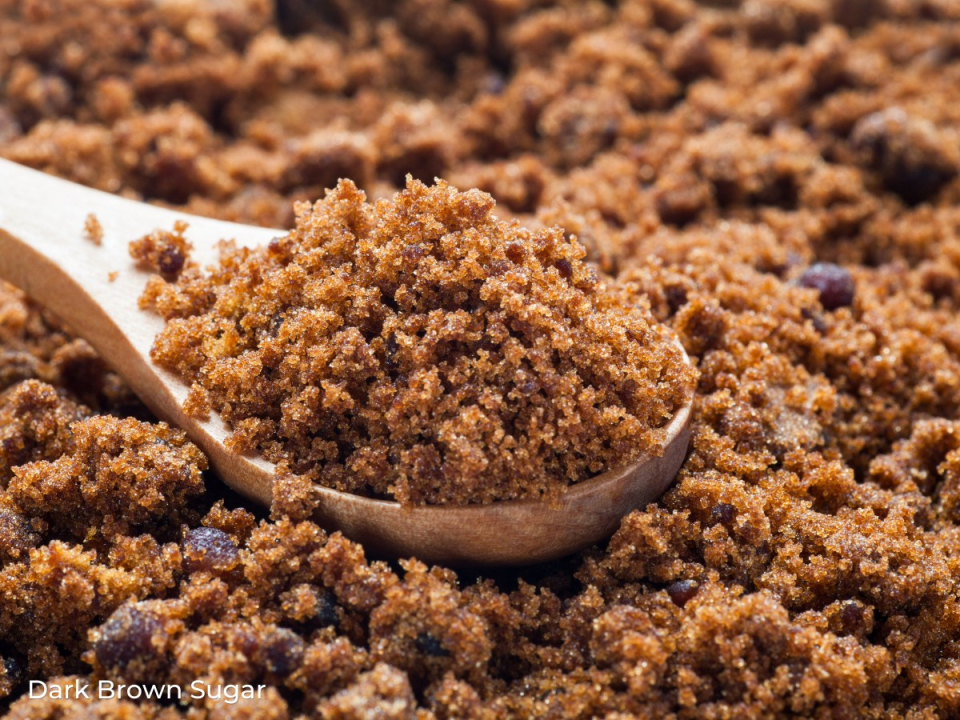
Dark brown sugar contains roughly double the molasses of light brown, around 6.5%, which gives it a deeper color, a stickier texture, and a flavor that’s noticeably bolder: toffee-like and slightly bittersweet in a way that really asserts itself in the finished dish.
Where light brown adds warmth, dark brown adds genuine character. It’s the right choice for gingerbread, sticky toffee pudding, rich fruitcakes, and barbecue sauces where a deep molasses flavor is the whole point. The higher moisture content also means denser, darker baked goods, so swapping dark for light brown (or vice versa) works in most recipes but will shift the flavor and texture noticeably.
17. Demerara Sugar
Demerara takes its name from the Guyana region where it was originally produced, though it’s now made across various sugar-producing countries. The crystals are large, pale golden, and notably dry, with a gentle toffee flavor from a thin coating of residual molasses.
It’s most at home as a finishing sugar: the large crystals caramelize beautifully under a blowtorch for crème brûlée, hold their crunch on porridge and biscuits, and add a golden, caramelized surface to flapjacks and crumbles in a way that finer sugars simply don’t. It’s a reliable swap for turbinado in most topping applications, and the two are similar enough that most recipes won’t suffer from the substitution.
18. Muscovado Sugar
Muscovado is one of the most intensely flavored sugars you can buy. It’s a minimally refined cane sugar that retains a very high molasses content, producing a dark, almost wet sugar with a powerful, smoky, bittersweet depth that conventional brown sugar can’t match. It comes in light and dark varieties, with dark muscovado being particularly bold, and it’s the right choice for dark gingerbread, rich fruitcakes, chocolate treats, and bold marinades where you want a deep, complex molasses flavor that actually makes itself known.
It clumps easily due to the moisture content, so storing it in an airtight container and breaking it up before use is a habit worth developing. Muscovado can often replace brown sugar by weight, although its stronger molasses flavor will change the result. For delicate or precisely balanced recipes, use the sugar specified.
19. Molasses
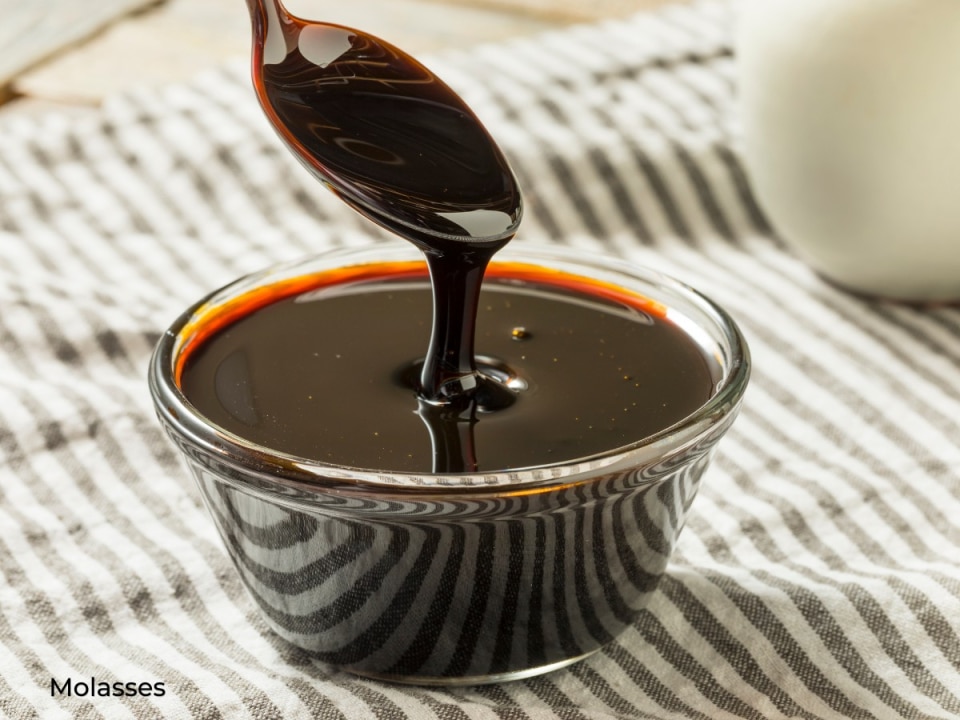
Molasses is the thick, dark syrup left behind after sugar crystals have been extracted from boiled sugarcane juice, essentially the concentrated essence of everything that gets removed during refining. The flavor is deep, bittersweet, and slightly smoky, coming in several grades: lighter molasses retains more sweetness, while darker grades push toward genuine bitterness. It’s what gives gingerbread, trifle desserts, Boston baked beans, and dark rye bread their characteristic depth, and it also works well in barbecue sauces and marinades where a smoky, complex sweetness is needed.
One important distinction: don’t substitute blackstrap molasses in a recipe that simply calls for “molasses” — blackstrap is significantly more bitter and will throw off the balance of most recipes that aren’t specifically designed for it.
20. Blackstrap Molasses
Blackstrap is the final grade of molasses, what’s left after the third boiling of sugarcane syrup when almost all the sucrose has been extracted. Very little sweetness remains and what you get instead is intensely bitter, almost medicinal, and not something most people would want by the spoonful.
In cooking it appears in very dark breads, certain gingerbread recipes, and Caribbean dishes where that intensity is entirely deliberate. It’s not interchangeable with regular baking molasses in most recipes so you should use it only when a recipe specifically calls for blackstrap, or the bitterness will dominate everything else.
21. Golden Syrup
Golden syrup is a thick, amber-colored syrup with a buttery, faintly caramelized sweetness that’s completely distinct from molasses or honey. It is milder and more rounded, without any bitterness. It was developed in Britain in the 1880s and has been a baking staple there ever since, featuring in flapjacks, treacle tart, and toffee.
Its real kitchen value goes beyond flavor: it prevents crystallization in sweets and candies, making it a useful addition even in small amounts when a smoother, glossier texture is the goal. Outside the UK and Australia it can be tricky to find, but it’s worth tracking down if you bake British recipes regularly. Light corn syrup is the closest substitute in most applications, though the flavor won’t be quite the same.
22. Rock Sugar (Mishri)
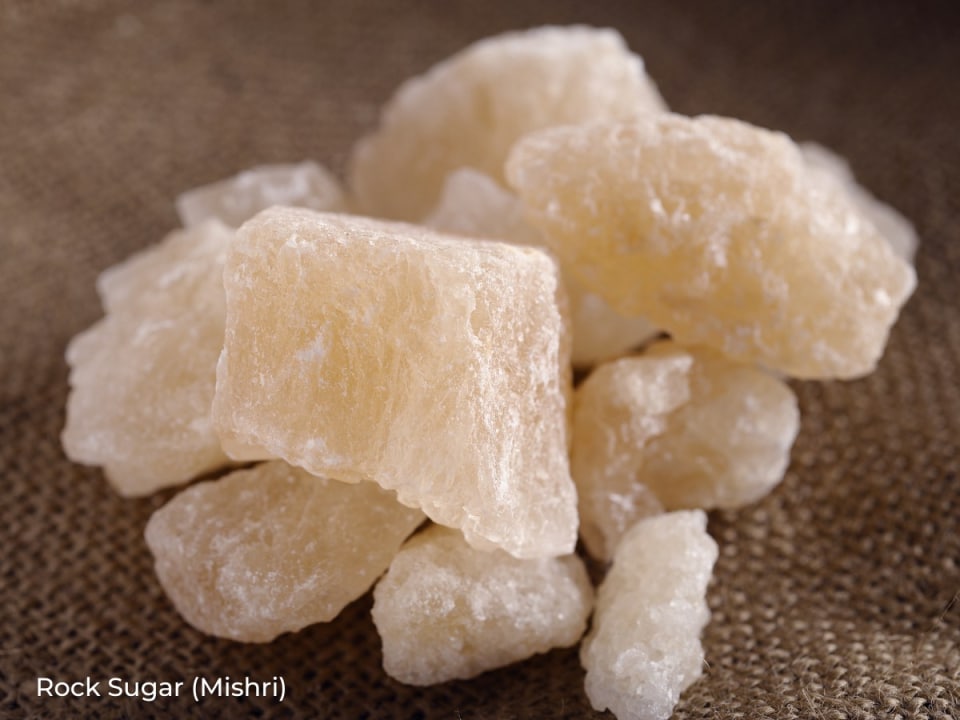
Mishri consists of large, irregularly shaped crystals of refined sugar grown slowly in a saturated solution with mildly sweet flavor.
It’s traditionally used to sweeten milk, chai, and herbal teas across Hindu and Jain traditions, and in Ayurvedic preparations where its slow-dissolving quality is specifically valued. Because it dissolves slowly, it’s best kept to drinks and simmered preparations rather than baking, where even incorporation into a batter or dough is important.
23. Chinese Yellow Rock Sugar
Chinese yellow rock sugar is a less refined version of rock sugar, sold in irregular amber-colored chunks with a subtly more complex, faintly honey-like flavor than the cleaner white mishri. It’s a fundamental ingredient in Chinese cooking, used to add a glossy sheen and rounded sweetness to red-braised dishes like hong shao rou and Peking duck glaze, and as a sweetener in herbal teas and tong sui dessert soups.
The slight caramel quality makes it preferable to white sugar in savory applications where depth matters without sharpness. Breaking it into smaller pieces before adding to a dish helps it dissolve more readily and distribute evenly through braises and sauces.
24. Jaggery
Jaggery is an unrefined cane or palm sugar produced across South Asia, Southeast Asia, and parts of Africa, made by boiling raw sugarcane juice or palm sap and setting it into dense blocks or soft paste without removing the molasses. The flavor varies by region and source: some jaggery is mildly caramel-like, others carry a deep toffee or fudge-like richness, but it’s consistently more complex and interesting than refined sugar.
It enhances the flavor of puddings and hallacas but it’s also fundamental to Indian, Sri Lankan, and Bangladeshi cooking, used in sweets like chikki, halwa, and ladoo, in chutneys, marinades, and festival foods. Hard blocks need to be broken up or grated before use, while softer paste varieties can be scooped directly into recipes.
25. Panela
Panela is the Colombian and broader Latin American equivalent of jaggery: raw, unrefined sugarcane juice boiled down and set into dense golden-brown blocks, with a warm, rounded flavor of caramel and molasses that varies by region and cane variety. It’s most commonly consumed as agua de panela, a popular everyday drink made by dissolving a block in hot water that sits somewhere between a tea and a very light hot chocolate.
It also appears in baking, marinades, and traditional Latin American dishes (such as hallacas) where its caramel depth adds character that refined sugar simply doesn’t. For baking, grating the block or breaking it into smaller pieces first helps it incorporate more evenly into a batter or dough.
26. Piloncillo
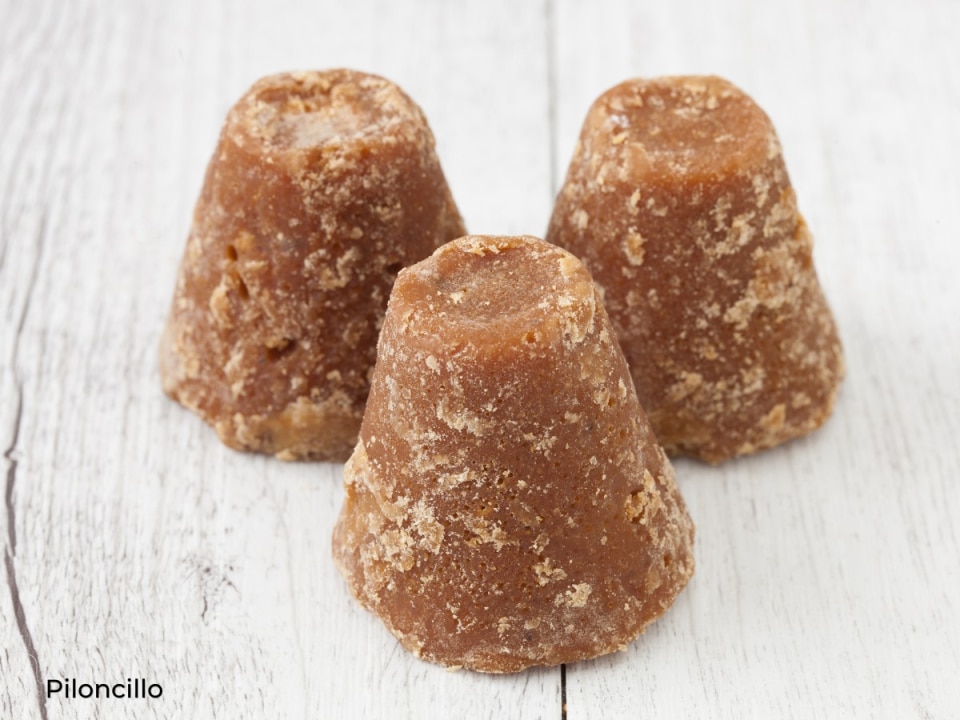
Piloncillo is Mexico’s unrefined cane sugar, closely related to panela but sold in characteristically small, hard cones ranging from pale gold to deep brown. The darker the cone, the more pronounced the molasses flavor: lighter piloncillo is mild and caramel-like, while darker varieties have the kind of depth that anchors mole negro, ponche, tamales de dulce, and capirotada.
It needs to be grated or broken down before use, and a coarse grater works well for this. Alternatively, chopping it roughly and adding it to warm liquid to dissolve before incorporating into a recipe is a practical shortcut.
27. Rapadura
Rapadura is a Brazilian unrefined cane sugar made by evaporating sugarcane juice at low temperatures, preserving as much of the original flavor as possible. It’s commonly sold in a grainy, sandy-textured granules (though you can also find it in blocks) with a strong, rustic flavor that’s earthier and more intensely molasses-forward than most other unrefined cane sugars.
It’s deeply embedded in rural Brazilian food culture, used in traditional sweets, breads, and even homemade cachaça production. It substitutes for brown sugar in a 1:1 ratio in most recipes, but the flavor is considerably more assertive, so it works best in recipes where that rustic, molasses-heavy character is an asset rather than a surprise.
Professional & Confectionery Sugars
These sugars are used primarily in pastry, confectionery, and commercial baking.
28. Invert Sugar (Trimoline)
Invert sugar is made by splitting sucrose into glucose and fructose, producing a syrup that’s sweeter than regular sugar, actively attracts and retains moisture, and resists crystallization. Those three properties make it genuinely valuable in professional pastry work: it extends shelf life in baked goods, keeps ice creams, syrups and ganaches smooth, and improves the texture of caramels and fondants in ways that regular sugar simply can’t.
Trimoline is the most common commercial form, sold as a thick ivory paste, and while home bakers rarely need it, it’s behind the smooth, long-lasting texture of most commercial confections. If a recipe calls for invert sugar and you don’t have it, a small amount of honey or golden syrup can approximate some of its anti-crystallization properties in a pinch, though neither is a perfect substitute.
29. Glucose Syrup
Glucose syrup is a thick, clear, nearly flavorless syrup made by breaking down starch into shorter glucose chains, and it contributes body, stability, and texture rather than pure sweetness. That makes it indispensable in confectionery work: it prevents crystallization in hard candies, gives halva and nougat and marshmallows their characteristic chew, adds gloss to mirror glazes and ganaches, and extends the softness of caramels and fondants.
The neutral flavor means it rarely affects the taste profile of a finished product, functioning instead as a textural backbone. Despite coming from a similar process, it’s not the same as high-fructose corn syrup, and the two shouldn’t be treated as interchangeable. In most American confectionery recipes, corn syrup works as a substitute, though glucose syrup tends to be thicker and slightly less sweet.
30. Isomalt
Isomalt is a sugar alcohol derived from beet sugar, and it does things in the kitchen that regular sugar simply can’t. It melts at a higher temperature than sucrose, resists humidity, recrystallizes slowly, and stays clear and workable for much longer once melted, which is why it’s the go-to material for pulled sugar, blown sugar sculptures, and the kind of decorative spun sugar work seen in competition patisserie. It’s also used in sugar-free confectionery because it’s only partially absorbed by the body, with a clean, mildly sweet flavor and none of the aftertaste associated with artificial sweeteners. It requires higher temperatures to melt than regular sugar, so a reliable candy thermometer is essential, and it sets harder and clearer than sucrose, which is both its strength and what makes it tricky to work with at first.
31. Barley Malt Syrup
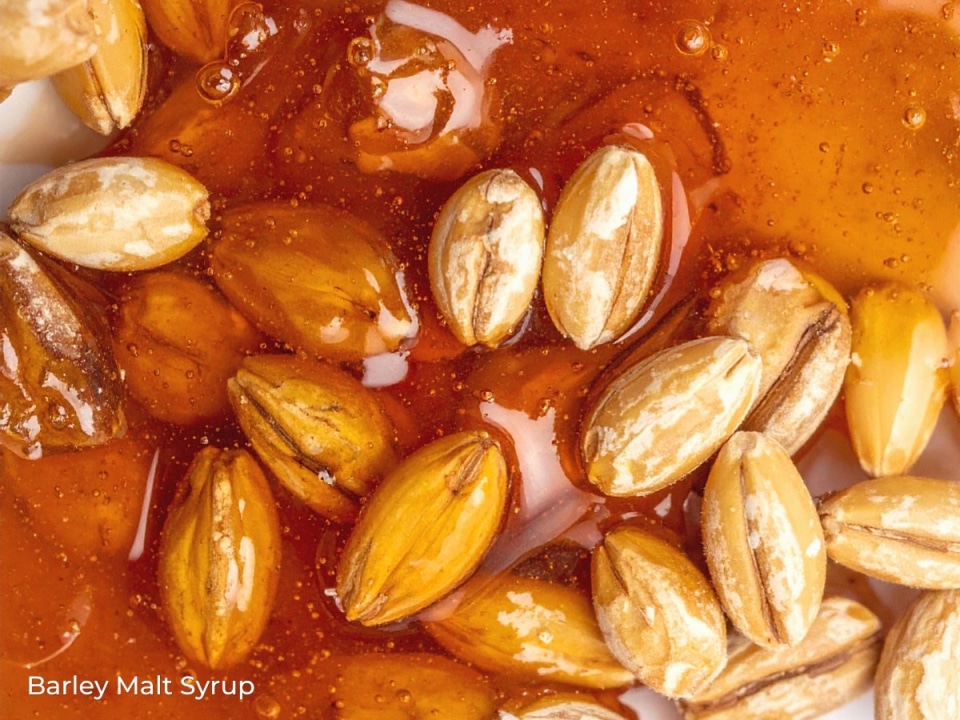
Barley malt syrup is made from sprouted barley grains, producing a thick, dark syrup with an intensely malty flavor that’s unlike any other liquid sweetener on this list. The taste is earthy, bittersweet, and deeply savory in a way that takes some adjustment if you’re expecting standard sweetness, and its primary kitchen roles reflect that specificity: it feeds yeast, adds color, and contributes the characteristic flavor of bagels, pretzels, and dark rye breads, and it plays a functional role in beer brewing. It’s not a sugar substitute in any general sense, and it shouldn’t be swapped for molasses or golden syrup — the flavor profile is fundamentally different. Use it only where a recipe specifically calls for malt syrup, or where a genuine malt flavor is the goal.
32. Corn Syrup
Corn syrup is made by breaking down cornstarch into glucose, and it’s a staple of American baking and confectionery. Light corn syrup is mild and nearly clear; dark corn syrup has caramel coloring and a touch of molasses flavor that works particularly well in recipes like pecan pie. Its real value is functional rather than flavor-based: it inhibits crystallization, which is why it shows up in fudge, caramels, marshmallows, and hard candies where a smooth, non-grainy texture is the whole point.
It’s worth noting clearly that corn syrup is not the same as high-fructose corn syrup, which is a separate, more heavily processed product. For readers outside the US, glucose syrup is the closest equivalent and works as a substitute in most confectionery recipes, though it tends to be slightly thicker and less sweet.
33. Fondant Sugar
Fondant sugar is a specialist ingredient used to make smooth icings and confectionery fillings. Dry versions contain very fine sugar crystals and, depending on the product, ingredients such as invert sugar or dried glucose syrup. Adding liquid according to the manufacturer’s instructions produces a smooth mixture for applications such as pastry coatings or soft chocolate centers. Different formulations suit different uses, so the preparation directions matter.
Dry fondant sugar should not be confused with prepared confectionery fondant, which is already a smooth paste, or with the ready-to-roll fondant used to cover cakes. Prepared pouring fondant can be warmed and adjusted to a coating consistency for pastries such as éclairs. Before buying, check which form your recipe requires: a dry mix, a prepared coating, or a rollable icing. Ordinary powdered sugar can make a simple glaze, but it is not automatically an equivalent replacement for a specialist fondant product.
Related: Excellent Brown Sugar Substitutes
Related: 5 Honey Substitutes You’ll BEE Loving
Related: 35 Types of Honey: Flavors, Origins & How to Use Them
Related: Top 10 Most Expensive Honeys
Related: 35 Tropical Fruits From Around the World You Should Try
