
35 Tropical Fruits From Around the World You Should Try
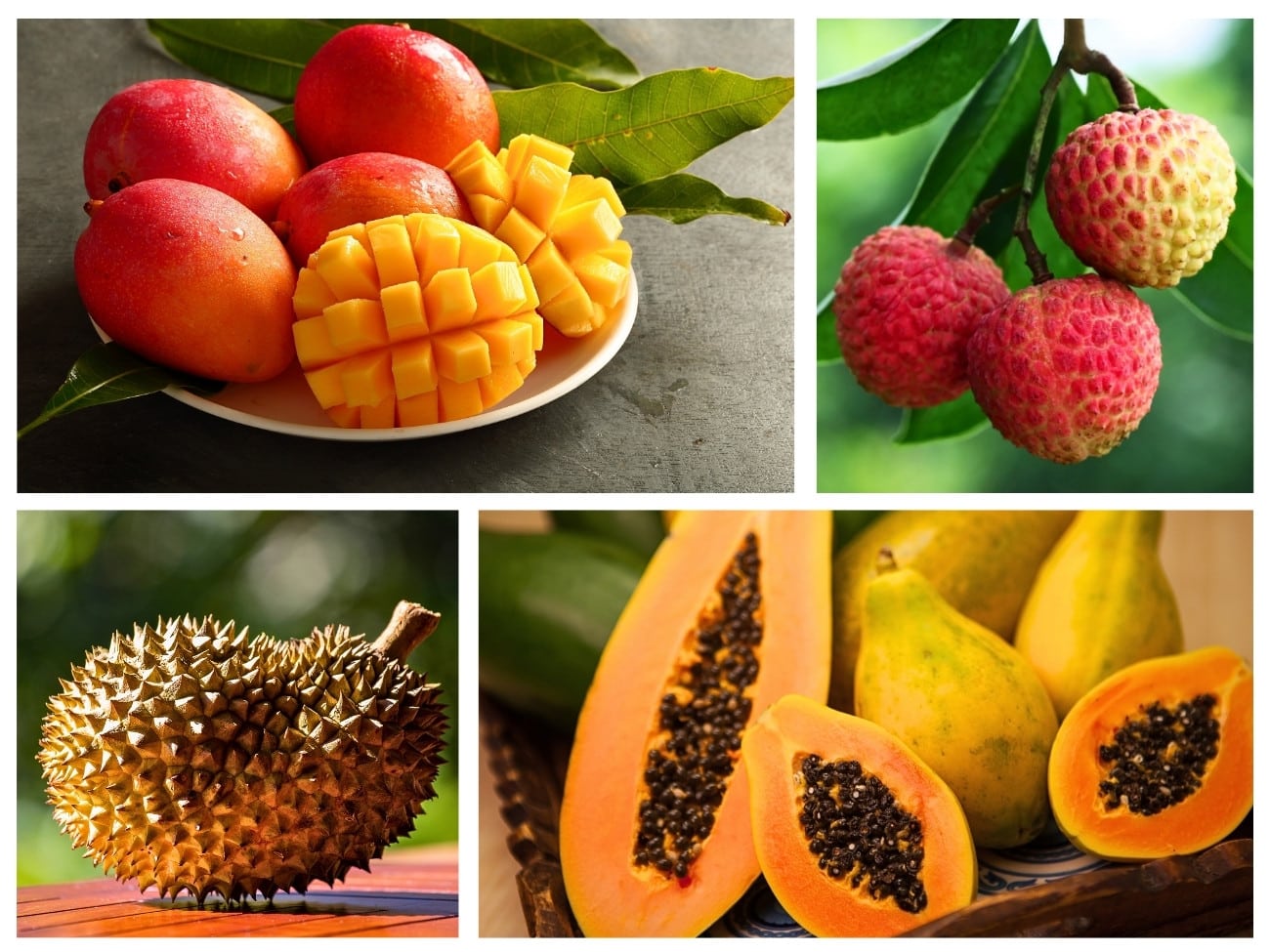
Tropical fruits are some of the most diverse, colorful, and distinctive foods on the planet. While familiar favorites like mangoes, bananas, and pineapples have become staples far beyond their native regions, countless others remain closely tied to the tropical landscapes where they originated. From the custard-like richness of cherimoya and mamey sapote to the intense perfume of lychee and the striking appearance of dragon fruit, tropical fruits offer an extraordinary range of flavors, textures, and culinary uses.
Many are enjoyed fresh at peak ripeness, while others are transformed into juices, desserts, sauces, preserves, and savory dishes that have shaped regional cuisines for centuries. Alongside their culinary appeal, tropical fruits are often rich in vitamin C, fiber, carotenoids, and other beneficial plant compounds. Here are 35 tropical fruits from around the world, each with its own unique story, flavor, and place in the kitchen.
1. Mango
Few fruits inspire the kind of devotion that mango does. Native to South Asia but now grown across the tropics, mangoes come in hundreds of different varieties, each with its own texture, sweetness, aroma, and level of acidity. Some are rich, buttery, and intensely sweet, while others are firmer and tangier, particularly the green mangoes used in Southeast Asian salads, pickles, and savory dishes. If you’re traveling somewhere mangoes are grown, it’s well worth trying the local varieties rather than sticking to the familiar supermarket types as you may be surprised by how different they can taste.
If you’re looking for some delicious mango recipes check out our steamed mussels with mango or our white chocolate & mango tart.
2. Pineapple
Pineapple is one of the great dual-purpose fruits: sweet and floral when ripe enough to eat raw, but also bold enough in flavor and acidity to hold its own in savory cooking. It works on Thai-style fried rice, alongside chicken, chopped into salsas, pressed into juice, or fermented into vinegar and tepache. The enzyme bromelain, found throughout the fruit, is a natural meat tenderizer and also the reason fresh pineapple can’t be used in gelatin desserts without cooking first. A good source of vitamin C and manganese, pineapple is also one of the few significant dietary sources of bromelain itself.
3. Banana
The banana is one of the world’s most consumed foods, and for good reason: it’s convenient, calorie-dense, naturally sweet, and available year-round in virtually every market on the planet. The Cavendish variety dominates global trade, but dozens of cultivars exist, ranging from tiny, intensely sweet finger bananas to large, starchy plantains that behave more like a vegetable than a fruit. Eaten fresh, baked into pudding, fried as chips, or added to banoffee pie, bananas are extraordinarily versatile. They’re a reliable source of potassium, vitamin B6, and resistant starch, particularly in less-ripe fruit, which supports gut health.
4. Blue Java Banana
Sometimes called the ice cream banana, the Blue Java is a cold-hardy cultivar known for its striking blue-green skin when unripe and, more importantly, for its exceptionally creamy texture and flavor once ripe. The taste genuinely resembles vanilla custard in a way that makes the ice cream comparison feel earned rather than promotional. Though rare in supermarkets, Blue Java bananas are grown across Hawaii, Southeast Asia, and parts of Central America, and they’re particularly popular in home gardens in subtropical regions. Like other bananas, they provide potassium and vitamin B6, but the texture sets them apart as a fresh eating experience worth seeking out.
5. Coconut

Coconut is the quintessential tropical fruit. Across South and Southeast Asia, the Caribbean, and West Africa, coconut is less an ingredient than an entire pantry in itself. You’ll find a wide range of uses from this fruit, depending on what coconut product you use. The white flesh can be eaten fresh, or dried and shredded into baked desserts, or sweet bite-sized treats while its milk and water are often used in hearty curries. The fat in coconut is predominantly saturated, largely in the form of medium-chain triglycerides, which are metabolized differently from most dietary fats and have attracted considerable nutritional interest.
6. Papaya
Papaya is something of a shape-shifter in the kitchen. Ripe, it’s soft, musky, and honey-sweet, best eaten fresh with a squeeze of lime to cut through its richness. Unripe and still green, it’s shredded into salads like the Thai som tam, as a flavor contrast to seafood, or pickled and used as a vegetable throughout Southeast Asia. The seeds, sharp and peppery, can be dried and ground as a spice substitute. Rich in vitamin C, folate, and beta-carotene, papaya also contains papain, a digestive enzyme similar to pineapple’s bromelain that makes it a traditional digestif in many tropical cultures.
7. Passion Fruit
Passion fruit packs an outsized punch for its small size: the wrinkled purple or yellow shell hides a cavity full of intensely aromatic, tart-sweet pulp and edible black seeds with a satisfying crunch. The flavor is floral and tropical with a sharp acidity that makes it exceptional as a dessert topping, curd, or syrup poured over pavlova, ice cream, or turked into the traditional lilikoi cheesecake. It holds up well in cocktails and dressings too, where that acidity does useful work. Nutritionally, passion fruit is a good source of fiber, vitamin C, and vitamin A, with more dietary fiber per serving than most tropical fruits.
8. Guava
Guava’s appeal begins with its scent: a heady, tropical perfume that’s sweet and slightly musky, stronger than almost any other fruit. The flesh ranges from white to deep pink depending on variety, with a flavor that sits between sweet and tart, and a texture somewhere between a pear and a strawberry. It’s eaten fresh, juiced, made into paste (the base of the classic guava and cheese pairing in Latin American cuisine), and used in jams, candies, or simple syrupy desserts. Pink-fleshed guavas are notably high in lycopene, and the fruit generally provides exceptional amounts of vitamin C, often surpassing oranges by a considerable margin.
9. Dragon Fruit (Pitaya)

Dragon fruit is one of the most visually distinctive fruits in existence, its hot-pink or yellow skin and dramatic petal-like scales making it unmistakable on any market stall. Cut it open and the flesh is either white or vivid magenta, dotted throughout with tiny black seeds. The flavor, however, is considerably more subtle than the appearance suggests: mildly sweet, faintly floral, and light in a way that makes it a good backdrop for bolder flavors in smoothies, fruit salads, and acai-style bowls. Pink-fleshed varieties contain betacyanins, the same pigment compounds found in beetroot, which have antioxidant properties and also turn smoothies a dramatic shade of purple.
10. Lychee
Lychees have one of the most immediately recognizable aromas in the fruit world: floral, perfumed, and almost rosy, like tropical fruit and flowers compressed into a single bite. Beneath the rough, pinkish-red shell is a translucent, slippery white flesh that’s sweet and juicy with a subtle floral note. They’re best eaten fresh but also appear in cocktails, sorbets, jellies, and Southeast Asian desserts. The flavor pairs naturally with ginger, rose, coconut, and vanilla. Lychees provide a solid amount of vitamin C and contain oligonol, a polyphenol compound found in their skin and flesh that has been studied for its antioxidant properties.
11. Rambutan
At first glance, the rambutan looks a little like a sea urchin: a bright red or yellow fruit covered in soft, hair-like spines. Peel it back and the fruit inside closely resembles a lychee, with translucent white flesh, a large central seed, and a sweet, mildly floral flavor. The taste is generally a little less perfumed and slightly creamier than lychee, with a pleasant juiciness. Rambutans grow in clusters throughout Southeast Asia and are eaten fresh, canned in syrup, or used in fruit salads and desserts. They provide vitamin C and small amounts of iron and copper.
12. Longan
Longan, whose name translates to “dragon’s eye” in Cantonese, a reference to the dark seed visible through the translucent flesh, is a close relative of lychee and rambutan, though with a distinctly different flavor profile. The taste is sweeter and less floral than lychee, with a musky, almost honey-like quality and a more delicate texture. It’s extremely popular across Southeast and East Asia, eaten fresh by the handful, dried into a raisin-like snack, or brewed into teas and tonic soups in traditional Chinese medicine. Fresh longan is rich in vitamin C; dried longan provides iron and is used in Chinese herbal cooking to support blood and energy.
13. Mangosteen
Mangosteen has been called the queen of tropical fruits, and the flavor lives up to the reputation: sweet, tangy, and floral all at once, with a delicate complexity that’s difficult to pin down and unlike almost anything else. The fruit is small and round, with a thick, deep purple rind that you crack open to reveal snowy white segments, some of which may contain seeds. It’s best eaten fresh, since the flavor is too nuanced to survive heavy processing. The rind is inedible because of how fibrous and bitter it is, although it contains xanthones, polyphenol compounds with significant antioxidant properties that have attracted scientific interest. But the flesh is provides a good dose of nutrients on its own, especially vitamin C and folate.
14. Jackfruit

Jackfruit is the largest tree fruit in the world, capable of reaching enormous sizes, and its culinary versatility is nearly as impressive as its scale. Young, unripe jackfruit has a neutral flavor and a fibrous, meaty texture that makes it one of the most convincing plant-based meat substitutes available: pulled, shredded, and seasoned, it absorbs flavors readily and works well in tacos, curries, and sandwiches.
Ripe jackfruit is completely different: sweet, tropical, and fragrant, eaten fresh or used in desserts and smoothies. It’s a reasonable source of vitamin C, potassium, and B vitamins, and the seeds are edible too, boiled or roasted like chestnuts.
15. Durian
Durian is the most polarizing food in the tropical fruit world. The smell, which ranges from ripe onion to turpentine to sweet custard depending on who’s describing it and which variety is in question, is so powerful that it’s banned from hotels, public transport, and airports across Southeast Asia. The flavor, to those who push past the aroma, is remarkably complex: rich, creamy, and custard-like, with notes of almond, vanilla, and something savory that’s difficult to categorize. It’s eaten fresh, used in ice cream, cakes, and candy, and deeply embedded in the food cultures of Malaysia, Indonesia, and Thailand. Durian is notably calorie-dense and provides potassium, vitamin C, and B vitamins.
16. Star Fruit (Carambola)
Slice carambola is a great fruit platter ingredient, since every slice resembles a perfect five-pointed star, giving it a unique visual appeal. The fruit is glossy and yellow-green, with a crisp texture and a flavor that ranges from mildly sweet to pleasantly tart depending on variety and ripeness. The whole fruit is edible, skin and all, with no preparation needed beyond washing and slicing, making it one of the easiest tropical fruits to serve. It works well in fruit salads, as a garnish, pressed into juice, or cooked into chutneys and relishes alongside fish and poultry. Star fruit is low in calories and provides vitamin C and a range of B vitamins, though people with kidney disease are advised to avoid it due to its oxalic acid content.
17. Tamarind
Tamarind is one of the great souring agents of global cuisine, the sticky, dark pulp inside its brittle brown pods delivering a deep, tangy sweetness that’s essential to the flavor profiles of Indian chutneys, pad thai, Worcestershire sauce, and sophisticated chicken or beef dishes. The flavor is complex rather than simply sour: fruity and slightly caramel-like, with a tartness that builds rather than hits all at once. Fresh pods, dried blocks, and concentrated paste are all used depending on the application. Tamarind provides iron, magnesium, and tartaric acid, and has a long history in traditional medicine as a digestive aid.
18. Breadfruit
Breadfruit is a starchy, versatile staple that has fed tropical communities across the Pacific, Caribbean, and parts of Asia for thousands of years, and its potential as a global food crop has attracted renewed interest in recent decades. Unripe, it behaves like a vegetable: roasted, boiled, fried into chips, or mashed like a potato, with a dense, starchy texture and a mild, slightly sweet flavor that absorbs seasoning readily. Ripe breadfruit becomes softer and sweeter, closer to banana bread in flavor. It’s a good source of complex carbohydrates, fiber, potassium, and vitamin C, and its high caloric value made it historically significant as a subsistence crop.
19. Soursop
Soursop is a large, spiky green fruit native to the tropical Americas, with a white, fibrous flesh that manages to be simultaneously sweet and sharply acidic, tasting something like a cross between pineapple, strawberry, and coconut. It’s rarely eaten raw in the way one might eat a mango; instead, the pulp is scooped out, strained to remove the seeds, and blended into juices, smoothies, ice creams, and mousses, where the intense flavor carries through beautifully. Across the Caribbean and Latin America, soursop juice is a beloved everyday drink. The fruit provides vitamin C, B vitamins, and a significant amount of dietary fiber, and the leaves are widely used in herbal teas across its native range.
20. Cherimoya
Mark Twain reportedly called the cherimoya the most delicious fruit known to man, and while that might be overstating it, the flavor is genuinely something special: sweet, creamy, and complex, with notes of vanilla, banana, pineapple, and something floral that makes it difficult to compare to anything else.
The flesh is smooth and custardy, eaten by scooping it away from the skin and the large, inedible black seeds. It’s native to the Andean highlands of South America and thrives at elevation, which limits where it can be grown. Best eaten fresh and chilled, cherimoya also works beautifully in smoothies and ice cream. It provides vitamin C, B6, and a good amount of dietary fiber.
21. Sapodilla
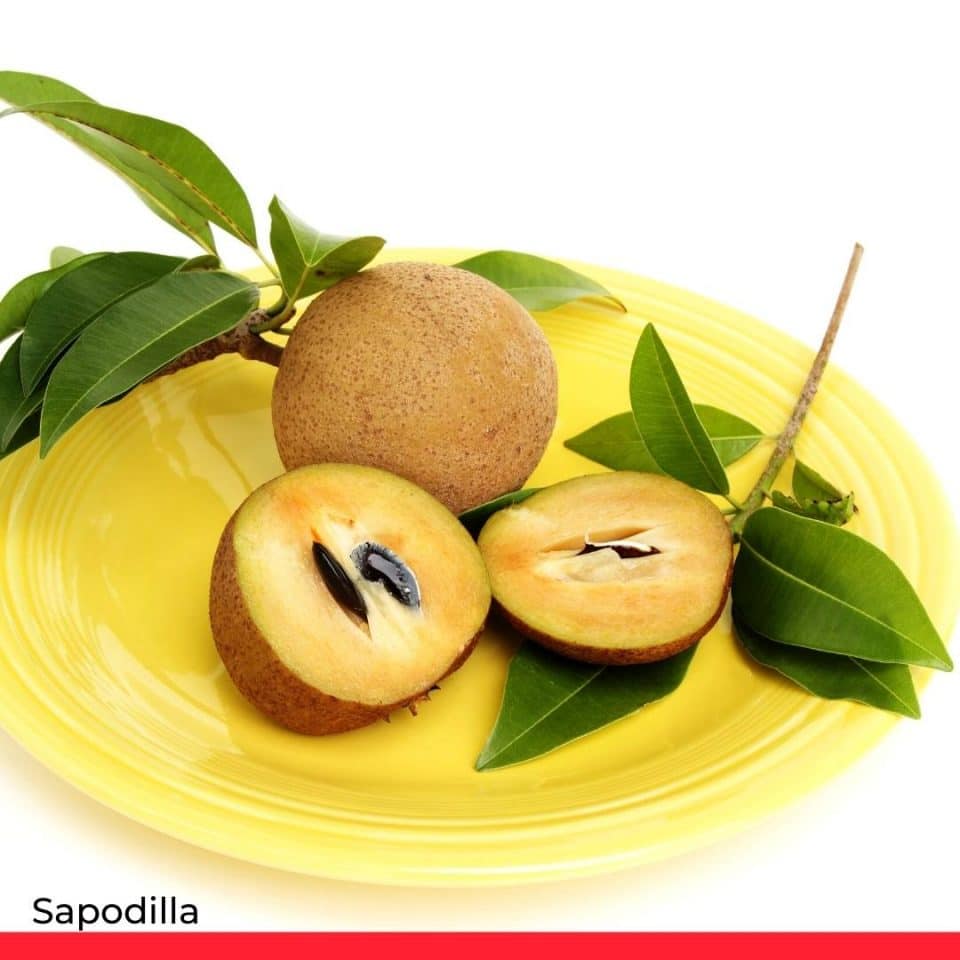
Sapodilla has a brown, potato-like exterior offers no hint of what’s inside: a honey-sweet flesh with a grainy, pear-like texture and a flavor that genuinely tastes of brown sugar, vanilla, and caramel, rich and warm in a way that feels almost more confectionery than fruit. Native to Mexico and Central America, it’s been cultivated across South and Southeast Asia for centuries and is popular in India under the name chikoo. It’s best eaten fresh and very ripe, scooped straight from the skin. Sapodilla provides dietary fiber and a useful amount of iron, along with natural tannins in less-ripe fruit that give it an astringent edge.
22. Mamey Sapote
Mamey sapote has the exterior of a large, rough-skinned potato and the interior of something altogether more spectacular: deep salmon-pink to reddish-brown flesh with a dense, creamy texture and a flavor that blends sweet potato, pumpkin, almond, and honey into something surprisingly complex. It’s a Cuban and Central American staple, most commonly blended into batidos (milkshakes) and ice cream, where its natural creaminess and sweetness require very little added sugar. The flavor also pairs well with cinnamon and vanilla. Mamey sapote is rich in beta-carotene, vitamin C, and B6, and provides a substantial amount of dietary fiber in a single fruit.
23. Black Sapote
The black sapote is sometimes called the chocolate pudding fruit, and while that description sets expectations very high, it’s not entirely misleading. When fully ripe, the flesh turns from pale green to a deep, dark brown, with a soft, pudding-like consistency and a flavor that’s mildly sweet and faintly reminiscent of chocolate, particularly when combined with a splash of cream or liqueur. Native to Mexico and Central America, it’s related to the persimmon rather than to other sapotes. It’s almost always blended or mashed rather than eaten in segments, and works well in mousses, smoothies, and raw desserts. Nutritionally, it offers vitamin C and a good range of carotenoids.
24. Salak (Snake Fruit)
Named for its reddish-brown, scaly skin, salak is a Southeast Asian fruit that peels to reveal two or three ivory-colored lobes with a crisp, dry texture quite unlike most tropical fruits. The flavor varies noticeably between varieties: some are sweet and honey-like, others are sharply astringent, and the best combine both in a complex, almost wine-like way. It’s eaten fresh across Indonesia, Thailand, and Malaysia, where it grows in low, spiny palms. The texture has been compared to a dry apple or firm pear, and it holds its shape well enough to use in fruit salads. Salak provides vitamin C, iron, and tannins, particularly in less-ripe fruit.
25. Pomelo

The pomelo is the grandfather of the citrus family, one of the few original wild species from which grapefruit and many other modern varieties descend. Its size alone sets it apart: enormous and round, with a thick, spongy pith that takes up a significant portion of the fruit before you reach the segments inside. The flesh is dry and firm compared to a grapefruit, sweet rather than bitter, and faintly floral in a way that makes it particularly suited to fresh eating. Across Southeast and East Asia it features in Lunar New Year celebrations and festive salads, and the thick peel is often candied or used in marmalade. It provides good amounts of vitamin C and potassium.
26. Acerola
Acerola looks a little like a small red cherry, but the resemblance ends there. Native to the Caribbean and tropical Americas, it’s one of the richest natural sources of vitamin C in the entire plant kingdom, containing up to 65 times more than an orange by weight.
The flavor is bright, tart, and tropical, somewhere between a cranberry and a green apple, with a pleasant acidity that makes it more useful in processed forms than as a fresh snack. It’s most commonly found as a juice, puree, or supplement ingredient, though fresh acerola is also eaten throughout Brazil and the Caribbean. Its antioxidant profile, driven by that extraordinary vitamin C content, has driven growing commercial interest in the fruit globally.
27. Jabuticaba
Jabuticaba is one of the most visually unusual fruits in the world: dark purple to black berries that grow directly on the trunk and main branches of the tree rather than on separate stems, giving the whole plant a strikingly surreal appearance when fruiting. Native to Brazil, the fruit tastes something like a muscadine grape, sweet and winey with a thick skin that pops between the teeth, releasing juicy, pale flesh. It ferments rapidly after harvest, which limits distribution but makes it a natural candidate for wine, liqueurs, and jams. Jabuticaba is rich in anthocyanins and other polyphenols, giving it strong antioxidant properties similar to those of dark berries.
28. Wax Apple
The wax apple is less an apple than it is a bells-shaped, glossy tropical fruit, its smooth skin ranging from pale pink to deep crimson depending on variety. It’s found throughout Southeast Asia, particularly in Taiwan and Thailand, where it’s a popular street snack and a staple at fruit stalls. The flesh is crisp, very watery, and mildly sweet with a faint floral note, refreshing in hot weather in the way that watermelon is, with a satisfying crunch rather than a juicy bite. It lacks the intensity of flavor to survive cooking well, so it’s nearly always eaten fresh, occasionally with chili and salt in the Thai style. It provides a light source of vitamin C and dietary fiber.
29. Cupuaçu

Cupuaçu is a large, brown-podded fruit from the Amazon basin, closely related to cacao, and it has attracted real attention from the food industry as a result of that connection. The white, pulpy flesh surrounds large seeds and has a complex, tangy flavor that blends chocolate, pineapple, and pear into something genuinely unusual. The pulp is used in juices, desserts, ice creams, and chocolates across Brazil, while the seeds can be processed into a white fat called cupuassu butter, used in confectionery and cosmetics as a cocoa butter alternative. Cupuaçu is rich in theobromines, B vitamins, and antioxidants, and is beginning to appear in specialty food markets outside South America.
30. Abiu
Abiu is a small, oval Amazonian fruit with a smooth, bright yellow skin and translucent white flesh that’s sweet, delicate, and faintly reminiscent of caramel or crème caramel, with a gelatinous texture that makes it unlike most fruits you’re likely to have encountered. The skin and seeds are inedible, and the flesh can leave a sticky residue on the lips due to its latex content, which dissipates in very ripe fruit. It’s eaten fresh throughout Brazil and parts of Southeast Asia, where it has been introduced, typically scooped straight from the skin. Abiu is a reasonable source of vitamin C and provides small amounts of calcium, and its delicate flavor makes it best appreciated unadulterated.
31. Lucuma
Lucuma is a Peruvian fruit with a dry, starchy flesh and a flavor that combines sweet potato, maple syrup, and butterscotch into something uniquely its own. Fresh lucuma is rarely exported due to its fragility, so outside South America it’s most commonly encountered as a dried powder used in smoothies, ice creams, and baked goods as a natural sweetener with a distinctively caramel-like depth. In Peru, lucuma ice cream is one of the most popular flavors in the country, arguably rivaling chocolate and vanilla in local affection. The fruit provides beta-carotene, iron, zinc, and B vitamins, and its low glycemic index has made the powder popular as a refined sugar alternative.
32. Ice Cream Bean
The ice cream bean is named not for its appearance but for the extraordinary texture of the white, cottony pulp that surrounds its large seeds inside the long, thick pod: soft, sweet, and genuinely reminiscent of vanilla ice cream or frozen cotton candy in a way that surprises almost everyone who tries it for the first time. The fruit grows on large trees across Central and South America and the Caribbean, where children eat it as a natural sweet directly from the pod. The flavor is mild, sweet, and faintly vanilla-like, without much acidity or complexity. The seeds inside are edible when cooked. As a source of nutrition, the pulp offers modest amounts of vitamin C and dietary fiber.
33. Finger Lime
Australia’s finger lime is a native rainforest citrus that has traveled from obscurity to the menus of some of the world’s finest restaurants on the strength of one extraordinary quality: its interior is packed with tiny, perfectly round vesicles of juice that burst on the tongue like caviar, earning it the nickname “citrus caviar.” The flavor ranges from tart and lime-like to more complex floral notes depending on variety, and that textural quality makes it an outstanding garnish on oysters, sashimi, cocktails, and desserts. Sustainably harvested from subtropical Australian bush, it has become a flagship of the native food movement. It provides vitamin C and a range of flavonoids concentrated in its edible skin.
34. Santol
Santol is a round, yellowish-pink tropical fruit native to Southeast Asia, where it’s as much a condiment as a dessert fruit. The ripe flesh is sweet and mildly acidic, surrounding a large, inedible seed, but it’s the unripe fruit that sees the most culinary use: sour, firm, and crisp, it’s shredded or pickled into salads, cooked into curries, and preserved in brine across Thailand, the Philippines, and Cambodia. Santol is sometimes called the cotton fruit, a reference to the fluffy texture of the inner pulp around the seed. The rind can be candied or made into jams. It provides vitamin C and dietary fiber, and in traditional medicine the bark and roots have a long history of use as a remedy for digestive complaints.
35. Canistel

Canistel, often called eggfruit, is one of the more unusual exotic fruits you’ll encounter, prized less for juiciness than for its remarkably dense, velvety texture. Beneath the smooth yellow skin lies bright golden flesh that resembles cooked egg yolk in both color and consistency, with a flavor often described as a blend of sweet potato, pumpkin, vanilla, and custard. Native to Central America but cultivated throughout the tropics, canistel is eaten fresh, blended into milkshakes, baked into pies, or incorporated into ice cream, where its naturally creamy texture shines. It’s rich in beta-carotene, vitamin C, and dietary fiber, making it as nutritionally noteworthy as it is distinctive in flavor and appearance.
Related: 8 Exotic Fruits to Try out in Costa Rica
Related: Exotic Asian Fruits: 16 Popular Options
Related: Paradise on a Plate: 20 Ways to Cook with Exotic Fruits
Related: Flavors of Puerto Rico: Exploring Locally Grown Fruits
Related: 15 Popular Fruits Grown in Tanzania
