
25 Types of Olives and What Makes Each One Unique
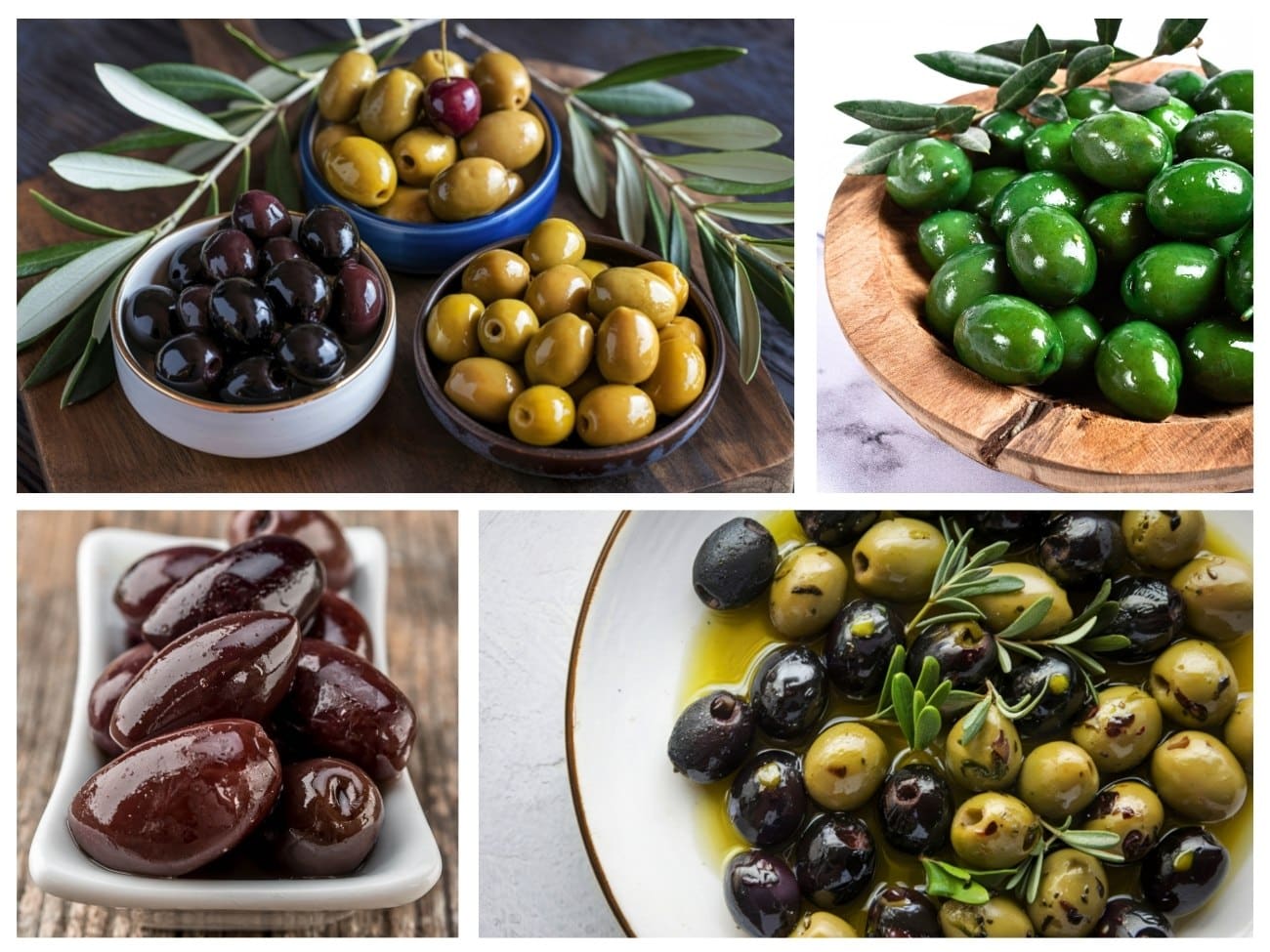
If you love olives, chances are you’ve had that moment on vacation: tasting an incredible olive at a tapas bar in Madrid or on a sunny terrace in Crete and wondering, what kind of olive is this, and why does it taste so much better than the ones I usually buy?
There’s a lot more to olives than simply green or black. Different varieties can be buttery and mild, fruity and sweet, intensely bitter, meaty, briny, or peppery, while the way they’re cured can transform their flavor even further. Some are prized as table olives, while others are grown primarily for their exceptional oil.
In this guide, we explore 25 different types of olives from across the Mediterranean, the Middle East, and the Americas: where they come from, what they taste like, how they’re traditionally prepared, and which varieties are especially worth seeking out.
1. Manzanilla – Spain & California

Manzanilla is probably the Spanish olive you’ve encountered most often without knowing its name. Grown mainly around Seville (and also widely cultivated in California) its name means “little apple,” a reference to its plump, rounded shape. It has firm, meaty flesh and a nicely balanced flavor: pleasantly briny with a little bitterness, but mild enough to be incredibly versatile.
You’ll most often find Manzanilla olives picked green and cured in brine, either served simply as a snack or pitted and stuffed with pimento, garlic, or almonds. They’re also a classic choice for cocktails. Compared with some milder green olives, Manzanillas have a slightly more pronounced bitter edge, which gives them a little extra character.
2. Kalamata — Peloponnese, Greece

Kalamata is probably the Greek olive most people recognize instantly. Grown around the city of Kalamata in the southern Peloponnese, these almond-shaped olives are harvested when fully ripe, giving them their familiar deep purple-black color. The flesh is meaty and rich, with a fruity, slightly winey flavor that works beautifully in Greek salads, Mediterranean dishes, or simply alongside bread and cheese. Their distinctive taste comes in part from the traditional curing process, which often includes red wine vinegar.
3. Castelvetrano — Sicily, Italy
If you think you don’t like olives because they’re too bitter or salty, Castelvetrano might change your mind. Also known as Nocellara del Belice, these large, vivid green olives come from western Sicily, particularly around Castelvetrano in the Belice Valley. They’re wonderfully mild and buttery, with a firm, meaty texture and very little bitterness. They’re one of the easiest olives to eat straight from the bowl and have become especially popular on antipasto platters and restaurant snack menus.
4. Arbequina — Catalonia, Spain

Arbequina is one of those olives you may know better from the bottle than from the olive bar. Originally from Catalonia and now widely grown across Spain as well as in California and Australia, this tiny round olive is prized primarily for its oil. Arbequina olive oil is gentle, fruity, and slightly sweet, with much less bitterness than many traditional Mediterranean oils. It’s an excellent choice if you prefer a softer extra virgin olive oil for salads, vegetables, or dipping bread.
5. Picual — Jaén and Andalusia, Spain
Picual may not be the olive you order with your drink, but it is enormously important in the world of olive oil. It’s grown especially heavily around Jaén in Andalusia and is the most widely planted olive cultivar in the world. Its oil is bold and unmistakable, with grassy flavors, a pleasant bitterness, and the peppery finish that can make a good extra virgin olive oil catch slightly at the back of your throat. It also stands up particularly well to cooking, so it’s worth seeking out if you like a more assertive oil.
6. Picholine — Southern France

Long, slender, and usually bright green, Picholine is one of France’s classic table olives. It’s associated particularly with southern France, where the olives are picked before they fully ripen and traditionally cured in brine. Expect a crisp bite, mild nuttiness, and just enough saltiness to keep you reaching for another. They work especially well as an aperitif olive, on cheese and charcuterie boards, or in a martini.
7. Gordal — Andalusia, Spain
You’ll know a Gordal when you see one: it’s enormous. Its Spanish name roughly translates as “the fat one,” and it’s among the largest table olives grown commercially. Gordal is particularly associated with Andalusia and the area around Seville, while the same cultivar is grown in California under the name Sevillano. The flesh is soft, substantial, and mild, which makes these olives ideal for stuffing with garlic, peppers, anchovies, or almonds. They contain relatively little oil, so they’re grown to be eaten rather than pressed.
8. Halkidiki — Northern Greece

Another olive that stands out for its size is Halkidiki, grown on the Halkidiki peninsula of northern Greece. These big green olives have a crisp, firm bite and a mild, lightly tangy flavor that makes them extremely approachable. Their generous size also makes them perfect for stuffing, particularly with feta, peppers, garlic, or almonds. If you’ve ever picked out the biggest green olives at an olive bar, there’s a good chance you’ve already encountered them.
9. Hojiblanca — Andalusia, Spain
Hojiblanca is one of Spain’s great all-rounders. Grown predominantly in Andalusia, it takes its name from the pale, silvery underside of the tree’s leaves. The olives have firm flesh and a flavor that can be slightly bitter when green but becomes softer and rounder as the fruit ripens. They’re eaten as table olives but are also widely pressed into oil, producing a fruity oil that can have subtle almond-like notes.
10. Niçoise — French Riviera
Small, dark, and surprisingly intense, Niçoise olives come from the French Riviera and are produced from the Cailletier cultivar. They’re allowed to ripen fully before picking, which gives them their deep purple-black color and concentrated, slightly nutty flavor. As the name suggests, they’re closely associated with salade niçoise, but they’re equally at home in tapenade or alongside fish and Provençal dishes. They may be tiny, but their flavor is anything but.
11. Bella di Cerignola — Puglia, Italy
Bella di Cerignola is another olive that makes an impression before you’ve even tasted it. Native to Cerignola in Puglia, it is one of Italy’s largest table olives, with thick, firm flesh and a pleasantly mild flavor. The green variety is perhaps the best known, although darker ripe versions are available too. Their size and beautiful appearance make them particularly good for antipasto platters, where they really don’t need much dressing up.
12. Mission — California, USA
Mission olives tell a different kind of olive story. They developed in California from olive trees introduced by Spanish missionaries in the late 18th century and became one of the state’s signature cultivars. The fruit ripens from purple to almost jet black and has naturally quite bitter flesh, so proper curing is essential. Mission olives can be eaten at the table, including in the familiar California black-ripe style, but they also produce a robust, full-flavored olive oil.
12. Gaeta — Lazio, Italy
Gaeta olives are particularly interesting because the same olive can look and taste quite different depending on how it’s cured. Grown around Gaeta in Lazio and produced from the Itrana cultivar, they can be brine-cured into plump, dark olives or dry-cured until wrinkled and intensely savory. The dry-cured version has an almost raisin-like texture and a concentrated flavor that works beautifully in pasta dishes, salads, and roasted vegetables. Itrana olives are also pressed into a robust, slightly spicy regional oil.
13. Leccino — Tuscany, Umbria, and Central Italy

Leccino is one of Italy’s classic oil olives and is grown widely across Tuscany, Umbria, and other olive-producing regions. Its oil tends to be smooth, mild, and gently fruity rather than aggressively bitter or peppery. For that reason, it’s often blended with stronger cultivars to create a more balanced oil. You can occasionally find Leccino as a table olive, but it’s really in the olive-oil bottle that this variety has made its name.
14. Frantoio — Tuscany, Italy
If Leccino represents the gentler side of Tuscan olive oil, Frantoio brings the punch. This celebrated Tuscan cultivar produces an oil that is grassy, herbaceous, pleasantly bitter, and noticeably peppery. It’s rarely grown primarily as a table olive; pressing is where its character really shines. Frantoio is often blended with Leccino and other local varieties to produce the distinctive, intensely flavored oils associated with Tuscany.
15. Taggiasca — Liguria, Italy
Taggiasca olives are tiny compared with the giant olives of Puglia or Andalusia, but they have a charm of their own. Grown in Liguria in northwestern Italy, they have tender flesh and a delicate, slightly sweet flavor with very little bitterness. They’re enjoyed both as table olives and as the source of Liguria’s famously gentle, fruity olive oil. You’ll also find them in traditional Ligurian dishes, where their subtle flavor works particularly well with rabbit, fish, vegetables, and herbs.
16. Galega — Central and Northern Portugal
Galega is one of the defining olives of Portugal, particularly in the central and northern parts of the country. The small, round fruit is used both for eating and for producing a fruity, balanced oil with mild bitterness and hints of almond. On Portuguese tables, Galega olives can also appear simply cured as azeitonas de conserva, the sort of unpretentious bowl of olives that arrives before a meal and disappears remarkably quickly.
17. Cornicabra — Castilla-La Mancha and Central Spain
Cornicabra gets its memorable name from its curved shape, which resembles a goat’s horn. It’s grown primarily in central Spain, particularly around Toledo and Castilla-La Mancha, and most of the crop goes into olive oil. The resulting oil is full-flavored, pungent, and slightly bitter—stronger than Arbequina but generally less forceful than Picual. The trees cope particularly well with dry conditions, which helps explain why this variety has become so closely associated with Spain’s interior.
18. Empeltre — Aragón and Northeastern Spain
Empeltre is a quieter Spanish variety that deserves more attention. Grown mainly in Aragón and neighboring areas of northeastern Spain, the olives ripen to a deep black and have soft flesh with a mild, slightly sweet flavor. They can be enjoyed at the table or pressed into an exceptionally gentle oil with hints of almond and apple. If very peppery olive oils aren’t your thing, Empeltre is one worth remembering.
19. Amfissa — Central Greece
Amfissa olives come from the area around Delphi in central Greece and are remarkably versatile. The same cultivar, also known as Konservolia, can be harvested green, partially ripe, or fully black, giving producers several very different styles from a single olive. The texture tends to be tender and the flavor relatively mild, making Amfissa an easy table olive even for people who don’t enjoy aggressively bitter varieties. The olives from the Amfissa region also have protected geographical status.
20. Chemlali — Central and Southern Tunisia
Chemlali is one of the varieties behind Tunisia’s enormous olive-oil tradition. It is grown extensively in the country’s hotter and drier regions and is particularly well adapted to conditions where water is scarce. The olives are primarily pressed rather than eaten, producing a fruity oil with gentle bitterness and often a distinctive green-almond character. It may not be a household name outside North Africa, but it plays an enormous role in Tunisian olive production.
21. Chetoui — Northern Tunisia
Travel north in Tunisia and you’re more likely to encounter Chetoui. This variety thrives in the cooler, somewhat wetter conditions of northern Tunisia and produces a noticeably more powerful oil than Chemlali. Expect pronounced bitterness, bold green-almond flavors, and plenty of intensity. It’s the sort of olive oil that makes its presence known rather than disappearing quietly into a dish.
22. Souri — Lebanon and the Levant
Souri is one of the great historic olives of the eastern Mediterranean. Its name is linked to Sur, the Arabic name for the Lebanese city of Tyre, and the variety is grown across parts of Lebanon, Syria, Israel, and Palestine. It’s valued primarily for olive oil, which tends to be aromatic, fruity, and well balanced rather than extremely bitter or peppery. The trees are known for their longevity, and some old Souri groves have been producing olives for generations.
23. Nabali — Palestine
Nabali, sometimes locally called Baladi, is deeply connected with Palestinian olive-growing traditions. The medium-sized fruit is grown mainly for oil, producing a smooth, relatively mild oil with gentle sweetness and restrained bitterness. Old Nabali trees are still found throughout traditional growing areas, giving the cultivar cultural significance that goes well beyond its flavor. If you’re exploring olive oils from the eastern Mediterranean, this is a particularly interesting variety to seek out.
24. Barouni — Tunisia and California
Barouni has taken an unusual journey from North Africa to the American West Coast. Originally from Tunisia, it was introduced to California in the early 20th century and became a specialty table olive there. The fruit is exceptionally large, with firm flesh and a fuller, more distinctive flavor than many mild green olives. It also tolerates very hot growing conditions particularly well. Today it’s far less common than Mission olives, which makes finding a jar feel like a bit of a discovery.
25. Throuba Thassos — Thassos, Greece
For one of the most unusual olives on the list, head to the Greek island of Thassos. Throuba olives are different because they naturally ripen and begin to dry on the tree rather than going through the usual brine-curing process after harvest. They’re then treated simply with salt, leaving them wrinkled, chewy, and intensely flavored, with a concentrated salty-bitter character that can almost remind you of dried fruit.
They’re traditionally eaten very simply, often with little more than a drizzle of olive oil. Throuba isn’t the mild olive you absentmindedly snack on by the handful—but if you already love olives and want to taste something genuinely different, it’s one of the varieties worth seeking out.
What are your favorite olives? Please let us know in the comments section below.
Related: Extra Virgin Olive Oil vs Olive Oil Explained
Related: Top 10 Most Expensive Olive Oils in the World
Related: 10 Best Olive Oil Dispensers (Reviewed!)
Related: Spaghetti Aglio e Olio
Related: Mediterranean Olive Oil & Parmesan Dip
