
25 Red Fruits You Should Eat (With Pictures!)

Looking to bring more color and variety to your menu? Red fruits are an easy way to do both, adding visual impact as well as fresh, bold flavors.
In this guide, we explore a mix of familiar favorites and lesser-known red fruits worth discovering. Whether you’re refining your current dishes or looking for new inspiration, these ingredients can add a vibrant touch—and maybe even introduce something new to your repertoire.
1. Cherries
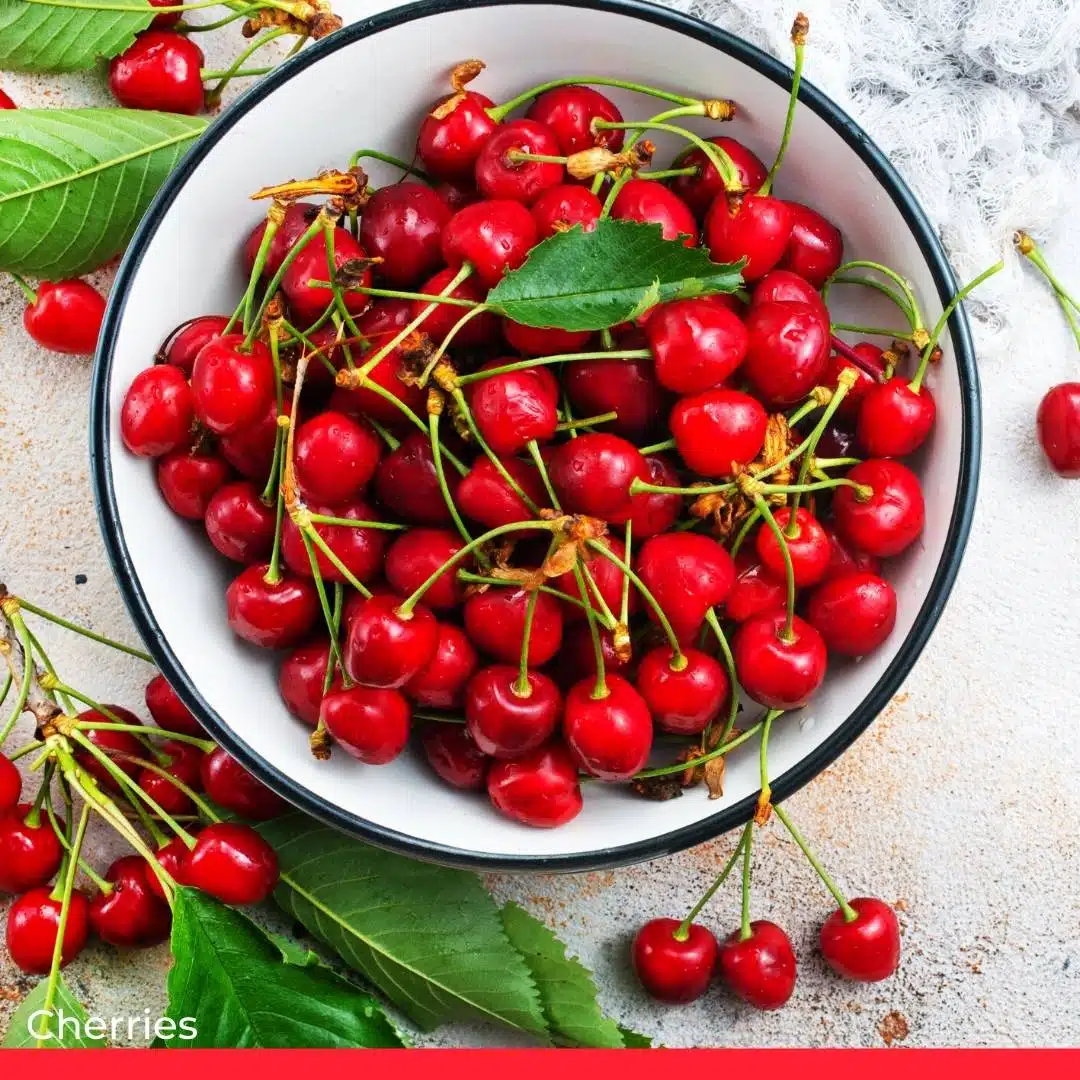
A bowl overflowing with luscious red cherries , perhaps the ultimate symbol of summer. But they’re not only delicious as a snack or to end a meal; they’re incredibly versatile.
There are endless ways you can use them to create spectacular desserts, preserves, and toppings for sundaes. Their sweet sharpness also makes them a great partner for pork and duck dishes, and they partner exceptionally well with goat’s cheese.
Cherries are packed with phytochemicals, vitamins, minerals, and fiber. In particular, they contain two powerful antioxidants: hydroxycinnamic acid and perillyl alcohol. All these nutrients can help in supporting a healthy body.
2. Cranberries

These small scarlet or orange-red berries are close relatives of blueberries. Naturally too sour to snack on, they’re commonly used in juices and sauces. However, when dried, they have a tart/sweet tang, which adds a tasty burst of flavor in granola, trail mix and energy bites.
Cranberries boast several helpful vitamins and minerals. These include manganese, copper, and vitamins C, E, and K. Their juice has been proven effective against urinary tract infections (UTIs).
3. Loganberry

Imagine a cross between a raspberry and a blackberry. The result is a loganberry. They’re pretty sour, so they’ll need sugar or sweetened cream to serve them raw. Loganberries make fantastic preserves and pie fillings but also partner well with rich meats such as game or duck.
Loganberries contain a virtually endless list of essential nutrients. For example, they’re a rich source of manganese and vitamin C. They also contain vitamins B1, B2, B5, E, and K, iron, and folate, as well as a long list of essential minerals and, of course, plenty of fiber.
4. Strawberries

Heart-shaped strawberries are loved worldwide for their ruby-red flesh and coat studded with tiny golden seeds. In fact, there are numerous varieties, each with a different flavor and aroma.
Fun fact: strawberries aren’t berries and are not even a fruit. Because they carry their seeds on their skin, rather than on the inside, botanically speaking, they’re part of a flower!
The ultimate ingredient for summer desserts, there’s no end to the ways you can use strawberries to create summery pavlovas, cookies, cheesecakes, ice creams, and smoothies. Or, just wash them and serve them with a massive bowl of thick cream.
Strawberries are a rich source of vitamins A, B-complex, C, E, and potassium, manganese, fluorine, copper, iron, and iodine.
5. Watermelon

Is there anything more healthy and refreshing than chilled watermelon on a hot summer’s day? The brilliant red flesh, hidden inside the thick green rind, is typically studded with shiny black seeds.
Chunks of watermelon enhance almost any summer salad, providing a vibrant color contrast to green or white ingredients (such as feta cheese). It’s also the perfect smoothie ingredient, being sweet, low in calories, and packed with health-giving nutrients.
Fun fact: did you know that not all watermelons are round or oblong? Some watermelons are square and this rare type can cost up to a whopping $800 a piece, making it one of the most expensive fruit in the world.
6. Blood Oranges

To the untrained eye, blood oranges look just like regular oranges, but inside, their flesh is deep crimson – almost maroon. In addition, blood oranges are typically sweeter and less acidic than other oranges, with undertones of raspberry or cherry.
However, they can be used in all the same ways – in cakes, ice-creams, and smoothies or to liven up chicken and duck dishes. Blood oranges make unexpected partners for mint, tarragon, fennel, soft cheeses, seafood, olives, and chocolate! And, of course, they’ll brighten up any salad!
Like all oranges, blood oranges are a valuable source of vitamin C, potassium, and fiber.
7. Goji Berries

Fresh pinky-red goji berries, while slightly sweet, can be too bitter to snack on. When dried, they become sweeter, although they retain that sharp tang that makes them flavorsome, healthy additions to granolas and trail mixes.
Dried berries can be rehydrated overnight and used on yogurts and ice creams or, as cookery guru Martha Stewart suggested, to ‘elevate avocado on toast’.
Want your red fruits to pack a powerful nutritional punch? Compared with all other foods worldwide, goji berries contain some of the highest antioxidant levels.
8. Pomegranate

Pomegranate arils are prized for their crisp bite and juicy, sweet-tart flavor. Grown across the Mediterranean, Middle East, South Asia, and parts of California, pomegranates are a staple in many regional cuisines.
The arils add a refreshing contrast to rich or creamy dishes, from salads and yogurt to roasted vegetables, and are especially popular in Middle Eastern dishes like fattoush or Persian stews such as fesenjan. Pomegranate juice and molasses are also widely used to bring a tangy depth to sauces, marinades, and glazes.
9. Muntingia

Sometimes called Jamaican cherries, Muntingia is a small, sweet fruit native to the Caribbean, Mexico, and South America.
They can be difficult to find outside those areas, but if you’re looking for an unusual fruit, they’re worth tracking down. Unless you’re planning a vacation to those areas, the easiest solution is to purchase seeds or a small tree from a specialist seed grower and produce your own!
Then, you’ll be able to surprise guests and family with this exotic yet delicious cherry red fruit.
Muntingia is especially rich in potassium and calcium.
10. Redcurrants

Redcurrants have been a staple of Central and Northern European cuisine for centuries. Their flavor is somewhere between raspberries and rhubarb. You can eat them raw, though they are not as sweet as other type of berries.
They’re the perfect complement for cheese plates or to add a sharp tang to salads. And in common with other red fruits, they’re low-calorie and packed with antioxidants.
11. Lingonberry

Lingonberries have a bold, tart flavor that softens when cooked, developing into a balanced sweet-sour profile. Popular across Scandinavia, they’re widely used in preserves and sauces, most notably as one of the classic sides to Sweden’s iconic meatballs, where they provide a bright contrast to the rich, savory flavors.
12. Caribbean Red Papaya
It’s easy to tell when Caribbean red papaya is ready to eat. It’s not just that the yellow skin ‘gives’ slightly when squeezed. It’s more the wonderful fragrance. Cut the papaya open to reveal succulent orangey-red surrounding tiny black seeds, glistening in the center.
It’s one of the most popular fruits not only in the Caribbean, but also throughout Central America from Costa Rica to El Salvador.
Papaya is a nutrient-rich source of healthy carbs and fiber. A single serving will provide 98% of the daily recommended intake of vitamin C, in addition to potassium and vitamin A.
13. Rambutan

With its bright, spiky shell and translucent flesh, rambutan is one of Southeast Asia’s most distinctive fruits. They are hugely popular in Indonesia, Malaysia, but also in East African countries like Tanzania (where they are known as shokishoki).
Inside, the juicy pulp is mildly sweet and refreshing, with a flavor often compared to lychee or grapes. It’s best enjoyed fresh, but also works well in fruit salads and chilled desserts.
14. Jujube

Sometimes called red dates, Chinese dates, or Chinese jujubes, these small red fruits are now found throughout the USA and Asia. Sweet and slightly chewy, they can be enjoyed fresh or dried, though if you use the dried version, remember that these are higher in sugar.
Jujube contains several antioxidant vitamins and essential minerals.
15. Red Pears

There are at least three common varieties of red pears: Anjou, Bartlett, and Starkrimson.
Their vibrant crimson color can add drama to any dish. Eat them raw or sliced into salads and cereals. They go particularly well with cheeses, and their brilliant color partners perfectly with pale brie or goat’s cheese.
They can also be poached, baked, roasted, or puréed. And, partnering with blackberries, they make lovely smoothies packed with nutrients to ward off winter colds and flu.
16. Blood Limes
A red lime seems like a contradiction. But yes, this unique fruit is a mandarin and Australian finger lime hybrid. These astonishing fruits have a knobbly crimson peel, sometimes flecked with gold. They taste unlike any other citrus fruit, sweeter than regular limes.
Red limes make unusual garnishes and can be used in all the same ways as regular limes to make preserves, syrups, juices, beverages, and sauces.
17. Water Apples

Native to Asia, water apples are smaller than regular eating apples. They have a crunchy texture and sweet flavor. In addition, their succulent flesh makes them ideal thirst-quenchers. When unripe, their peel is green, and they taste much more sour.
Like many red fruits, their nutrient profile is impressive. Loaded with vitamins A & C, they’re also abundant in vital trace minerals.
18. Tamarillo

Often called the “tree tomato,” tamarillo has a tangy, complex flavor that sits somewhere between tomato and passion fruit. Beneath its slightly bitter skin lies a juicy, seed-filled interior that works well in both sweet and savory dishes, from compotes to salsas.
19. Red Durians
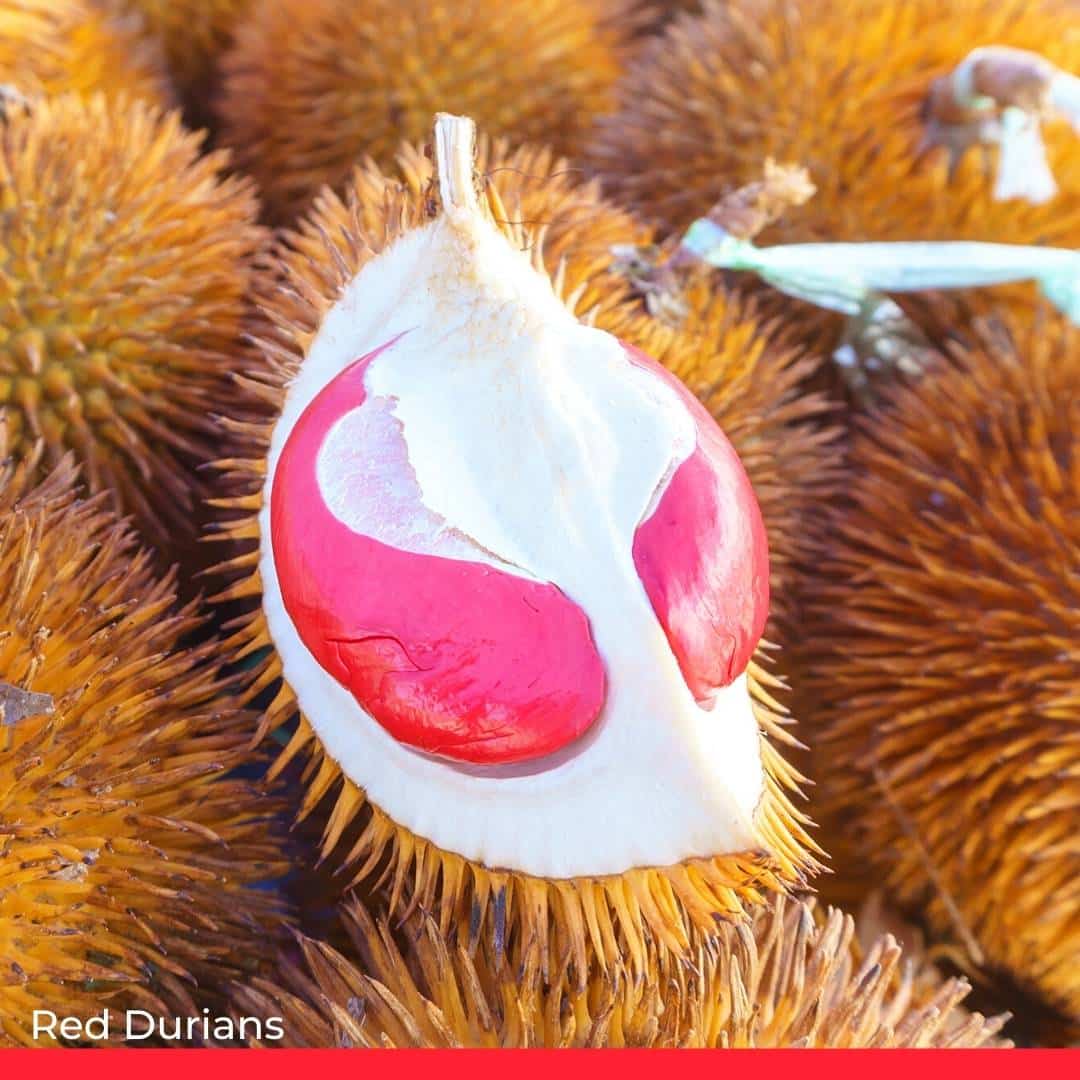
Red durians are, as yet, a rare sight. They can only be harvested once per year. With the high demand and limited supplies, it’s no surprise that not many people have ever seen, let alone tried one.
And they are a sight to see! The outside is pink and covered in spikes. Cut one open, and you’ll notice substantial fleshy crimson segments protected by a thick layer of creamy white flesh. It looks like something out of a horror movie.
The taste? Sadly, red durians aren’t as sweet or creamy as their green counterparts. In fact, some of the 32 varieties offer very little taste or smell. However, their flesh is sometimes fried with onions and chilies, the seeds can be cooked, boiled, or roasted, and you may also find red durian made into chips, drinks, and sweet goods.
20. Saguaro Cactus Fruit

The Saguaro cactus is found in the Sonoran Desert in Arizona, California, and Mexico. It produces beautiful spiky fruits, which, for millennia, were a staple food for the local native American tribes. The fruits continue to be hugely popular in Mexico and Arizona.
The flesh is sweet and juicy, while the edible seeds (as many as 2,000 in each fruit) are nutty.
Saguaro cactus fruit is rich in vitamins C and B12 and is high in fiber.
21. Red Bananas

Imagine the soft, fragrant sweetness of a banana mixed with raspberries, and you have an idea of what red bananas taste like.
Use them in the same ways you’d use regular bananas. They contain vitamins C and B6 and valuable amounts of magnesium and potassium.
22. Red Apples

Red apples are valued for their crisp texture and balanced sweetness, which can range from mildly tart to honeyed depending on the variety. Grown widely across temperate regions—including the U.S., Europe, and China—they are a staple ingredient in many cuisines. Fresh slices add crunch and natural sweetness to salads, slaws, and cheese boards, while cooked apples are popular in baked goods like pies, tarts, and crumbles. In savory dishes, they pair well with pork, poultry, and root vegetables, adding a subtle sweetness and acidity. Apples are also used in juices, ciders, and sauces, where their flavor becomes softer and more rounded when cooked.
23. Elephant Heart Plums
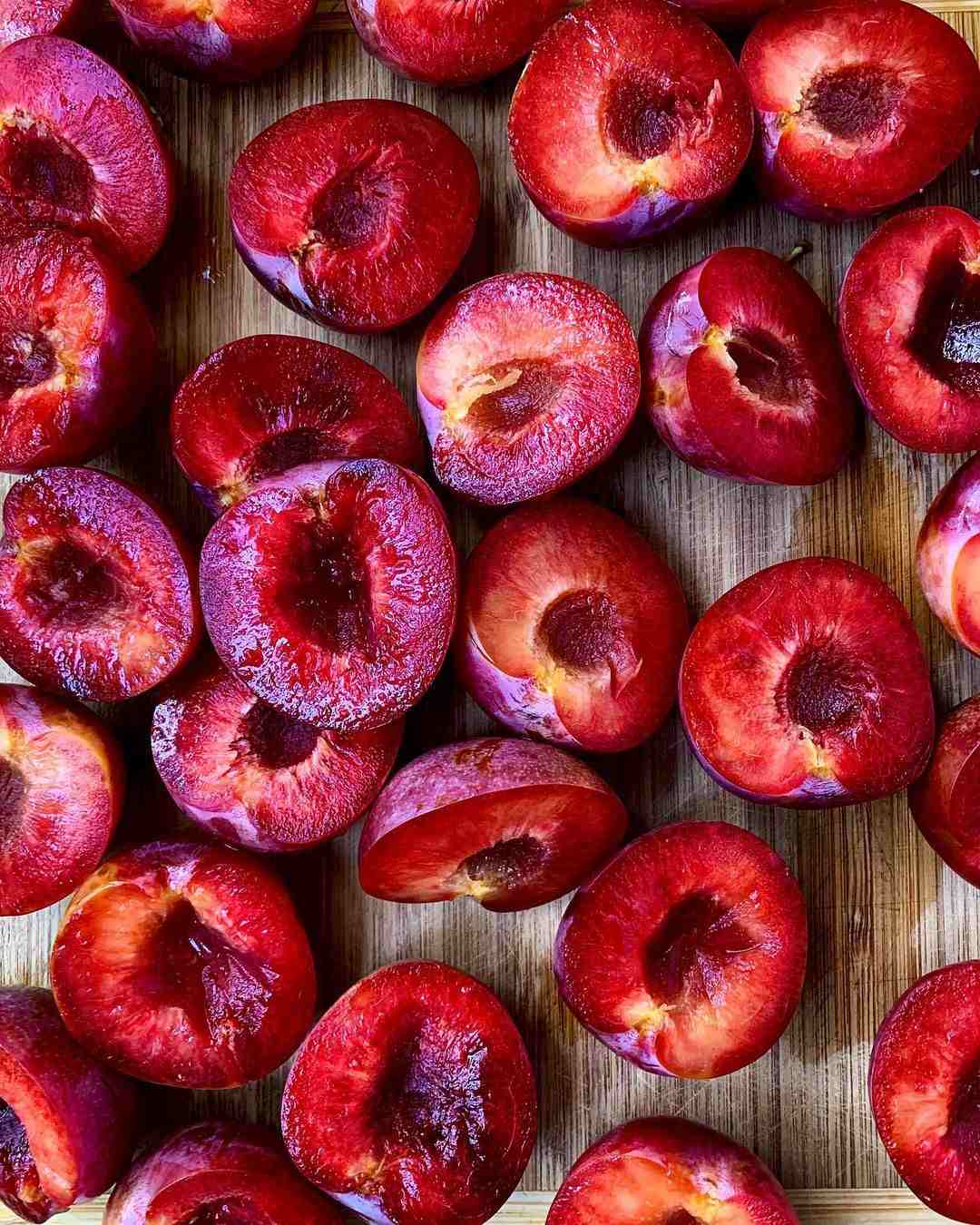
Because it bruises easily, this Japanese plum variety, with its reddish-purple skin and complex flavor, has become somewhat hard to find.
However, these plums are worth looking out for. They develop a wonderful silky texture when heated, so they work well in puddings, pies, and sweet sauces. They also make great pickles. Elephant Heart plums also pair well with ‘sweet’ meats such as pork, roasted lamb, and poultry, and cheeses such as manchego.
They’re rich in vitamins A and K, fiber, copper, potassium, and magnesium.
24. Red Mulberries

Mulberries come in three different colors: red, white and black. Because they’re not easy to transport, you’re most likely to encounter delicate, thin-skinned red mulberries dried or in preserves or syrups. They make suitable substitutes for blackberries but are sweeter, so they need less added sugar.
As a result, they partner well with other berries, stone fruits, and citrus; fresh cheeses; rich meats such as pork, duck, or wild game; and bitter greens such as arugula.
Mulberries provide reasonable amounts of beta-carotene, iron, potassium, manganese, folic acid, and vitamins A, C, K, and B-complex. They also contain resveratrol.
25. Mangoes

To end our list, a bit of a novelty. Miyazaki mangoes, aka ‘Eggs of the Sun’, are named after the Japanese city where they’re produced. They have crimson skin and gorgeous pink-orange-red flesh. Expect to pay at least $50 each. A single mango has even fetched $2,000 at auction making them one of the most expensive fruits out there.
Far too precious to eat as a snack or mix into a fruit salad, they’re typically given as gifts on formal occasions in beautifully designed packaging.
Suppose you’re looking for the experience without the eye-watering price tag. In that case, the good news is that they’re bred from ‘Irwin’ mangoes, which are far more affordable and available in the US.
Related: 25 Naturally Red Foods
Related: 19 Amazing Blue Fruits You Need to Try
Related: 20 Orange Fruits to Add to Your Diet
Related: Discover 20 Tasty Yellow Fruits
Related: 21 Naturally Black Fruits
