
15 Popular Romanian Easter Foods to Try Out This Year

Updated for 2026: refreshed recipes, new photos, and expanded traditional dishes.
Christmas and Easter are the two most important holidays in Romania. This is when families come together, everyone gets to rest, relax and, of course, enjoy delicious foods. Now, everyone has different tastes, and we’re always on the lookout for new and innovative recipes. But there are certain staples that are never missing from the Romanian dinner table during the holidays.
Tradition is very important in Eastern Europe, and Easter in Romania is nothing short of festive. It’s also an important religious holiday, especially in the Orthodox community, which makes up more than 85% of the population.
Christmas and Easter are the two most important holidays in Romania. Much like in Greece, Easter is considered just as important as Christmas—if not more so—and is celebrated on a far larger scale than in most of Western Europe or the United States. This is when families come together, people take time to rest and reconnect, and, of course, enjoy an abundance of traditional foods.
In Romania, Easter is not celebrated on a single date. The majority Orthodox population—over 85% of the country—follows the Orthodox calendar, which often places Easter on a different day than the Catholic and Protestant celebrations observed in Western countries. At the same time, Roman-Catholic, Greek Catholic, and Hungarian and German minority communities (mostly Catholic or Protestant) celebrate Easter according to the Western calendar.
Tradition plays a central role in Romanian culture, and Easter is one of the most deeply rooted and meaningful celebrations of the year. Beyond its festive atmosphere, it remains a profoundly important religious holiday. Easter marks the resurrection of Jesus Christ three days after the crucifixion, and many Romanians observe long-standing customs such as painting eggs on Holy Thursday, attending church services on Good Friday, listening to the rhythmic sounds of the semantron (toaca), and participating in the midnight Easter Mass on Saturday night.
Food is another essential part of the celebration. While beloved dishes like sarmale, zacuscă, and boeuf salad appear on both Christmas and Easter tables, there are also specialties unique to the Easter feast.
Without a doubt, lamb is the centerpiece of the traditional Romanian Easter meal. It is prepared in a variety of ways—from hearty stews and roasts to drob, a traditional lamb offal dish often compared to haggis. However, not everyone enjoys lamb, and many Romanians opt for pork instead, which remains the most widely consumed meat in the country.
Below, we explore some of the most popular Romanian Easter foods. Take a look—you might just find inspiration to try something new this year.
1. Lamb (Steak and/or Stew)

Without a doubt, lamb is the centerpiece of the traditional Romanian Easter meal, and for many, it’s impossible to imagine the holiday without it. Traditionally, especially in the countryside and in smaller towns, families would buy a whole lamb and use every part of it, preparing everything from hearty roasts and stews to soups and drob, a traditional lamb offal dish often compared to haggis.
That said, not everyone enjoys lamb, and many Romanians opt for pork instead, which remains the most widely consumed meat in the country.
As a fun bit of trivia, even among lamb lovers, it’s a meat that’s rarely eaten outside of Easter—making it a truly seasonal and symbolic part of the celebration.
2. Easter Eggs

Egg dyeing is a deeply rooted tradition in Romania, and it’s taken quite seriously. Traditionally, eggs are dyed red on the Thursday before Easter Sunday, symbolizing the blood of Christ.
Beyond this, there are many regional customs and techniques. In the past, people often used onion skins and herbs to create beautiful, natural, chemical-free patterns. In regions like Bucovina, egg decorating is elevated to a true art form, involving intricate designs and a painstakingly delicate process.
These decorated, hard-boiled eggs are displayed on the Easter table, given as gifts to family and friends, and cracked and eaten, usually as a snack or appetizer, throughout the Easter celebrations.
3. Lamb Haggis (Drob de Miel)

Drob de miel is a staple of the Romanian Easter table, often compared to haggis. It’s made with lamb offal (lungs, heart, kidneys, spleen, and liver) mixed with green onions, fresh herbs, eggs, and bread soaked in milk or water.
Rich, flavorful, and deeply traditional, drob is typically served warm, either as part of the Easter breakfast or as an appetizer for lunch and dinner.
4. Pască or Paska

Another staple of the Romanian Easter table, pască (known as paska in other parts of Central and Eastern Europe) is the dessert of choice across much of the country, particularly in Moldavia and southern regions, and somewhat less so in Transylvania.
This rich, festive cake is typically made with sweet cheese, eggs, cream, and raisins, although modern variations may include chocolate or cocoa. Baked until soft, fluffy, and slightly creamy in the center, pască is traditionally decorated with a cross or other religious motifs, reflecting the spiritual significance of Easter.
5. Cozonac

Another sweet staple of the holidays, whether Christmas or Easter, cozonac is a popular and deliciously rich sponge cake filled with walnuts, cocoa, or Turkish delight.
It’s a welcome treat after a hearty meal of eggs and lamb, and pairs wonderfully with a glass of milk, coffee, tea, or hot cocoa.
6. Lamb Soup

As mentioned earlier, many Romanian families buy whole lambs for Easter, making use of every part—so you can expect a wide variety of lamb dishes on the table.
Lamb soup is one of the most popular, typically prepared with fresh spring herbs and greens such as sorrel.
7. Sarmale (Cabbage Rolls)
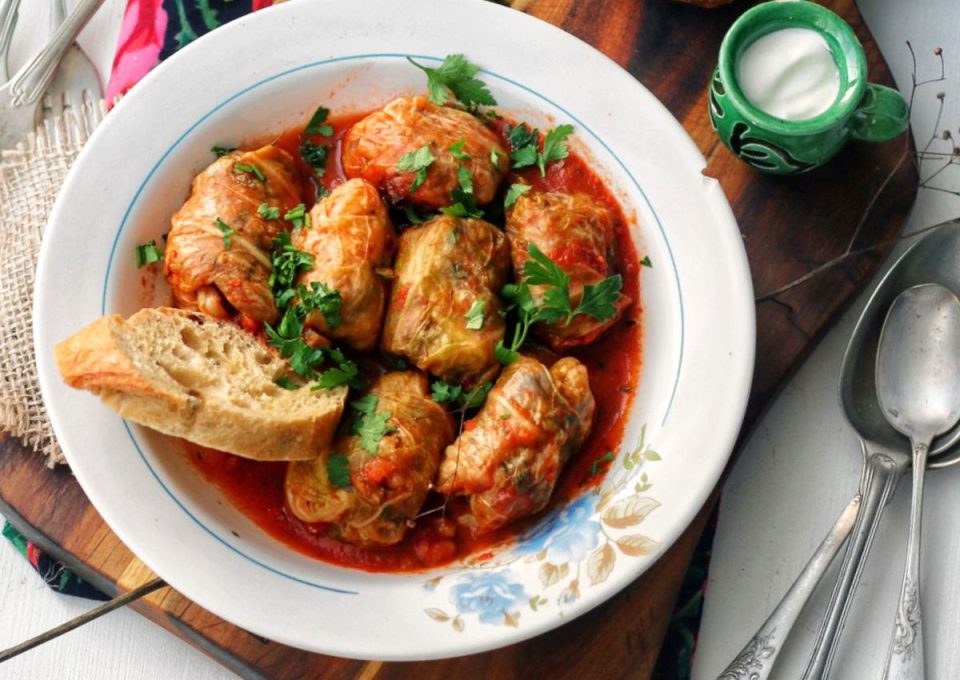
Those who don’t enjoy lamb often turn to pork, and sarmale are always a popular choice. One of the most beloved and iconic Romanian dishes, sarmale (cabbage rolls) are enjoyed year-round, but especially during Easter and Christmas. They are made from pickled cabbage leaves filled with a mixture of ground pork, rice, onions, parsley, and dill, all seasoned simply with salt and pepper.
There’s also a popular vegetarian (or fasting) version made with mushrooms instead of meat, which is just as flavorful. For the full experience, sarmale are best served with a generous spoonful of sour cream.
8. Deviled Eggs (Ouă umplute)

A popular holiday appetizer, deviled eggs are a staple on many Romanian Easter tables, especially for those who aren’t fans of hard-boiled red eggs. There are countless variations when it comes to the filling, with each family having its own preferred recipe.
A classic version includes mustard, mayonnaise, liver pâté, vinegar, salt, and pepper, finished with a sprinkle of paprika on top. But fillings can vary widely, with additions such as bacon or other ingredients depending on taste.
9. Boeuf Salad

Ahh, nothing says a traditional Romanian holiday meal quite like a generous serving of boeuf salad. A staple of Romanian cuisine, it’s enjoyed during both Easter and Christmas and once you start, it’s hard to stop.
Despite its name suggesting the use of beef, many people today prepare it with chicken instead. It’s essentially an elevated potato salad, made with peas, pickles, potatoes, carrots, tender meat, and plenty of mayonnaise.
Boeuf salad is typically served as an appetizer, often alongside drob de miel on the Easter table. Spread on a slice of bread, it makes for a satisfying bite—whether as a starter, a snack, or even a light meal at any time of day.
10. Chicken Soup

Soup is a must on the Romanian Easter table, and for those who don’t enjoy lamb, there are plenty of delicious alternatives. Popular choices include supă de găluște (dumpling soup), supă de tăiței (noodle soup), and ciorbă rădăuțeană, a rich and flavorful chicken soup.
11. Cakes (Prăjituri)

No Romanian Easter is complete without a very impressive selection of homemade cakes, known as prăjituri, usually baked alongside cozonac. These are often sheet cakes, cut into small squares and arranged beautifully on platters for guests.
From classics like Albinița (honey cake) and “Snow White” cake to other honey-based layered desserts and tender cornulețe filled with jam or nuts, the variety is endless. Every family seems to have its own favorites, and no matter how full you are, there’s always room for “just one more” slice.
12. Lichiu

Here’s yet another delicious dessert to feature on your Easter cooking list this year, inspired by Saxon traditions of old – Romanians of Transylvanian Saxon descent still love this recipe today. It’s called Henklesh, hencleș, or lichiu, depending on where you’re from.
It’s a simple dessert recipe featuring a bread base, topped with a creamy mixture and baked in a wood-fired oven. The recipe has evolved over the decades, and now you can find lichiu filled with rhubarb, cream cheese and vanilla, or nuts and raisins.
13. Meatball Soup (Ciorbă de Perișoare)

We’ll close our round-up with yet another soup—because Romanians simply love soup, and no festive table feels complete without it. Ciorbă de perișoare, a flavorful meatball soup, is a true classic enjoyed throughout the year, including during Easter celebrations.
Related: 27 Famous Romanian Desserts
Related: Zacuscă: Romanian Roasted Vegetable Spread
Related: Mămăligă (Romanian Polenta)
Related: Papanași: Romanian Fried Donuts
Related: Romanian Eggplant Salad (w/ Mayonnaise)
