
Gâteau Magique (French Magic Cake)
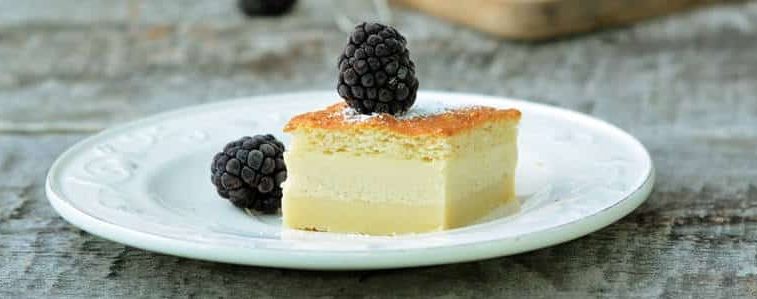
Gâteau Magique literally translated to magic cake is a delicious French cake that is quite easy to make. It begins with a classic mixture of butter, milk, eggs, and flour. But the beauty of this cake is that there’s a magic that happens as it bakes – which is probably where the name comes from.
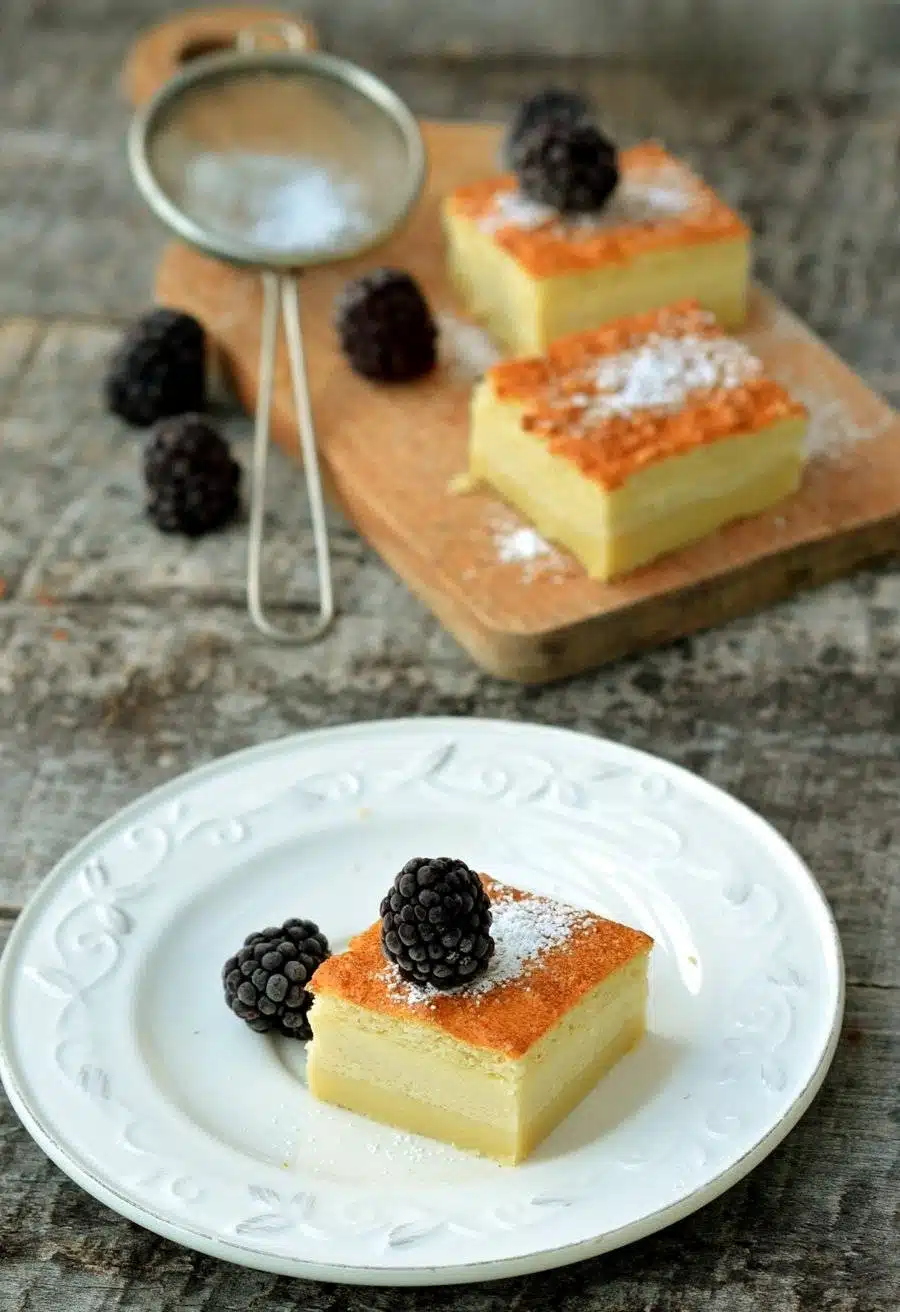
The classic smooth composition transforms and separates, becoming a wonderful cake with three different layers: a shortbread, an airy custard, and a dense custard. Add the magical noisette butter, and it becomes an envy-inducing cake that will center stage on the holiday table.
Noisette butter is nothing more than clarified butter, browned just enough to turn it a golden color. It gives the cake extra color and a wonderful caramel taste, which is enhanced by the brown sugar. Add a hint of vanilla extract and the flavor is unleashed. A wonderful texture and a magical cake!
There is also chocolate-version of this delicious cake. You can find the chocolate magic cake recipe here.
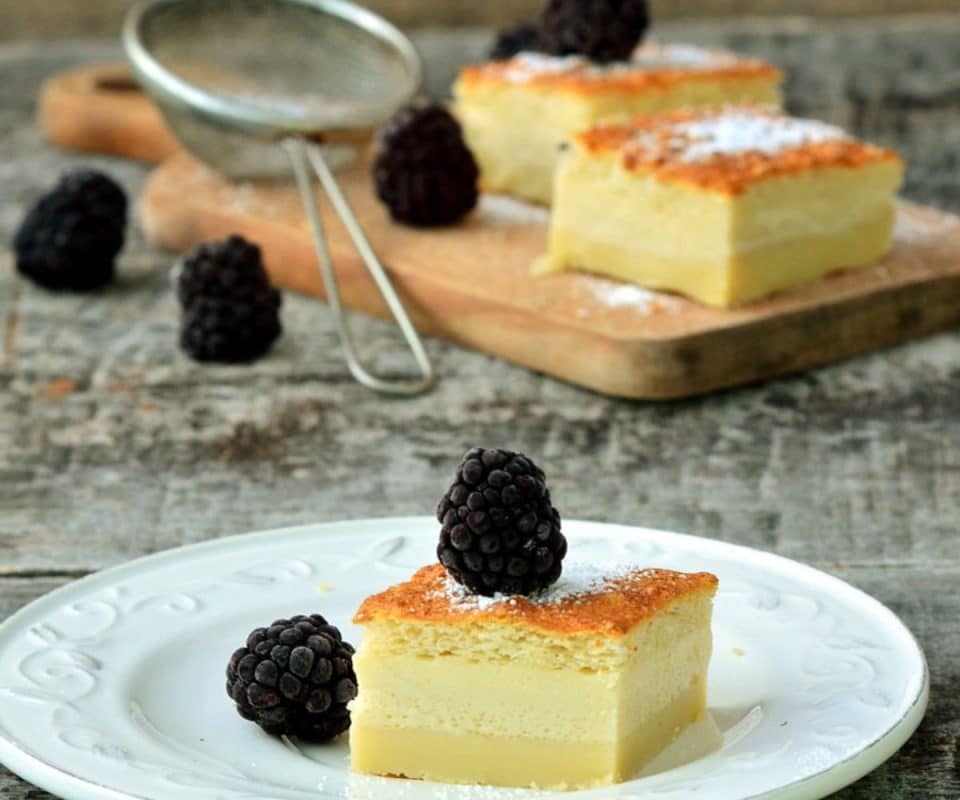
Enjoy the full recipe for the French magic cake below!
Gâteau Magique (French Magic Cake)

Ingredients
Ingredients
- 4 large eggs
- a pinch of salt
- 1 tsp vanilla extract
- 125 g brown sugar
- 125 g butter
- 120 g all-purpose flour (plain flour)
- 500 ml milk
- blackberries (optional)
Instructions
- Melt the butter over a low heat. Once at the boil, leave for 5-10 minutes until it turns golden brown, with the brown residue visible on the bottom of the pan. Turn off the heat and strain the butter through a thin sieve. Leave to cool.
- Mix the egg yolks with the sugar. They should triple in volume, at least. Add the flour and the melted butter and mix gently.
- Gently warm the milk with the vanilla extract until just lukewarm (do not boil!) and gradually add it to the mixture, mixing continuously. The consistency will be fairly thin.
- Whisk the egg whites with a pinch of salt until they become stiff. Add to the mixture with a spatula mixing gently. Do not overmix, even if the mixture is not fully smooth.
- Preheat the oven to 160 °C (320 °F). Butter a 24/24cm (9.5/9.5 inch) non-stick baking tray. Pour the mixture into the tray. Bake for 45-50 minutes, until a nice golden brown.
- Leave the cake to cool in the tray for 1-2 hours and then slice it into delicious cubes. Sprinkle with powdered sugar and serve.
Enjoy!
Notes
For more delicious French delights, check out our story on the best French desserts.
Related: Fraisier Cake (French Strawberry Cake)
Related: Opera Cake (Gâteau Opéra)
Related: Quatre Quarts: French Pound Cake

Can you use coconut milk?
Hi Laura,
You can replace the 500 ml of regular milk with the same amount of unsweetened coconut milk from a carton. This will give the cake a subtle coconut flavor, although the texture and separation of the three layers may differ slightly. Avoid using full-fat canned coconut milk, as its higher fat content can affect the cake’s delicate structure.
Best,
Chef’s Pencil Team
What type of flour would be ideal?
Hi Jay,
All-purpose flour (i.e. plain flour) is the best choice for this recipe. It has the right protein content to create the cake’s signature three layers—a dense base, creamy custard center, and light sponge top. Bread flour contains too much protein and can make the cake chewy, while cake flour may not provide enough structure. If you’re in the UK or Australia, use plain flour; in the US, standard all-purpose flour works perfectly.
Best, Chef’s Pencil Team
Unfortunately, my cake was only two layers. The top was great but the two bottom layers merged into one. Perhaps I over-mixed it? Thoughts?
Hi Kris,
That’s one of the most common magic cake challenges, so you’re definitely not alone!
It can happen for a few different reasons, so it’s hard to pinpoint one without seeing the batter. Overmixing after folding in the egg whites is one possibility, as it can prevent the batter from separating properly during baking. On the other hand, if the egg whites weren’t incorporated evenly enough or the batter wasn’t completely smooth before they were added, that can also affect the final layers.
Oven temperature can play a role too. If the cake sets too quickly, the layers don’t have enough time to separate fully. An oven thermometer can be helpful if you suspect your oven runs hot.
One tip that often helps is to fold the egg whites in very gently and don’t worry about incorporating them completely. It’s perfectly fine (and even desirable) to leave a few small lumps or streaks of egg white in the batter. They disappear during baking and help the cake develop its characteristic three layers.
Since your top layer turned out well, you’re very close! I hope you’ll give it another try.
Best, Chef’s Pencil Team
Does it need to be whole milk? What about 2% or low fat? Thanks!
Hi Micha,
Great question! Whole milk is recommended because the higher fat content helps create the dessert’s signature three distinct layers during baking. You can use 2% milk if that’s what you have on hand, but the texture may be slightly less rich and the layers may not separate as cleanly. We wouldn’t recommend low-fat or skim milk, as they can affect the final structure and creaminess. Hope you give it a try!
Best,
Chef’s Pencil Team
Should the milk come to a froth or what? Heat the Milk up isn’t useful direction.
Hi Kaiten,
Just heat it until it’s warm to the touch (around body temperature or slightly above). It should feel warm if you dip a finger in, but not hot. This helps it incorporate smoothly into the batter without cooking the eggs.
Best, Chef’s Pencil Team