
Caviar Is Getting Cheaper. Here’s Where We Found the Lowest Prices
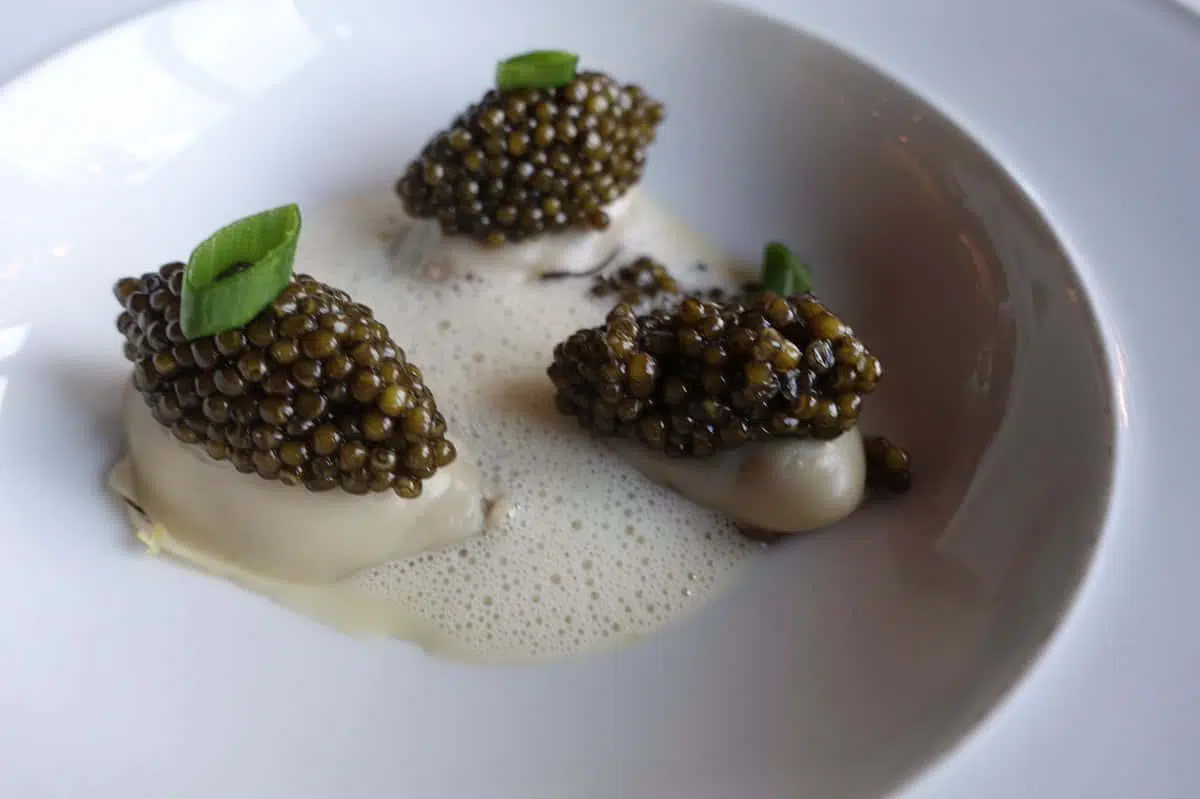
When a clothing and home-goods retailer starts selling caviar at relatively affordable prices, you know something is changing in the luxury-food aisle.
Quince, the direct-to-consumer brand better known for cashmere sweaters, linen sheets, and silk dresses, currently lists a 100-gram tin of Royal Osetra caviar for $125. Buy two or more tins and the price drops to $100 each. The company says its Osetra is farmed in China’s Thousand Island Lake and comes from Acipenser gueldenstaedtii, the sturgeon traditionally associated with Osetra.
And this is not a flash sale sparked by a sudden caviar craze. Quince has been selling the same 100-gram tin for $125 for months, and customers seem to be impressed: it has nearly 1,500 reviews with an average rating of 4.9 out of 5 stars. Independent reviewers have been positive, too. Eater described the roe as more buttery-briny than nutty and gave it an 8/10 rating.
Quince is hardly alone. Imperia Caviar’s Caviar Club currently offers 100 grams of Kaluga Hybrid Reserve for $100, along with 100 grams of Royal Ossetra at the same $1-per-gram price. Loft, a Los Angeles-based caviar retailer, currently sells a 125-gram tin of Ossetra Reserve Caviar for $138.
Caviar is still not cheap in the ordinary sense of the word. But at roughly $1 to $1.25 per gram, these offers occupy very different territory from the almost ceremonial luxury product many diners grew up imagining. Compare them with more traditional luxury retailers such as Caviar Russe, where a 125-gram tin of Classic Ossetra sells for $495, or The Caviar Co., where a similarly sized tin of Hybrid Kaluga Caviar is priced at $428.
From Champagne Luxury to Weeknight Indulgence
For decades, caviar came with a fairly rigid set of associations: Champagne, white-tablecloth dining, silver service, mother-of-pearl spoons, and some of the most expensive restaurant meals in the world. When Chef’s Pencil looked at the world’s most expensive caviars in 2022, even the more accessible products on the list were priced in the thousands of dollars per kilogram.
The same image carried over into fine dining. Some of the priciest Michelin-starred tasting menus in the U.S. and Europe have been explicitly caviar-centric: Chef’s Pencil’s 2024 ranking, for example, placed New York’s Caviar Russe among the world’s most expensive Michelin restaurants with a $975, 11-course caviar-focused tasting menu, while an earlier European ranking highlighted Amsterdam’s Ciel Bleu and its €595 premium caviar tasting menu.
That image has been loosening for years. Caviar is still a luxury, but it is increasingly being sold (and eaten) in a much more casual way.
Caviar has appeared on fried chicken, potato chips, hot dogs, burgers, and even chicken nuggets. Social media has encouraged diners to treat it less reverently, while a new generation of direct-to-consumer companies has adopted the visual language of lifestyle brands rather than old-school luxury houses.
That change is as much about permission as price. Once a 100-gram tin costs around $100, buyers can be somewhat more generous with it. A spoonful on a potato chip suddenly feels less transgressive than when every pearl seems to carry the price of a tasting-menu supplement.
The Caviar Business Has Changed, Too
There is also a supply story behind the changing price of caviar.
True caviar is the salted roe of sturgeon, an ancient family of fish whose origins stretch back to the age of the dinosaurs. Different caviars, such as Osetra, Kaluga, and Beluga, generally come from different sturgeon species, each producing roe with its own size, texture, and flavor profile.
Caviar, like other luxury foods, has not always been the ultra-expensive delicacy we know today. In 19th-century America, it was abundant enough to be handed out as a bar snack. However, the early 1900s marked a turning point for American sturgeon populations, as they faced endangerment due to overfishing and the negative impacts of the industrial revolution. The construction of industrial infrastructure, such as dams and blockages, disrupted traditional spawning routes and further contributed to sturgeon’s decline. Additionally, rivers became polluted with industrial waste, exacerbating the challenges faced by these magnificent fish.
Caviar prices fell after the collapse of the Soviet Union in the 1990s, when large quantities of Caspian Sea caviar entered the market. But intense fishing pressure quickly depleted wild sturgeon populations, eventually leading to restrictions and bans on much of the wild-caught trade.
The industry that emerged looks very different. Today, the vast majority of caviar sold in the U.S. (and around the world) comes from farmed sturgeon. Farming does not make caviar quick or inexpensive to produce as sturgeons (farmed or wild) take many years to mature and produce eggs, but the expansion of aquaculture has significantly increased supply.
China has become particularly important. Over the past decade, large numbers of farmed sturgeon there have reached maturity, bringing considerably more caviar to market. Quince, for example, openly states that its Royal Osetra is sustainably farmed in Thousand Island Lake, China, from sturgeon originating from the Caspian region.
Where Can You Buy the Most Affordable Caviar Now?
A quick comparison of current online prices shows just how wide the market has become. Among the retailers we checked, Imperia’s Caviar Club currently offers the lowest price, with both Kaluga Hybrid and Royal Ossetra priced at $1 per gram. Loft Caviar comes surprisingly close, while Quince remains one of the more affordable options for a 100-gram tin.
Price per gram is calculated using the larger tin shown. Prices checked in September 2026 and may change.
The difference is substantial. A 100-gram tin from Imperia’s Caviar Club costs $100, while the same quantity of Royal Osetra from Stur Caviar is $225. Loft’s 125-gram Ossetra Reserve, at $138, works out to only about $1.10 per gram, making it another particularly aggressive offer.
Quince sits somewhere in between. Its 100-gram Royal Osetra costs $125, or $1.25 per gram—still dramatically below many traditional luxury-caviar prices and, importantly, not just a temporary bargain-bin offer. The product has also built a substantial customer following and received a positive independent review from Eater.
Cavi illustrates how much pricing can still vary even among newer direct-to-consumer brands. Its 125-gram Kaluga Hybrid costs $259, more than twice the per-gram price of Imperia’s club offering.
None of this means the products are directly interchangeable. Species, farm, grading, pearl size, salinity, processing, freshness, and brand positioning can all affect both price and eating quality. But the comparison does show that shoppers can now find genuine sturgeon caviar from roughly $1 per gram, a price point that would have seemed much less common only a few years ago.
So when a surprisingly inexpensive tin appears online, the explanation is not necessarily that it is inferior. The retailer, sourcing arrangement, membership model, and margin structure can matter almost as much as the type of caviar inside the tin.
But Is the Cheaper Stuff Any Good?
This is where the story gets more interesting. The answer appears to be: most of the times, absolutely.
Eater’s Francky Knapp tried Quince’s Royal Osetra months before the latest wave of attention and rated it 8/10. She found it buttery and briny, enjoyed it with eggs and avocado, and particularly liked it on olive-oil-fried potato chips.
The Wall Street Journal conducted its own informal tasting of several direct-to-consumer brands. Not everything impressed: some samples were judged too oceanic or aggressively briny. But its tasters responded positively to caviar from Cavi, Roe House, and Quince.
That is probably the most useful takeaway for consumers. There is no simple equation in which expensive always means excellent and inexpensive always means inferior. There are differences between species, farms, grading, egg size, firmness, salinity, processing, freshness, and storage. Two tins labeled “Osetra” can deliver very different experiences. And branding can muddy the comparison further.
What Should Good Caviar Taste Like?
Good caviar should taste clean, fresh, and pleasantly briny, not aggressively fishy. The pearls should be intact and separate, with a gentle pop when you press them against the palate. Depending on the variety, the flavor can lean buttery, nutty, creamy, mineral, or more distinctly oceanic.
Texture matters almost as much as flavor. Mushy roe is a bad sign, while firm, glossy pearls that hold their shape tend to give a better eating experience.
How to Serve Caviar
The simplest approach is often the best. Chef’s Pencil’s guide to serving caviar recommends keeping the tin well chilled and serving it over crushed ice, ideally straight from its original container. Caviar should be spooned gently rather than stirred or spread so the delicate pearls remain intact.
A mother-of-pearl spoon is the traditional choice, partly because reactive metals such as silver, copper, or brass can interfere with the flavor. If you want to keep things classic, serve caviar with warm blinis and a little sour cream, or alongside lightly toasted bread. Chilled Champagne, brut sparkling wine, dry white wine, or ice-cold vodka are traditional pairings.
It also works beautifully on small warm potatoes with sour cream, or as a finishing garnish for chilled soups such as vichyssoise. The main rule is restraint: caviar’s delicate flavor can easily be overwhelmed by too much lemon, raw onion, or other assertive condiments.
And while caviar is increasingly being paired with everything from potato chips to fried chicken, avoid cooking it directly. Heat quickly dulls its flavor, so add it at the very end as a garnish or fold it gently into a finished sauce just before serving.
A Couple of Chef’s Pencil Recipes to Try
For a more ambitious preparation, Michelin-starred chef Gabriel Kreuther’s Sturgeon & Sauerkraut Tart Topped with Sturgeon Caviar combines hot-smoked sturgeon, sauerkraut, sabayon, and white sturgeon caviar in a crisp phyllo tart. The caviar is added only at the end, preserving its texture and flavor.
For something lighter, you could also try Star Anise Marinated Salmon with Flying Fish Roe & Cucumber Jelly, where the roe is used as a finishing element alongside marinated salmon, cucumber jelly, and ginger.
Caviar may be getting cheaper and more casual, but the best way to enjoy it hasn’t changed much: keep it cold, treat the pearls gently, and let their flavor do most of the work. Whether you eat it from a mother-of-pearl spoon, pile it onto a blini, or spoon it over a potato chip, the point is no longer to save every tin for a once-a-year occasion.
