
Chef of the Week: Chef Jean-Philippe Blondet of Alain Ducasse at The Dorchester
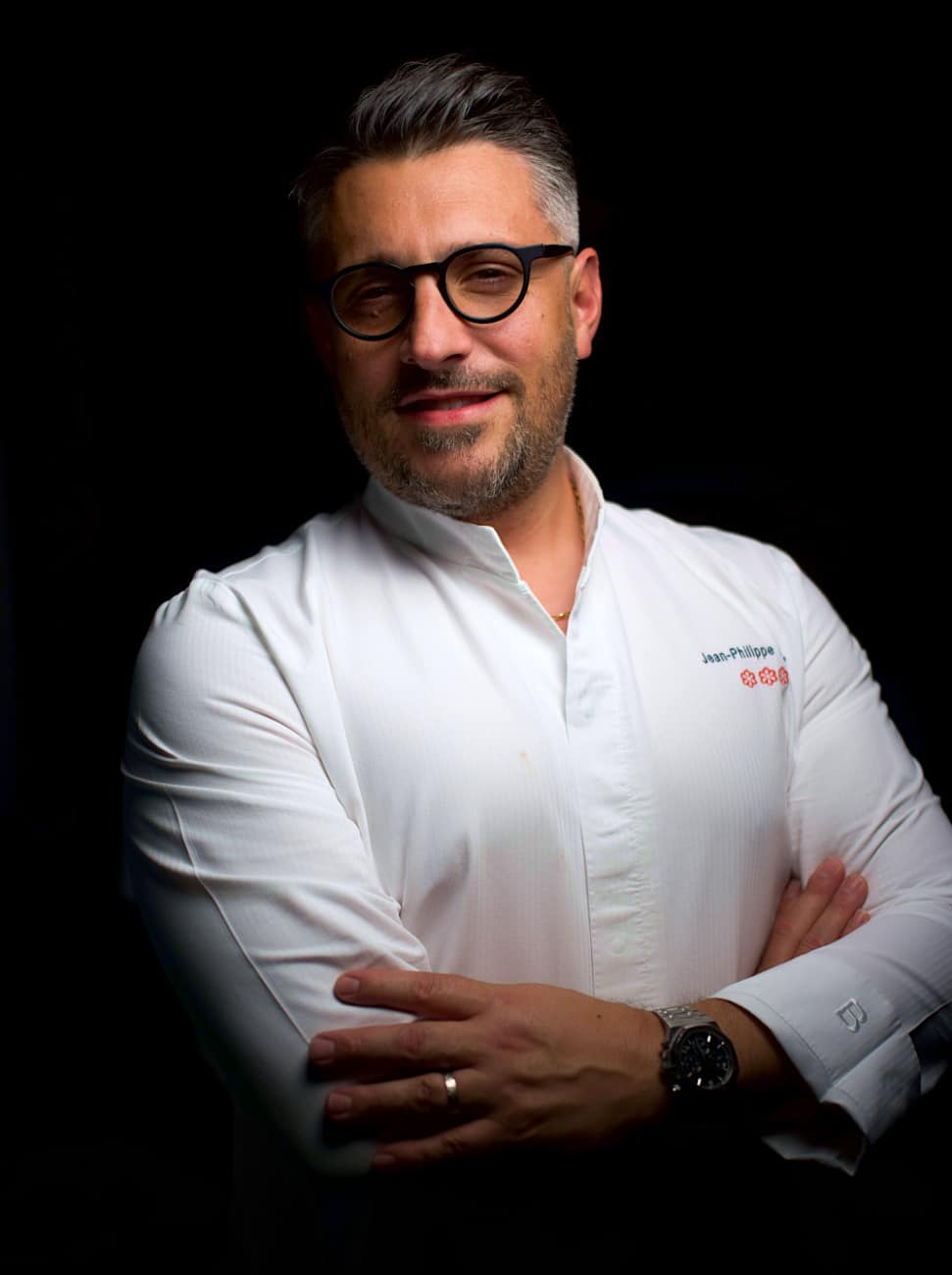
Few chefs embody the elegance and precision of modern French haute cuisine quite like Jean-Philippe Blondet. As Chef Patron of Alain Ducasse at The Dorchester, one of London’s most celebrated three-Michelin-starred restaurants, Blondet has spent nearly two decades refining his craft within the Alain Ducasse universe while gradually developing a creative voice distinctly his own.
Originally from the South of France, Blondet brings together the discipline and philosophy of the Ducasse school with a lighter, ingredient-driven approach centered around seasonality, vegetables, seafood, and precision.
In this edition of Chef of the Week, he speaks about modern French cuisine, leading one of the world’s elite kitchens, the evolving tastes of London diners, and the importance of restraint, simplicity, and strong culinary foundations.
1. You’ve worked with Alain Ducasse for nearly two decades. How do you balance the distinct “Ducasse DNA” with your own creative voice as Chef Patron at The Dorchester?
The Ducasse DNA is a fundamental part of who I am as a chef, it underpins my approach, from discipline and precision to a deep respect for product and seasonality. That foundation provides structure, but also allows for freedom in my own way of cooking.
My role is to honour those principles while letting my own voice come through.
As Chef Patron at Alain Ducasse at The Dorchester, my role is to honour those principles while letting my own voice come through. I express that through instinct, emotion and creativity, cooking that feels fluid rather than fixed. While the philosophy remains constant, each dish reflects my experiences, memories, and how I feel in that moment.
2. The Ducasse philosophy focuses heavily on Cuisine Naturalité (fish, vegetables, and cereals). How do you translate that quintessentially French, earth-focused ethos for a London palate?
Cuisine Naturalité isn’t about imposing a French identity, but about respecting ingredients in their purest form. In London, that means working with exceptional British produce, vegetables, grains and sustainable fish, and elevating them with precision. It becomes less about tradition and more about dialogue, staying true to Alain Ducasse’s philosophy while reflecting the diversity and openness of the London palate.
3. Holding three Michelin stars is a relentless pursuit of perfection. How do you ensure your team approaches the 1,000th plate with the same precision and care as the first?

For me, it comes back to fundamentals, clear communication, presence in the kitchen, and respect for the process. Every member of the team understands that each plate leaving the pass matters equally, whether it’s the first service of the season or the thousandth.
We have an incredible team, including Restaurant Director, Marion Pepin, who ensures that service is always of the highest quality, alongside a strong kitchen team, including Stéphane Petit, with whom I work closely to ensure that everything leaving the kitchen is perfect.
Success lies in creating an environment where everyone feels a sense of ownership over the guest experience, when the team is grounded in purpose and pride, everything else follows.
4. If you had to choose one humble British ingredient that has completely surprised you with its quality since moving to London, what would it be?
One ingredient that has truly surprised me is the quality of British shellfish, particularly hand-dived scallops. The taste and quality are exceptional, requiring very little intervention to shine which aligns perfectly with the philosophy of letting the ingredient speak for itself.
It’s something I highlight in one of my favourite dishes, the hand-dived scallops with beurre blanc and caviar. It’s a simple dish, but one that relies entirely on the quality of the ingredient and the precision of its execution.
5. We are moving into a new season. What is one dish on the current menu that best captures this seasonal transition?
One dish that really captures this moment of transition is the appetiser we have on the menu at the moment: green asparagus and spelt from Provence, morel with Arbois wine. Asparagus is such a fleeting ingredient, and at its peak has a natural sweetness that defines the season. We treat it with great respect, keeping the preparation restrained so that the ingredient remains at the centre of the dish.
It’s a way of marking the arrival of spring on the menu, light, vibrant, and focused entirely on the product at its best.
6. If sauce is the “soul” of French cuisine, what defines a modern jus that feels refined and contemporary rather than heavy?
For me, a modern jus is about purity and precision. It should be light, almost transparent, with nothing excessive, just a true expression of the main ingredient. It’s less about richness and more about balance and digestibility, allowing the sauce to support and enhance the product rather than mask it.

7. Your plating is famously architectural and precise. When does a dish have “too much” on the plate? How do you know when to stop?
For me, a dish has too much on the plate the moment it loses clarity. Every element must have a purpose, if something doesn’t bring flavour, texture, or balance, then it doesn’t need to be there. It’s ultimately about restraint; knowing when to stop comes from respecting the main ingredient and allowing it the space to express itself.
8. You’ve cooked in the most elite kitchens in the world. What is the one thing a London diner demands that a Parisian or Monégasque diner does not?
London diners are highly receptive to new ideas, lighter styles of cooking, and more vegetable-led dishes.
I think London diners have a level of openness and curiosity that is quite unique. They are highly receptive to new ideas, lighter styles of cooking, and more vegetable-led dishes, whereas in other cities there can be a stronger attachment to tradition. In London, there’s an expectation to evolve, to be creative and to reflect the diversity of the city – making it an incredibly exciting place to cook.
9. What is the one piece of advice you give to a young commis entering your kitchen who dreams of one day becoming a Chef Patron?
The advice I always give is to take the time to build strong foundations. It’s important not to rush the journey or try to reach the finish line too quickly. Each stage exists for a reason, and mastering the basics takes time and patience. Before you can grow, you must strengthen your roots. A deep understanding of fundamentals, along with discipline and consistency, will support everything that comes later. With solid foundations in place, progression happens naturally.

10. Looking back at your journey, what moment or milestone has been most defining in your career so far?
Becoming Chef Patron at Alain Ducasse at The Dorchester was certainly a big moment in my career. It marked years of dedication, learning and growth within the Ducasse group, as well as the trust placed in me to lead such an incredible restaurant.
It was not only a professional achievement, but also a moment of real personal responsibility, one that continues to shape how I cook, lead my team, and approach each day in the kitchen. It is a role I take great pride in, and one that continues to motivate me to evolve.
11. What is something diners might not fully appreciate about the experience at Alain Ducasse at The Dorchester?
Something diners may not always see is the level of detail and teamwork behind the experience. From the sourcing of ingredients to the precision in the kitchen and the coordination with the dining room, every element is carefully considered.
The intention is that nothing ever feels overworked or complicated, it should feel seamless, even though there is an enormous amount of thought behind it.
12. Outside of your own cuisine, what inspires you most at the moment – whether it’s a place, ingredient, or culinary movement?
I’m always inspired by the natural rhythm of the seasons, particularly the diversity and potential of vegetables. There is something very exciting about working with an ingredient at its absolute peak and finding different ways to express it with precision and simplicity. It’s less about a specific trend, and more about a movement towards a more plant-led, respectful way of cooking.

13. For home cooks looking to elevate their everyday cooking, what is one technique or principle that can make the biggest difference?
Cooking is often about restraint, knowing when to stop and allowing each ingredient to express itself at its peak.
For me, the biggest difference comes from understanding timing and seasoning. Cooking is often about restraint, knowing when to stop and allowing each ingredient to express itself at its peak. If you focus on that, rather than complexity, even the simplest dish can be elevated.
14. If you could travel anywhere for just one meal, where would you go?
If I could travel anywhere for just one meal, I would go to the South of France. It’s where I grew up, and it remains deeply connected to my memories and my identity as a chef. I know the region extremely well having grown up visiting the markets with my family, including the best spots for the freshest local produce.
Chef Jean-Philippe Blondet | Linkedin | Instagram
Alain Ducasse at The Dorchester
The Dorchester, 53 Park Ln, London W1K 1QA, United Kingdom
