
Chef of the Week: Þráinn Freyr Vigfússon, ÓX, Iceland

At ÓX, one of Reykjavík’s most acclaimed fine-dining restaurants, the experience is as much about personal connections as it is about the food. Just 17 guests gather around the kitchen counter, watching the chefs prepare each dish and hearing the stories behind the ingredients. The intimate concept was inspired by chef-owner Þráinn Freyr Vigfússon’s time cooking at a fishing lodge in the Icelandic Highlands, where sharing meals and getting to know his guests sparked the idea for a very different kind of restaurant.
Þráinn’s culinary journey began at just 14, washing dishes at his father’s hotel in northern Iceland. He went on to work in some of the country’s leading kitchens, represent Iceland at the prestigious Bocuse d’Or competition in 2011, and establish ÓX as one of Iceland’s most distinctive dining destinations. The restaurant earned its first Michelin star in 2022, followed by a Michelin Green Star in 2025. His cooking draws deeply on Icelandic traditions and seasonal ingredients, reimagining everything from smoked lamb to sheep’s head through contemporary techniques.
Beyond ÓX, Þráinn is also behind Sümac, a restaurant inspired by Middle Eastern and North African flavors, and Amma Don, an intimate speakeasy cocktail bar.
For this week’s Chef of the Week, we spoke with Þráinn about preserving Iceland’s culinary heritage, the importance of genuine hospitality, his approach to sustainability, and the challenges of running a small Michelin-starred restaurant. He also shares his thoughts on Iceland’s evolving food scene and why mastering the basics remains one of the most important lessons for any cook.
1. You grew up in Sauðárkrókur, in northern Iceland, and began working in your father’s hotel kitchen at just 14, washing dishes. What are your earliest food memories, and when did you realize that cooking could become your life’s work?
My first food memory is the lunchbox at kindergarten. I still remember the smell and how much I looked forward to it every day. As a kid, I always said I wanted to be a chef like my mom, but I wasn’t really doing much cooking or helping her in the kitchen.
It was only when I started working at the summer hotel that I realised this was something I wanted to do. The action in the kitchen felt exciting right away.
2. Before opening your own restaurants, you worked in some of Iceland’s leading kitchens and represented your country at the prestigious Bocuse d’Or competition in 2011. Which experiences shaped you most as a chef, and what did competing at such a high level teach you about cooking and working under pressure?
A lot of chefs have shaped me, including Bjarni at Grillið at Hotel Saga and Leifur at Kolabrautin (La Primavera).
Competitions are also a great way to learn and try out your ideas about food. You learn how to organise, plan everything through, and work under pressure. Execution is also incredibly important, both in competitions and in restaurants.
3. ÓX is unlike most fine-dining restaurants, with just 17 seats, a hidden entrance, and a dining experience built around personal interaction. What inspired the original concept, and what did you want to create that you felt was missing from Reykjavík’s restaurant scene?
I wanted to create a restaurant that was different from others in Iceland, with more intimacy and a homely atmosphere. The idea came to me while I was cooking at a fishing lodge in the Icelandic Highlands. I was cooking for the fishermen around the clock, spending almost all my time with them. We really got to know each other.
What I loved most was the immediate connection. I could see their reactions to the food right away, understand what they liked and what they didn’t, and get a real sense of what made them happy. It was personal, honest, and something that stayed with me.
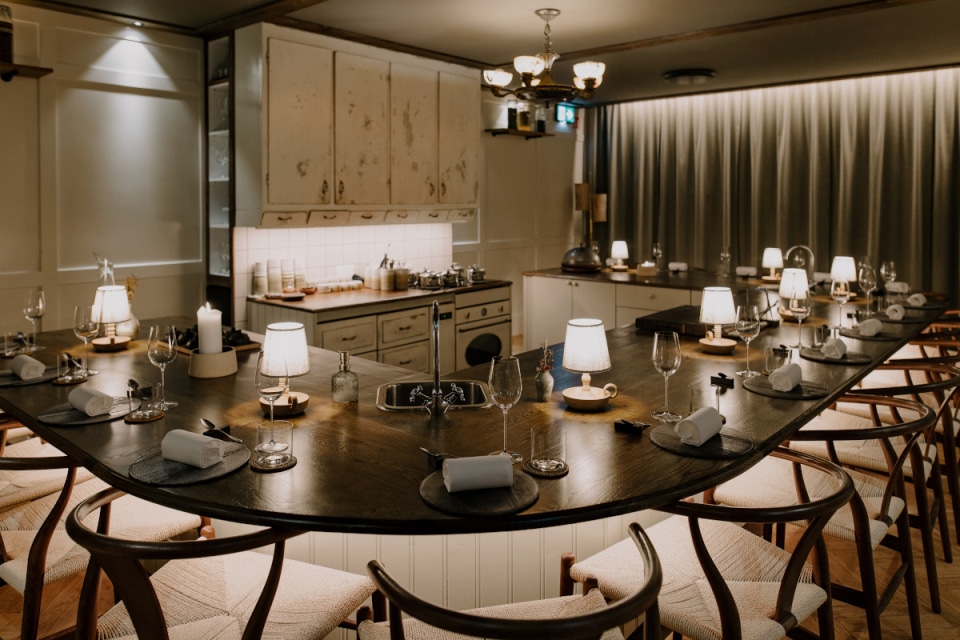
4. The experience at ÓX is deliberately intimate, with guests seated around the kitchen counter, watching the team cook and hearing the stories behind each dish. How important is that connection between chefs and diners, and how do you balance the precision of Michelin-starred cooking with the relaxed, welcoming atmosphere you want to create?
I think teamwork is one of the most important parts of what we do at ÓX. When someone is talking to a guest or explaining a dish, someone else naturally steps in and picks up where they left off. That way, the flow of the cooking and the service is never really interrupted.
Everyone on the team is trained to do pretty much everything. We all know what’s coming next, what’s already been done, and what needs to happen. It’s not like a traditional kitchen where one chef only works with meat and another only does fish.
I think it’s that versatility, and the way everyone understands each other’s roles, that makes the whole experience feel so natural and seamless. There’s a lot happening behind the scenes, but for the guests, it should all feel effortless.
5. Is there a particular dish you’ve created at ÓX that you’re especially proud of, or one that best represents your approach to modern Icelandic cuisine? We’d love to hear the story behind it, from the inspiration and ingredients to the techniques that make it special?
I think some of my favourite dishes are the ones inspired by old Icelandic food traditions, like sheep’s head, smoked lamb tongue, or smoked leg of lamb served with fried bread. These are all classics that have been part of Icelandic food culture for generations.
A lot of these dishes are seasonal, so they only appear on the menu at certain times of the year.
One of my personal favourites is the sheep’s head terrine. Sheep’s head is a very traditional Icelandic dish, although it’s not something you see that often in modern restaurants. We take that old tradition and give it our own interpretation.
For this dish, we use rutabaga, which is traditionally served alongside sheep’s head, usually as a mash. Instead, we dehydrate and cook the rutabaga and incorporate it into a terrine. So the flavours are very familiar, but the technique and presentation are different.
The sheep’s head terrine usually comes onto the menu in January and February, around the time of Þorrablót. It’s an annual Icelandic celebration where people come together to enjoy traditional foods, often with plenty of drinks. It’s a celebration of our food heritage, and I really enjoy bringing some of those old traditions into ÓX in a slightly different way.
6. Iceland has some extraordinary ingredients, from seafood and lamb to wild herbs, seaweed, and lesser-known local produce. Which ingredients do you find particularly exciting to work with? And given Iceland’s relatively short growing season, how does seasonality influence the way you develop your menus?
We have a very short growing season in Iceland, so naturally we have to adapt to that. During the winter months, the menu is more focused on proteins, like fish and meat. Then, as we move into summer, we have more vegetables, fruits, and fresh ingredients to work with. Game also plays its part when it’s in season.
We try to preserve as much as we can throughout the year, so we can carry some of those seasonal flavours into the colder months.
I think the most important thing is that we let the ingredients guide us, rather than trying to force something onto the menu. We have a pretty good understanding of what becomes available throughout the year, so in a way, we have a natural calendar to work from.
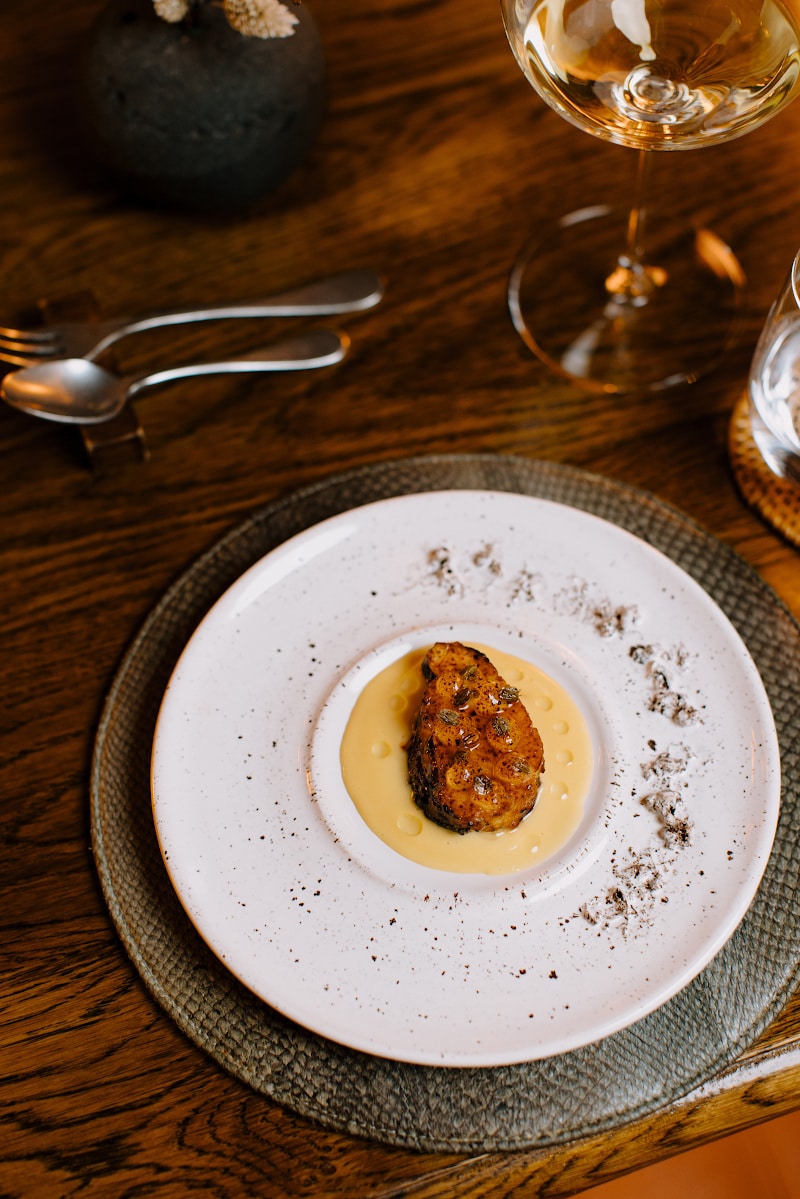
7. Sustainability is a central part of ÓX’s philosophy. You’ve spoken about reducing waste, using ingredients in several different ways, and finding creative uses for products that other kitchens might discard. Could you share some practical examples of how these ideas work at ÓX, and what other restaurants could learn from your approach?
I think sustainability is a word that’s maybe a little overused these days. For me, it’s really about how you approach things.
When you’re working with ingredients, it’s about looking at everything you have and finding ways to use it. Sometimes you end up with something you wouldn’t normally choose to work with, but because you have it, you start thinking creatively about what you can do with it. And quite often, something really interesting comes out of that.
But I also think sustainability goes much further than just ingredients and food waste. It’s about the people working in the restaurant, how you treat your team, and also how you run the business. A restaurant needs to be financially sustainable. It can’t just be losing money.
I learned a lot about that when I worked in France. What I really took away from the French restaurant culture was this practical approach to running a kitchen. You respect the ingredients, you don’t waste things, and you make sure the business can stand on its own feet.
So for me, sustainability isn’t just one thing. It’s about the food, the people, and the business. Everything needs to work together for the restaurant to survive and grow.
8. ÓX received its first Michelin star in 2022 and a Michelin Green Star in 2025. You were also recognized through Michelin’s new Mindful Voices initiative in 2026. What have these distinctions meant to you and your team, and has international recognition changed how you think about your responsibilities as a chef and restaurant owner?
It’s been really nice, and the recognition has helped us continue doing what we love, with the restaurant fully booked most of the time. I’m grateful to all the great staff who have made it possible.
9. Beyond ÓX, you also created Sumac, which brings Middle Eastern and North African culinary influences together with Icelandic ingredients. What first sparked your interest in these cuisines, and has exploring such different food traditions influenced the way you approach Icelandic cooking?
Sumac actually started because, in the early days of ÓX, I needed a restaurant that could support the idea and help make ÓX possible.
I’d always been interested in Middle Eastern and North African cuisine, although at that time I didn’t know that much about it. So I started travelling to the region, visiting restaurants in different major cities and exploring the food. The more I explored it, the more I fell in love with the flavours, the ingredients, and the cooking techniques. It’s something I’ve found fascinating ever since.
Since opening Sumac, we’ve continued learning and developing our understanding of that cuisine. I think the more knowledge and experience you gain, the more you can start using it in different ways.
And naturally, some of that has influenced my cooking at ÓX as well. Not in the sense that we’re creating Middle Eastern dishes at ÓX, but sometimes a small technique or a different way of working with an ingredient finds its way into something we’re doing.
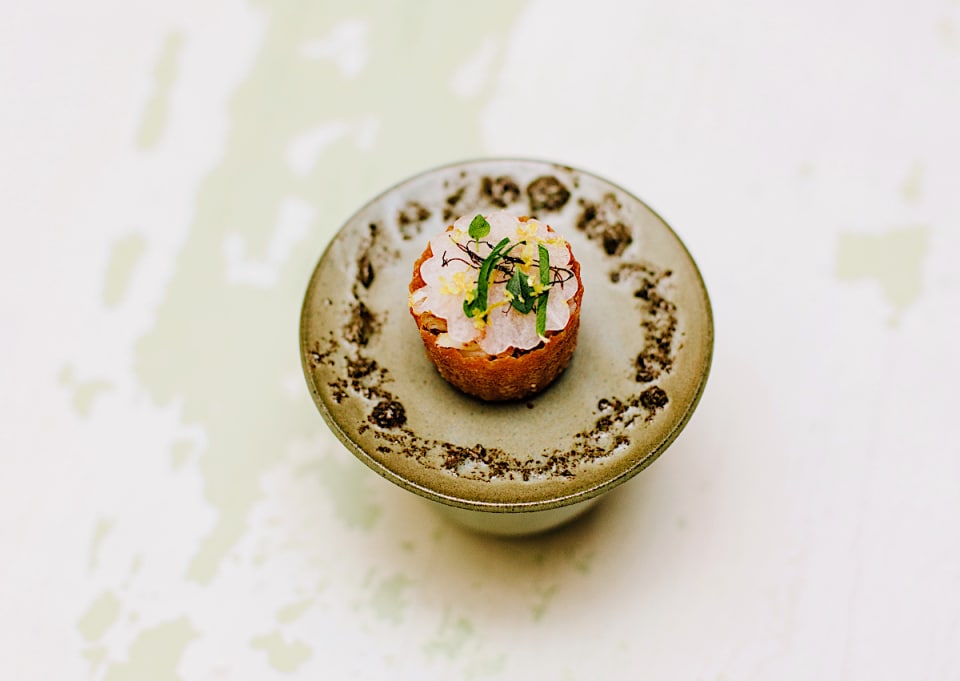
10. Running a 17-seat Michelin-starred restaurant must present some unusual business and operational challenges. What have been your biggest lessons about managing a small fine-dining restaurant, from controlling costs and minimizing waste to training a team that can consistently deliver such a personal experience?
The biggest lesson has probably been about learning how to manage the team and understanding just how fragile the restaurant business can be. Every day brings something new, and we have to perform consistently.
It’s about constantly trying to improve, finding better ways of working, and managing as much as possible with a relatively small team. You try to create a structure where everyone knows what they’re doing and things run smoothly, but at the same time, there are always challenges you can’t really predict.
11. Iceland’s restaurant scene has gained considerable international attention in recent years, with Reykjavík becoming an increasingly popular food destination. How has the local culinary scene evolved throughout your career, and what impact has this growing international recognition had on Icelandic chefs, restaurants, and local producers?
I think it has helped the restaurant scene in Iceland a lot. Having more people visiting Reykjavík and dining out has made it possible for restaurants to become more financially sustainable, not just during the busy summer months, but throughout the year.
I also think it has helped the restaurant scene develop in a really positive way. We’re seeing more restaurants focusing on a particular cuisine or style of cooking, rather than trying to offer a little bit of everything.
With smaller menus and a stronger focus on ingredients, I think the overall quality has improved. And that also has a positive effect on local producers. When restaurants become more focused on what they’re doing and what they need, producers can start developing and improving their products to meet that demand.
So I think it’s all connected. More visitors have helped create a stronger restaurant industry, which in turn has encouraged better restaurants, better ingredients, and more opportunities for local producers.
12. For someone visiting Iceland for the first time, which three Icelandic dishes or ingredients would you encourage them to try, and why? These could be traditional specialties, lesser-known local favorites, or contemporary interpretations that showcase how Icelandic cuisine is evolving.
The first one is easy: a smoked lamb hot dog from a stand downtown! The ultimate Icelandic fast food.
Icelandic scallops are small, sweet, and delicious.
Langoustine makes an amazing stock for soups and sauces, and the meat itself is delicious fried or grilled.
13. Finally, if you could teach home cooks just one lesson from your years in professional kitchens, what would it be? What’s something simple that can make a surprisingly big difference to the food they prepare at home?
I think the most important thing is to focus on the basics and do them properly. For example, if you’re frying something in a pan, make sure you get a really nice sear on it. That’s where the caramelisation happens and where so much of the flavour develops.
It’s the same with grilling. If you’re going to grill something, make sure you do it properly.
I think whether you’re cooking at home or in a professional kitchen, it’s really about understanding what’s important at each step and focusing on getting that right.
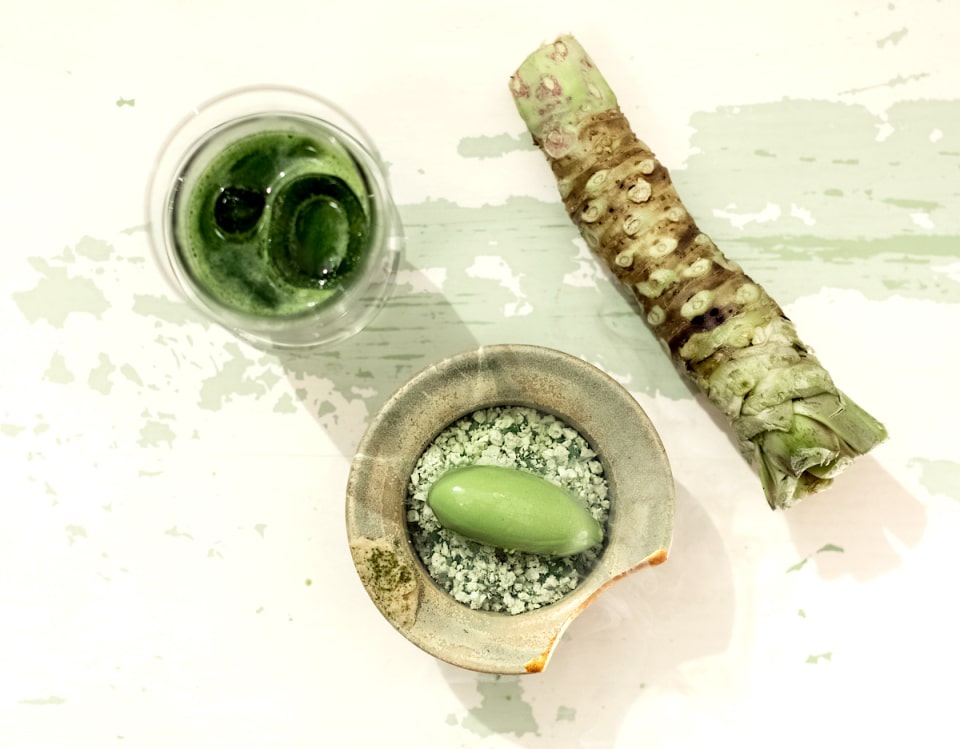
Chef Þráinn Freyr Vigfússon | Instagram
ÓX
Laugavegur 55 101, 101 Reykjavík, Iceland
Sümac Grill + Drinks
Laugavegur 28, 101, 101 Reykjavík, Iceland
