
25 Tasty White Fruits You Need to Try Out

When it comes to fruit, bold, vibrant colors are having a moment from deep purples and rich blues to bright oranges and reds.
And for good reason. These intensely colored fruits are often loaded with antioxidants and essential minerals that support overall health. Still, it might be time for their paler counterparts to step into the spotlight.
White fruits may not be as visually striking, but they share many of the same benefits. They’re typically low in calories and can provide a range of minerals, along with vitamins like B-complex, C, and K, and dietary fiber, though this varies depending on the fruit. That said, they generally don’t match the antioxidant levels of more brightly colored fruits.
Even so, white fruits have their place, especially when it comes to presentation. They can add contrast to darker berries or highlight the vivid green of fruits like gooseberries, bringing balance and variety to both flavor and appearance.
Since relatively few fruits have naturally white or cream-colored skins, this list also includes fruits with more colorful exteriors but pale, creamy, or white flesh. And if we’ve missed a favorite of yours, feel free to share it in the comments as we’d love to hear about it.
1. Coconut

This is arguably the best-known white fruit. Sure, the shell is brown, but no one eats that, right? It’s a favorite across all ages.
The snow-white flesh of the coconut is incredibly versatile. It can be added to both savory and sweet dishes, enjoyed on its own as a crunchy, low-sugar snack, or used as a garnish for cakes and desserts. Blend it with water to make coconut milk, a delicious lactose-free alternative to dairy.
Coconut is a staple ingredient in many Asian cuisines and beyond. We’re especially fond of using it in desserts like Thai coconut dumplings (kanom tom), coconut rasmalai, or Venezuelan besitos de coco: all great ways to make the most of its rich flavor.
2. Dragon Fruit

Another fruit that stands out for its colorful exterior and white, black-doted interior is dragon fruit. With its vivid pink, purple, or green-tipped skin and soft, spiky scales, it’s hard to miss. But inside, it reveals a refreshing white flesh dotted with tiny black seeds.
Dragon fruit is widely grown in tropical and subtropical regions, particularly in Southeast Asia, Central America like Guatemala and Puerto Rico, and parts of South America.
Its pulp is mildly sweet with a subtle tang, making it a refreshing addition to fruit salads. Add a few chunks to bring a light, juicy texture and a visually striking contrast to the mix.
3. White Strawberries

White strawberries are an astonishing sight, like regular strawberries reversed. Crisp white skin and flesh dotted with red seeds. You won’t know whether to eat them or to admire them, but if you’re looking for a conversation starter, they’ll get your guests talking.
And when you do bit into them – what a delight! They’re sweeter than ordinary strawberries, with a pineapple-like taste.
White strawberries are still mainly cultivated in Japan. So although you can find them in luxury food stores in the US and Europe, expect to pay a premium. White jewel strawberries, a type of white strawberries cultivated in Japan, sell for around $10 a piece and are some of the most expensive fruits in the world.
4. White Currants

White currants are an ideal, low-calorie snack. Though considerably sweeter than their tart red or black counterparts, they retain the characteristic sharpness. Their distinctive fragrance carries the floral notes of Muscat grapes combined with sour cherries.
Due to their eye-catching hue, they can be used in the same ways as other bramble fruits or used as decorations and garnishes.
5. Bananas

Bananas are arguably the world’s most popular fruit as they are incredibly nutritious and versatile and can be enjoyed raw, baked, or roasted.
Their pale flesh adds a sumptuous creamy contrast to brilliantly-colored berry salads or smoothies. And they make the palest yellow smoothies, ice creams, puddings, and flavored yogurts. You can also use it for varios cakes like this delicious vegan cheesecake or this banana & mango cake.
Bananas pack a powerful nutritional punch, rich in potassium and fiber. They also provide a valuable dose of healthy prebiotics to help digestion, so they can be enjoyed daily as part of a healthy and low-calorie diet. Lesser known is perhaps that banana leaves can also be used for cooking.
6. White Mulberries

Unlike their darker relatives, white mulberries don’t always change color as they ripen: they can remain pale, creamy white, though some may develop a light pinkish hue. They have a mild, sweet flavor with subtle honeyed notes.
They can be enjoyed much like other mulberries and bramble fruits. In addition to making excellent preserves, they pair well with rich meats, cheeses, citrus fruits, and fresh herbs like mint.
7. Pineberries

Although they look like white strawberries, pineberries are a hybrid of the South American strawberry and the North American strawberry. They taste like pineapples with the texture of strawberries.
Due to their small-scale cultivation, they’re challenging to find. However, if you can find this petite aromatic variety, they’re well worth adding to your fruit bowl.
8. Cherimoya (Custard Apple)

These are also known as ‘ice-cream fruit’. The succulent, grainy white flesh of the cherimoya is studded with large inedible black seeds. This luscious fruit has tasting notes of banana, vanilla, strawberry, or papaya.
Because of their seeds, they’re typically enjoyed raw. Chill, cut in half, and scoop the luscious ‘custard’ with a spoon.
9. Breadfruit

A staple food across the Caribbean from Saint Lucia to Trinidad & Tobago, breadfruit is a versatile fruit with a starchy, potato-like texture when cooked. It’s commonly roasted, fried, or baked, and becomes slightly sweeter as it ripens, making it suitable for both savory and sweet dishes.
10. Rambutans
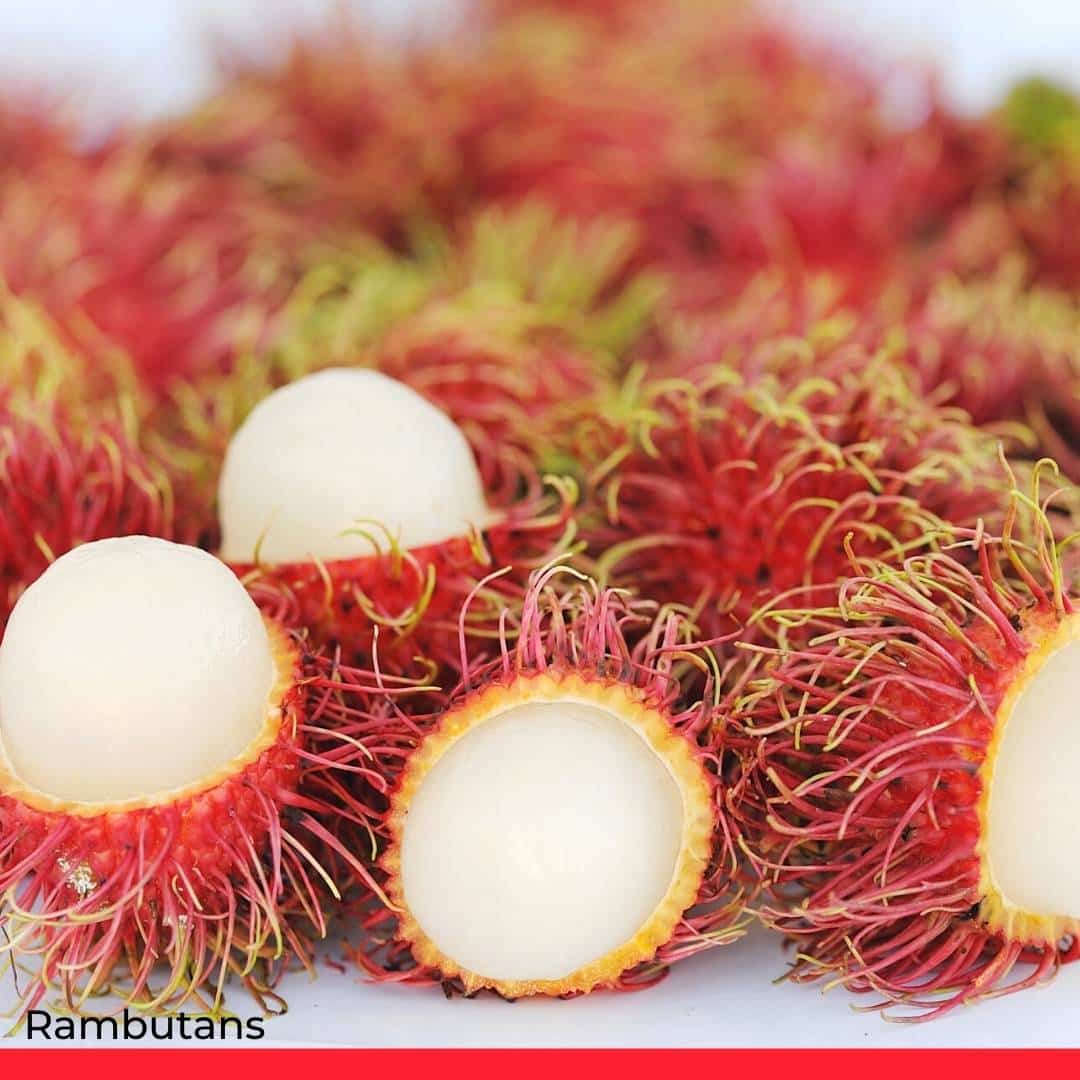
Imagine a giant grape with distinctive orange-red skin covered in long, soft spines, and you’ve got a good idea of what a rambutan looks like.
Break the skin open, exposing a juicy, almost translucent white pulp with a beautiful fragrance.
Rambutans can be eaten raw, cooked, or used for decorative purposes.
11. Lychees
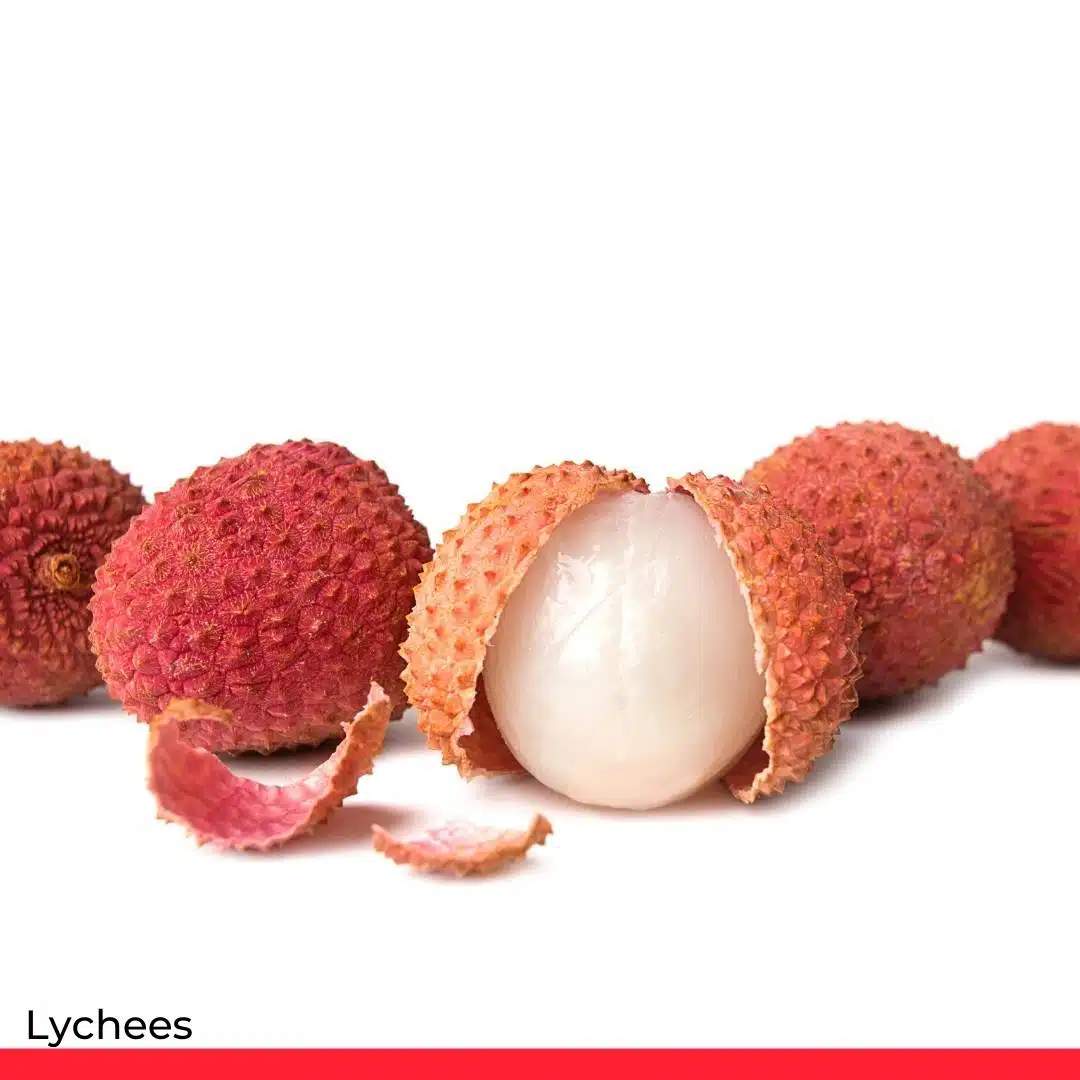
The translucent white flesh of lychees is covered with a knobbly, deep pink rind, which is easy to break open with a thumbnail.
The delicate flavor and aroma of the juicy pulp is often compared to strawberries, watermelons, citrus, and even rose water.
Ripe white lychee flesh adds an unexpected soft texture and a burst of sweetness to fruit salads or green salads. In addition, it makes an intriguing syrup for ice creams, cheesecakes, and cocktails when boiled with sugar.
12. Dragon’s Eye
A close cousin of lychee, dragon’s eye has translucent, juicy flesh with a delicate, floral sweetness. It’s commonly enjoyed fresh, added to fruit salads and chilled desserts, or used in a variety of Asian dishes, both sweet and savory.
13. Ice Apple

Commonly served chilled, ice apple is prized for its subtle sweetness and tender, jelly-like texture. It’s used in fruit salads, blended into milk drinks, or paired with coconut milk and rose syrup for simple desserts. Its naturally hydrating quality makes it especially popular in warm climates.
14. Noni Fruit

Perhaps you enjoy the challenge of ‘extreme’ fruits, such as durians. If so, you’ll love these exotic fruits.
The noni fruit, native to Polynesia, has several names: Indian mulberry or hog apple. It’s also known as ‘cheese apple’ or even ‘vomit apple’, which should tell you everything about the aroma and flavor.
It looks a little like a small, knobbly white pineapple. However, under the weird exterior is a white center, which is high in antioxidants and has been used for medicinal purposes for centuries.
However, there’s one more name for this unusual food: starvation fruit. Because, in times of famine, people would only eat it if the alternative was to die of hunger.
Let’s move on!
15. Soursop (Guanabana)

Don’t confuse these with cherimoya or custard appl as while they’re related, they’re quite different in both appearance and flavor. Soursop has a distinctive green, spiky exterior and soft white flesh inside.
Where cherimoya is known for its rich, custard-like sweetness, soursop leans in a brighter direction, with a sharper, more refreshing flavor reminiscent of pineapple and citrus. Its flesh is also smoother and creamier, lacking the slightly grainy texture often found in cherimoya.
16. Mangosteen

Mangosteens are characterized by their rigid purple exterior and sweet, juicy white pulp. This can be enjoyed raw or included in smoothies and tropical fruit salads for a delicious burst of flavor. It may be available in specialty stores, canned, dried, or frozen if you can’t find fresh mangosteen.
Mangosteen is highly nutritious as it contains a range of unique antioxidants.
17. Huito
Commonly used in beverages and traditional desserts, huito is valued for its fragrant, slightly tangy pulp. Native to the tropical regions of Central and South America—particularly the Amazon basin—it’s often blended into refreshing drinks or reduced into a dense, dark-blue syrup used in confections and preserves.
18. White Guavas

While most guavas have pink flesh, white varieties with distinctive white flesh resembling an apple’s are available.
White guavas have a sweet-sharp flavor with a delicate sour aftertaste. The tropical flavor works well in cooked dishes, or they can be enjoyed raw.
19. White Transparent Apples
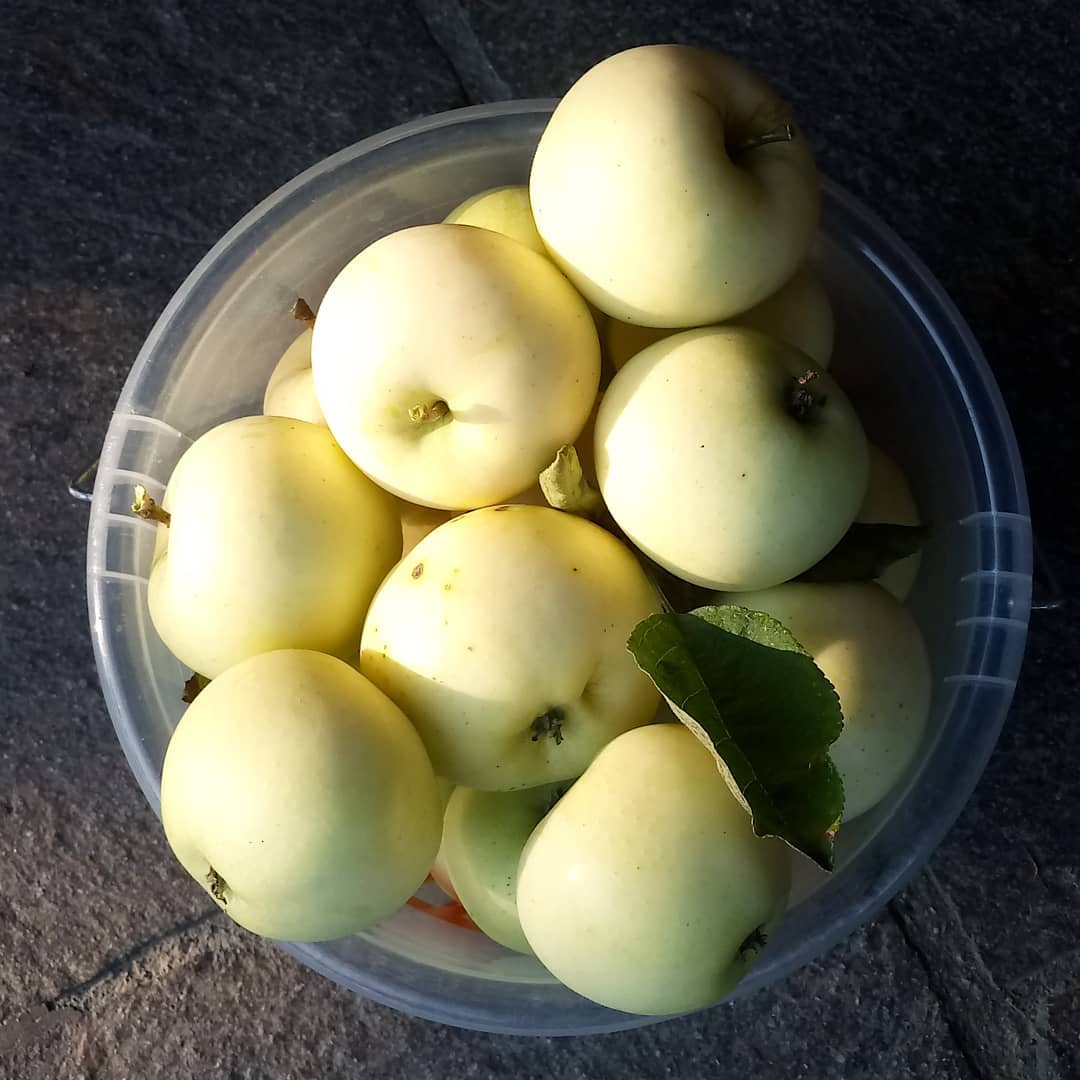
Known as the white transparent in Europe and the yellow transparent in the US, this unusual apple is prized for the translucent whiteness of its crisp, succulent flesh.
Because of its robust and sour flavor, this variety makes a perfect cooking and baking apple, keeping its firm texture in crumbles, pies, and creamy white sauces. It’s also used in juices and ciders.
20. Baobab Fruit

The chalky white flesh of ripe baobab fruit is slightly sweet with a subtle sour tang. Imagine a mild lemon-flavored yogurt, and you’ll be getting close.
Packed with nutrients, it’s considered a superfood. However, you’ll only find it outside Africa in powder form.
21. White Peaches
The juicy white flesh of these peaches is prized for its delicate sweetness and fragrant aroma. They’re delicious eaten fresh, blended into smoothies, or tossed into fruit salads. When cooked, however, they tend to soften quickly and break down into a smooth, almost creamy consistency.
White peaches pair beautifully with berries and other soft fruits, as well as nuts like pecans, creamy cheeses, and fresh herbs such as thyme, rosemary, and basil. They also work well with warm spices like ginger, cinnamon, nutmeg, and cardamom.
If you’re looking to put them to good use, try them in a peach tart with creamy peach filling and walnut crust, or in a layered peach yogurt cake with an almond base—both great ways to highlight their delicate flavor.
22. Pears (Nashi, Tsu Li, and many more)

A standout among white-fleshed fruits, the Japanese pear, also known as nashi, combines the crisp bite of an apple with the juicy sweetness of a pear. Its pale, almost translucent flesh is refreshingly crunchy and subtly sweet, making it especially satisfying when eaten fresh.
Nashi pears are excellent sliced into salads or served as a light, hydrating snack, but their firm texture also holds up well to cooking methods like poaching and roasting. In many Asian cuisines, they’re finely grated and added to marinades, where their natural enzymes help tenderize meat while adding a gentle sweetness.
23. White Wonder Watermelon
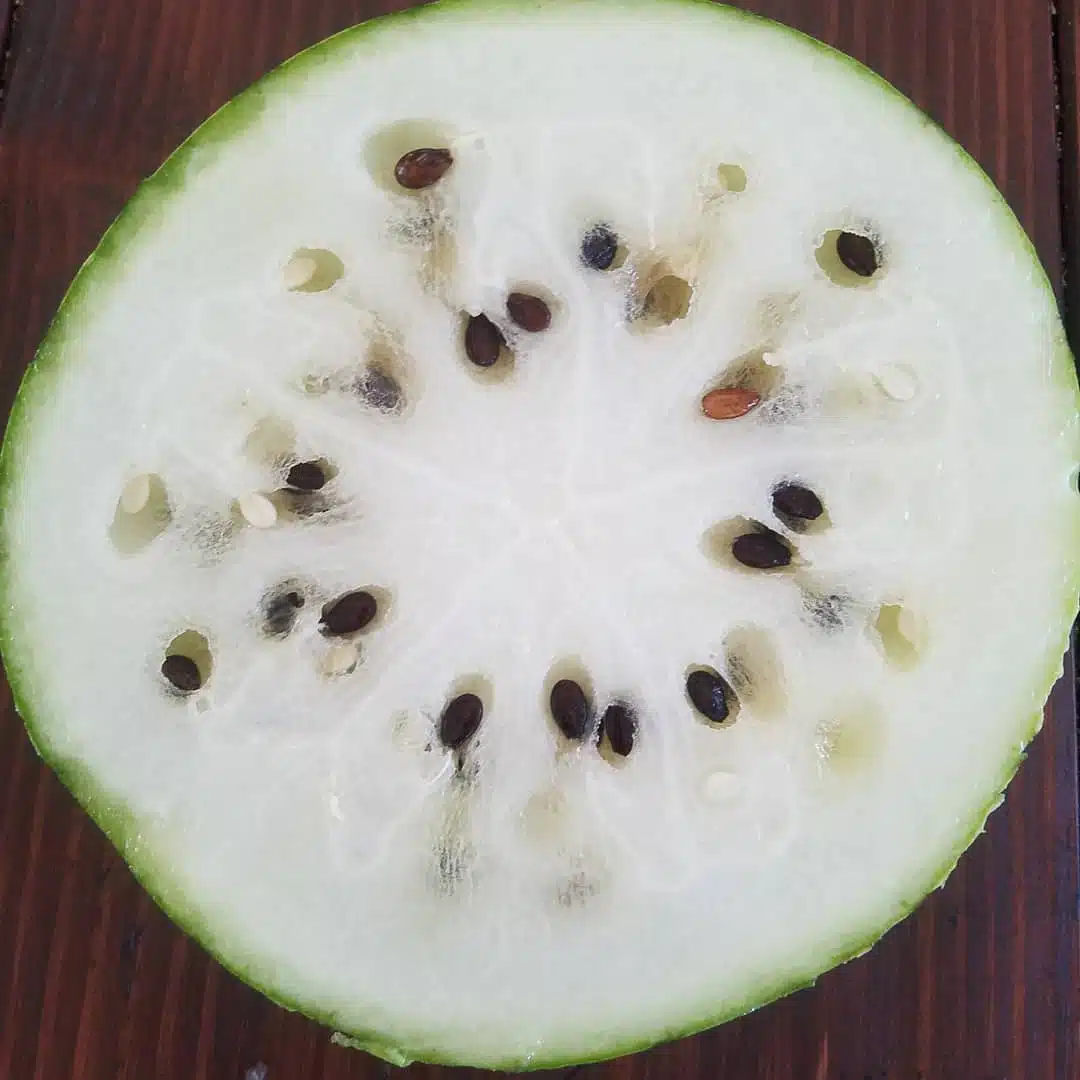
The rare White Wonder looks like any other watermelon with its thick stripy green rind. But inside that rind hides crispy, creamy-white flesh with a grainy texture.
The flavor is delicate and slightly sweet but more reminiscent of cucumber than the honeyed sweetness of a fully ripe red variety. Best eaten raw to savor the refreshing juiciness.
24. Snowbank White Blackberries

These beautiful snow-white berries have a milky, translucent appearance – like clusters of tiny pearls. Yet, they’ve been bred to offer all the flavor of a typical blackberry. Although they can be used the same way as other blackberries, it seems a shame to cook with them because they don’t add color.
Instead, they make an exciting addition to fruit displays or add a dramatic and unusual contrast to chocolate, pink, or purple desserts.
25. Rambai
Rambai is a Southeast Asian fruit with pale, juicy segments and a sweet-tart flavor with subtle citrus notes. It’s eaten fresh or incorporated into curries, chutneys, and relishes, where its acidity helps balance richer flavors.
Related: 25 Naturally White Foods

Related: 25 Stunning Orange Fruits

Related: 25 Naturally Green Fruits
Related: 25 Naturally Red Fruits

