
Tsoureki: Greek Easter Sweet Bread

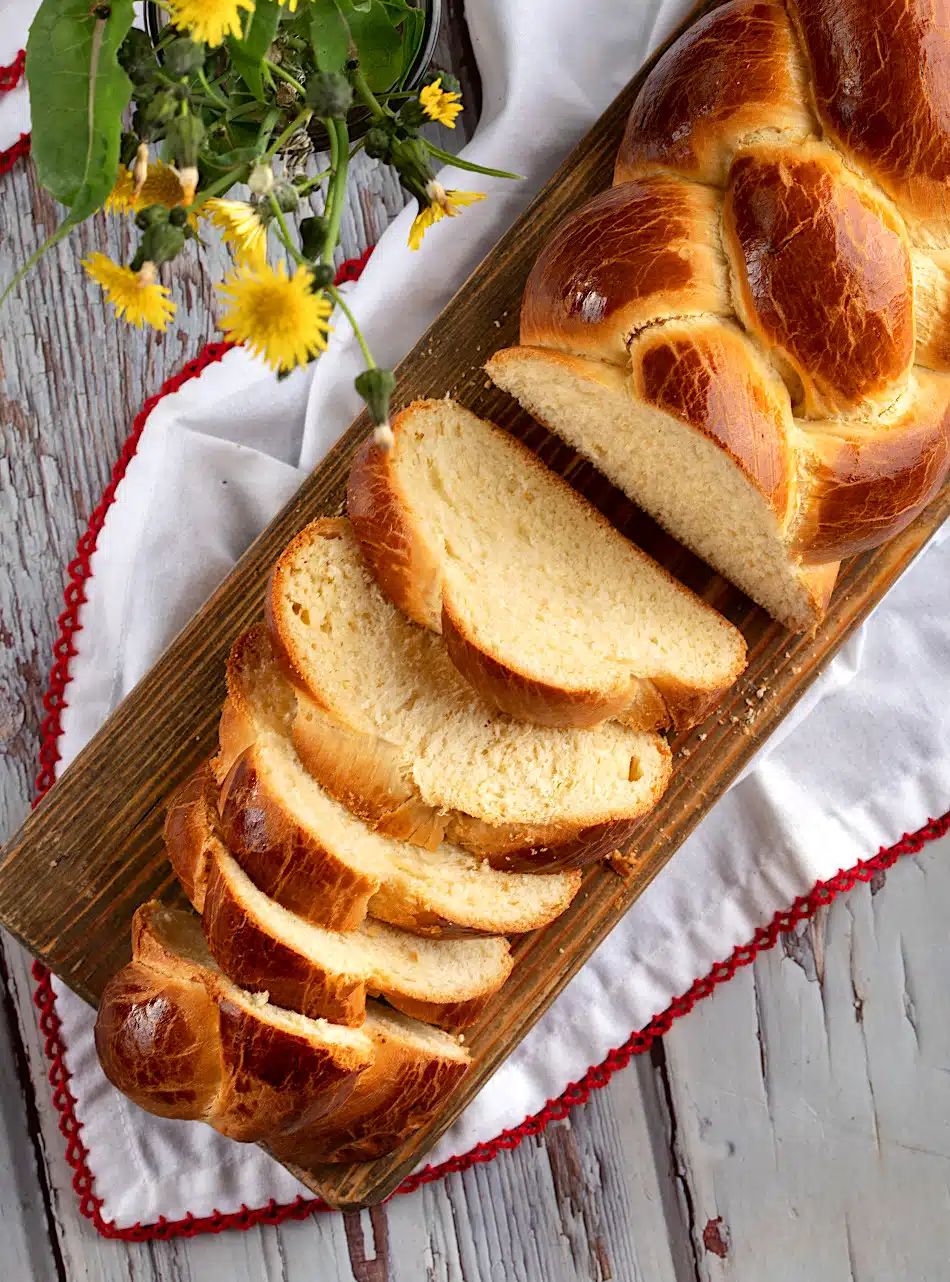
There’s no true Greek Easter celebration without tsoureki. In this recipe, chef Giorgos Tsoulis shares his take on the beloved classic, blending butter, eggs, and sugar into a rich, tender dough scented with mahlep, mastic, and fresh orange zest. The result is a beautifully golden loaf with a delicate aroma and a soft, stringy crumb that pulls apart in satisfying strands.
Though traditionally baked for Easter, tsoureki feels special any time of year. It requires patience and proper kneading to achieve its signature texture, but the reward is well worth the effort: light yet indulgent, fragrant, and perfect alongside a morning coffee or at the center of a festive table. Chef Tsoulis keeps the method approachable, making this timeless Greek favorite easy to recreate at home..

Tsoureki: Greek Easter Sweet Bread

Ingredients
- 120 ml whole milk lukewarm
- 3 tsp dry yeast
- 100 g granulated sugar
- 500 g all-purpose flour
- ¾ tsp salt
- ¼ tsp mastic grated
- ¼ tsp mahlep grated
- zest of 1 orange
- 3 eggs large
- 150 g butter chilled and diced
- 2 egg yolks thinned with a little water, for brushing
Instructions
- Preheat the oven to 170°C (340°F), fan mode (or 180°C / 350°F conventional).
- In the bowl of a stand mixer, add the lukewarm milk, yeast, and sugar. Whisk to combine and let the mixture sit for 5 minutes, until the yeast is activated and slightly foamy.
- Add the flour, salt, mahleb, mastic, orange zest, and eggs. Using the dough hook attachment, knead on medium to medium-high speed for about 5 minutes, until a smooth dough starts to form.
- Increase the mixer speed slightly and gradually add the butter, a little at a time. Continue kneading for 5–6 more minutes, until the dough becomes smooth, elastic, and slightly sticky.
- Lightly grease a mixing bowl with olive oil and transfer the dough into it. Cover tightly with plastic wrap and let it rise in a warm place for about 1 hour, or until doubled in size.
- Once risen, divide the dough in half. Take one half and divide it into 4 equal pieces. Roll each piece into a rope about 15 cm (6 inches) long.
- Pinch the ends of the ropes together and braid them into a neat loaf.
- Transfer the braided loaf to a baking sheet lined with parchment paper. Repeat the same process with the remaining dough to make 2 loaves total.
- Cover the loaves with a kitchen towel and let them rise again for 30–40 minutes, until slightly puffed.
- Brush the tops with egg yolks and bake for 20–30 minutes, or until beautifully golden brown.
- Remove from the oven, allow to cool for 5 minutes, and serve.
Notes
- Tsoureki requires extended kneading to properly develop the gluten structure. The more you knead the dough, the more gluten strands (fibers) form, which gives the bread its signature stringy, pull-apart texture.
- The dough is properly kneaded when you gently press the surface and it springs back to its original shape. This indicates that the gluten has fully developed and the dough has enough elasticity and that’s how you know it’s ready.

Related: Fogatsa (Sweet Easter Bread from Corfu)
Related: Koulourakia – Greek Easter Cookies
Related: Greek Easter Bunny Bread
Related: Egg-shaped Lemon Curd Cookies
Related: Easter Chick & Bunny Cupcakes

Definitely requires some effort, but it comes out so soft and yummy. Great recipe 👌
Thanks for the feedback! Much appreciated@