
The 5 Most Expensive Tuna Species in the World

Nutritious and delicious, tuna is versatile and one of the most sought-after fish in the culinary world. And while canned tuna is widely available and relatively affordable (though still more expensive than canned sardines or mackerel), the prices of fresh tuna, especially for certain species and cuts, can go through the roof.
Several factors determine how much a tuna is worth. Population size is only one piece of the puzzle. Species that grow slowly, cannot be commercially bred in captivity, and produce richly marbled flesh prized for sashimi command the highest prices. Bluefin tuna checks all those boxes, which is why it sits at the top of the market. Skipjack tuna, by contrast, is abundant, fast-growing, and widely used for canning, accounting for around 70% of the canned tuna consumed in the United States. Between those extremes lie species such as Bigeye, Yellowfin, and Albacore, whose prices reflect a balance of availability, meat quality, and culinary demand.
This article was updated in June 2026 with the latest retail and wholesale tuna prices. We also corrected a couple of factual inaccuracies, including information about the size of different tuna species.
Fishing methods and catch locations contribute to pricing as well. Tuna caught sustainably and with environmentally conscious methods may have a higher price due to the careful preservation of the marine ecosystem.
Market dynamics, global trade patterns, seasonal variations, are all defining determinants. Transportation costs, import/export taxes, and processing expenses further affect the final retail price.
But what makes tuna so desirable? Well, that fatty, firm and meaty consistency lends itself exceptionally well to delicious meals. Tuna can be expertly seared like a delectable steak or served in its raw and delicate form as in the renowned Japanese delicacy, sashimi. It’s also lean and packed with micronutrients, in case you were worried about calories.
And now, let’s see what is the most expensive tuna in the world and makes these types of tuna so expensive.
| Species | Typical Retail Price* | Best Known For | Typical Uses |
|---|---|---|---|
| Bluefin | $100–300/lb | Rich, buttery, heavily marbled flesh | Premium sushi, sashimi, steaks |
| Bigeye | ~$43/lb | Rich flavor and higher fat content | Sashimi, sushi |
| Yellowfin (Ahi) | ~$33/lb | Firm texture and versatility | Sushi, poke, grilled steaks |
| Albacore | ~$28/lb | Mild flavor and light-colored flesh | Sushi, searing, premium canned tuna |
| Skipjack | ~$27/lb | Lean, flavorful, abundant | Katsuo tataki, canned tuna |
1. Bluefin Tuna: The Crown Jewel of Tuna | $100–$300/lb retail; record sales up to $6,060/lb
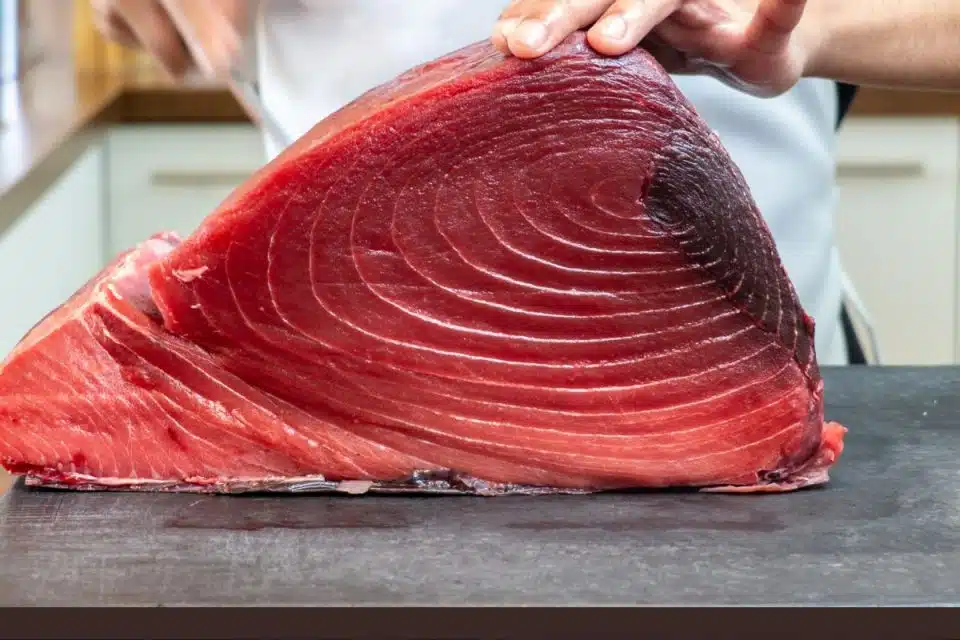
Bluefin tuna sits in a league of its own. Rich, firm, deeply flavorful, and beautifully marbled, it is the species most closely associated with high-end sushi counters and luxury seafood dining.
Its flesh ranges from lean, ruby-red akami to buttery, intensely marbled otoro, the prized belly cut that can command eye-watering prices. This combination of size, fat content, scarcity, and demand from top sushi restaurants makes Bluefin the most valuable tuna species in the world.
The auction records tell the story. In 2013, a 489-pound (222 kg) Bluefin sold for $1.8 million. In 2019, a 612-pound (278 kg) tuna fetched roughly $3 million, or about $4,900 per pound. Then, on January 5, 2026, Tokyo-based sushi chain Kiyomura Corp. paid $3.24 million, or 510 million yen, for a 536-pound Bluefin at Tokyo’s Toyosu Market New Year auction. Caught off Oma in northern Japan, the fish worked out to roughly $6,060 per pound, the highest price ever recorded for Bluefin tuna.
Of course, those headline-grabbing auction prices are exceptional and often carry publicity value. For restaurants and consumers, sashimi-grade Bluefin is usually priced by cut. Akami, the lean red meat, typically sits at the lower end of the market, while chutoro, the medium-fatty belly, costs more. Otoro, the fattiest and most luxurious belly cut, commands the highest premium thanks to its silky texture and rich, buttery flavor.
At specialty fishmongers, premium Bluefin cuts generally range from about $100 to $300 per pound, depending on the cut, origin, handling, and whether the fish has been processed using techniques such as ikejime and sold fresh rather than frozen.
2. Bigeye Tuna: The Sushi Chef’s Alternative | Around $43/lb on Average
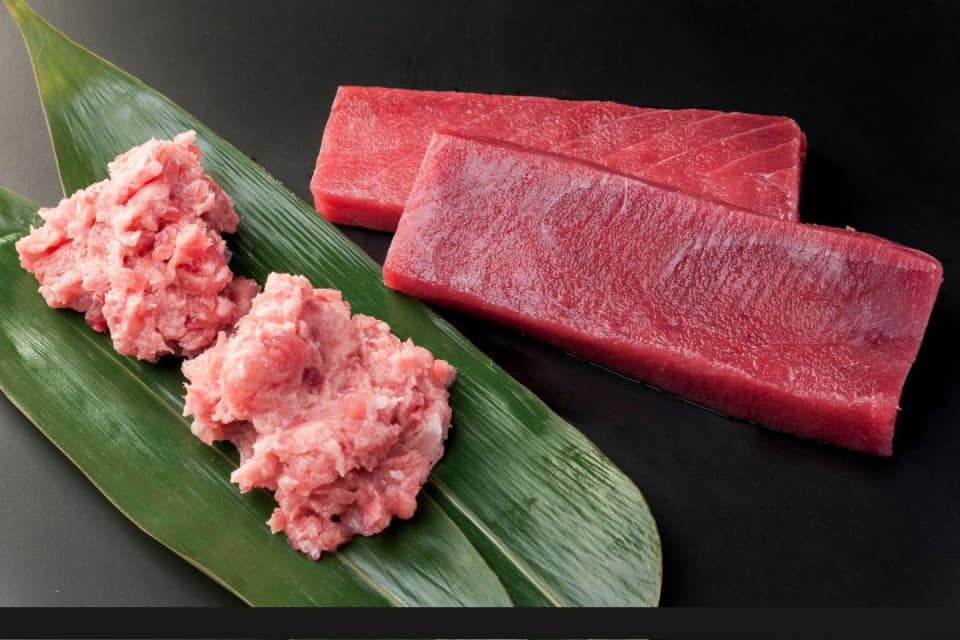
Often overshadowed by Bluefin, Bigeye tuna is nevertheless one of the most prized species in the premium sashimi market. Its flesh is darker than Yellowfin’s, with a deep ruby-red color and a noticeably higher fat content, giving it a richer flavor and a softer, more buttery texture.
Bigeye strikes a balance between quality and price. While it lacks the intense marbling of Bluefin, it offers a fuller flavor and more luxurious mouthfeel than Yellowfin, making it a favorite among sushi chefs looking for exceptional quality without Bluefin’s premium price tag.
At specialty fish markets, sashimi-grade Bigeye is typically sold as akami blocks or whole loins and averages around $43 per pound, with retail prices generally ranging from $35 to more than $50 per pound, depending on origin, freshness, and cut. That places it firmly in the premium tier, more expensive than Yellowfin, but still well below the lofty prices commanded by Bluefin.
3. Yellowfin Tuna: The Everyday Premium | Around $33/lb on Average ($30–$40 Retail Range)

Known as ahi in Hawaii, Yellowfin tuna occupies the sweet spot between affordability and premium quality. It’s one of the most widely served tuna species in sushi restaurants, prized for its clean flavor, firm texture, and versatility. While it lacks the rich marbling of Bluefin or the buttery mouthfeel of Bigeye, it remains an excellent choice for sashimi, poke, sushi, and lightly seared steaks.
Unlike Bluefin, Yellowfin is relatively abundant and is found throughout tropical and subtropical oceans around the world. It can grow to more than 400 pounds (180 kg), although most commercially harvested fish are considerably smaller. Its greater availability helps keep prices well below those of Bluefin while still positioning it firmly in the premium seafood category.
Hawaiian wild-caught ahi is among the most sought-after varieties. Across specialty fish markets, sashimi-grade Yellowfin currently averages around $33 per pound, with most retailers charging $30 to $40 per pound, depending on origin, freshness, and cut.
If you’re buying Yellowfin to eat raw, always look for fish specifically labeled sashimi-grade or sushi-grade and purchase it from a reputable seafood supplier. Freshly landed fish generally offers the best texture, although high-quality frozen Yellowfin—properly handled and flash-frozen shortly after harvest—can also deliver excellent results.
4. Albacore Tuna: The Pantry Staple with a Premium Side | Around $28/lb on Average

Albacore is best known as the “white tuna” found in premium canned tuna products, prized for its mild flavor, firm texture, and light-colored flesh. While most of the global catch is destined for canning, high-quality wild-caught albacore also has a place in the sashimi market.
Compared with Bluefin, Bigeye, and Yellowfin, albacore contains less fat and has a milder flavor, making it an approachable choice for diners who prefer a cleaner, more delicate taste. Its healthy populations and widespread availability also help keep prices relatively affordable.
The premium end of the market consists of wild-caught, sashimi-grade loins, which currently average around $28 per pound. Retail prices typically range from about $19 to $26 per pound at fresh fish markets, while exceptional imported loins can sell for more than $45 per pound.
For most consumers, however, albacore remains synonymous with quality canned tuna—a reminder that not every excellent tuna has to command Bluefin prices.
5. Skipjack Tuna: Beyond the Can | Around $27/lb on Average

Skipjack tuna is best known as the workhorse of the canned tuna industry, accounting for the majority of canned tuna sold worldwide. Fast-growing, abundant, and widely distributed throughout tropical waters, it remains one of the most commercially important tuna species.
That said, Skipjack has a premium side that’s often overlooked. In Japan, where it’s known as katsuo, it’s commonly served as katsuo tataki—lightly seared over an open flame, then sliced thin and served with citrus, ginger, or ponzu. Its lean, intensely flavored flesh makes it a favorite seasonal dish, particularly when the fish is at its freshest.
Sashimi-grade Skipjack prepared as katsuo tataki typically sells for around $27 per pound at specialty retailers. While that’s considerably less than Bluefin, Bigeye, or Yellowfin, it reflects the added value of high-quality preparation and presentation. Fresh fillets command the highest prices, while frozen products and canned Skipjack remain among the most affordable seafood options available.
For most consumers, Skipjack will always be the tuna found in a pantry rather than behind a sushi counter. But in the hands of skilled chefs, it proves that even one of the world’s most abundant tuna species can deliver an exceptional dining experience.
Whether you’re splurging on buttery Bluefin otoro or preparing an affordable weeknight dinner with albacore, every tuna species has its place in the kitchen. The difference lies not only in price, but also in flavor, texture, fat content, and the dishes each variety is best suited for.
If you’re looking for inspiration, browse Chef’s Pencil’s collection of tuna recipes, where you’ll find everything from elegant sashimi and seared tuna steaks to tuna carpaccio, salads, meatballs, tuna curry, and other chef-created recipes that showcase this remarkably versatile fish.
Curious how tuna compares to other luxury seafood? Don’t miss our guide to the world’s most expensive seafood, where we explore everything from premium caviar and king crab to abalone, sea cucumbers, and other delicacies that command astonishing prices around the globe.
Related: Most Expensive Caviar in the World
Related: Most Expensive Steak in the World
Related: Most Expensive Olive Oils in the World
Related: Most Expensive Cheese in the World
Related: Most Expensive Fruit in the World

Ahi, the Hawaiian word for tuna, is a term applied specifically to bluefin and bigeye tuna – NOT yellowfin. Additionally, yellowfin is NOT the largest tuna species, that title goes to bluefin, by a wide margin.
Also, your per pound pricing is beyond mysterious. Least expensive bluefin is $400/lb? But you can get bigeye for $40/lb? Then yellowtail for $35 while skipjack and albacore both fetch $23? How can Starkist sell a 5 ounce can of tuna for $1.25 if they have to pay more than $20 per pound to buy the tuna they put in the can? At the retail level you can buy bluefin, bigeye and yellowfin at a fresh fish market (dockside) or fresh/flash frozen at a premium grocer for as little as $20 per pound. (Restaurants can pay a LOT more, into the thousands of dollars per pound). Now, if you’re talking about price paid to the fisherman at the dock/wharf, average prices are in the $6-$8 per pound range for cleaned, bled fish, but top specimens in the most competitive markets can fetch thousands or even millions of dollars for whole bluefin. But your article doesn’t specify what the $40/lb, $35/lb $23/lb etc. represent. Pretty poorly done article.
Thanks for taking the time to leave such detailed feedback.
You were absolutely right that the article needed updating. We’ve since revised it substantially, correcting the factual error regarding Yellowfin (Bluefin is indeed the largest tuna species) and updating the pricing information throughout.
We’ve also clarified that the prices quoted refer to premium retail, sashimi-grade tuna sold by specialty fishmongers, not dockside prices paid to fishermen or the wholesale prices used by canneries. Those are very different markets, which explains the large price differences compared with canned tuna.
Regarding ahi, our updated article reflects its common culinary use, where the term is widely applied to both Yellowfin and Bigeye tuna.
We appreciate readers who point out inaccuracies—it helps us keep our content up to date. Thanks again for taking the time to comment.
Chef’s Pencil Team