
Chef of the Week: Jon Howe, Lumière, Gloucestershire
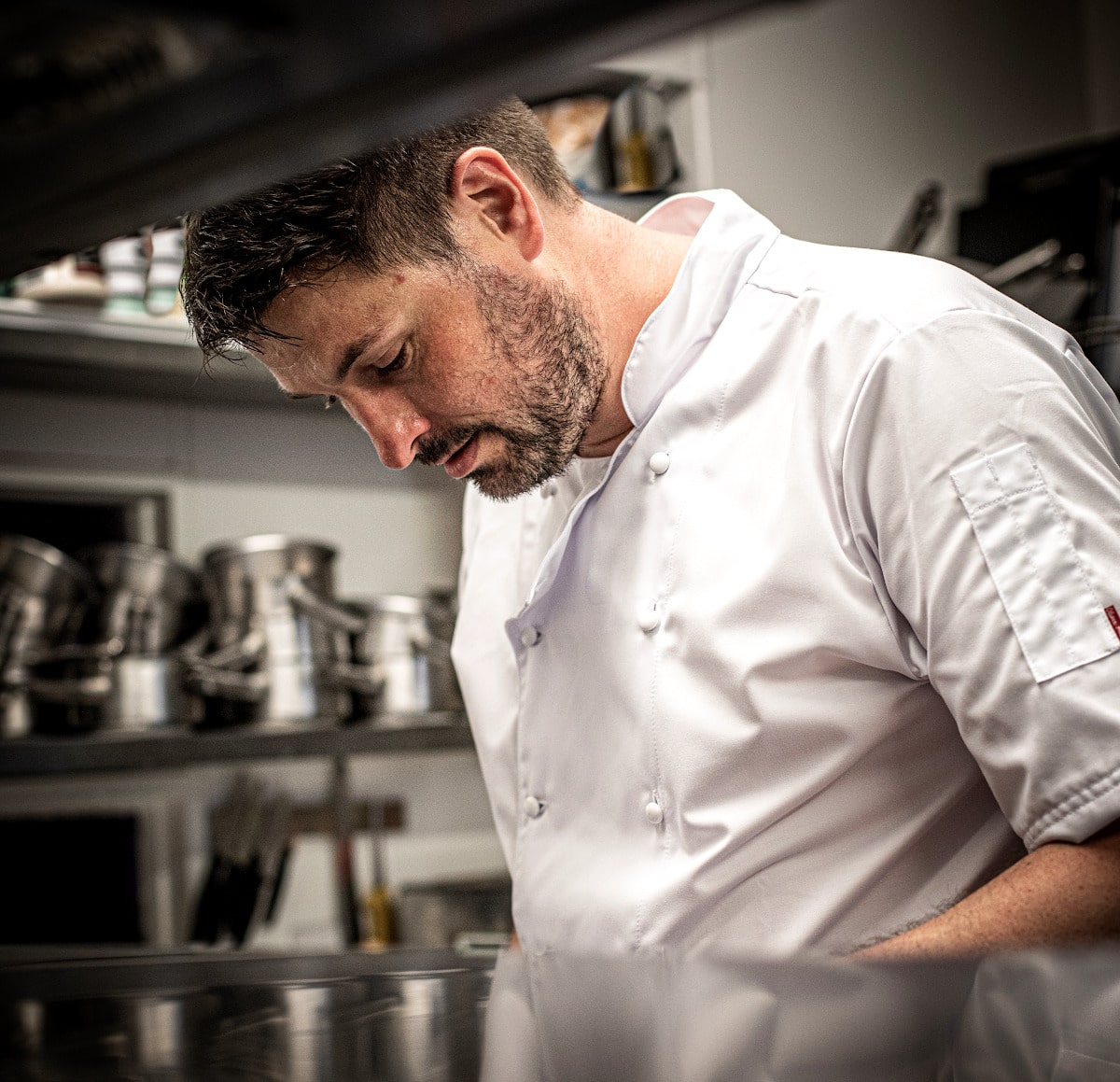
From the beginning, Lumière was built around a very personal idea: to create the kind of restaurant Jon Howe and his wife Helen would genuinely want to visit themselves. Since opening in Cheltenham in 2009, they have developed that vision into one of Gloucestershire’s most distinctive independent restaurants, combining ambitious cooking with a relaxed, welcoming style of hospitality. The Michelin star that followed was an important milestone, but for Jon, it was ultimately a validation of the approach they had believed in from the start: staying independent, staying personal, and creating an experience that feels warm rather than formal.
Today, Lumière is increasingly shaped by its own kitchen garden, close relationships with local producers, English wines, and a deeply rooted approach to sustainability. Jon and the team grow produce, keep bees, compost kitchen waste, minimize food waste, and let the seasons influence what appears on the menu. That sense of place and independence runs through everything they do, from the food itself to the way guests are looked after.
In this week’s Chef of the Week feature, Jon talks about building Lumière alongside Helen, what independence means in practice, the work that goes on behind the scenes of a Michelin-starred service, why fine dining should still be fun, and how he sees the future of British restaurants becoming more personal, relaxed, and authentic. Along the way, he also reflects on some of the chefs who influenced him earlier in his career and the lessons that still stay with him today.
1. When you and Helen opened Lumière in 2009, you set out to create the restaurant you yourselves would most love to visit. Fourteen years later, that vision was rewarded with a Michelin star. Looking back, what did that moment mean to you, and did it change the way you viewed the journey that brought you there?
Receiving a Michelin star was obviously one of the proudest moments of our lives, but more than anything it felt like validation.
Helen and I never built Lumière around awards. We built the restaurant we’d want to spend our own money in—warm, relaxed, genuinely welcoming, with food we were proud to serve. The Michelin star told us that staying true to that vision was the right decision.
It didn’t fundamentally change how we cook or how we look after our guests. If anything, it reinforced that authenticity matters more than trying to be something you’re not.
2. You and Helen have built Lumière together from the very beginning, each leading a different side of the restaurant. How has working as husband and wife shaped the dining experience you wanted to create?
We’re fortunate that our strengths complement each other. I spend most of my time focused on the food, while Helen leads everything front of house and the overall guest experience. Because we’re married, we’re constantly talking about the restaurant. Ideas don’t stop when service finishes—they continue over breakfast, walking the dog or working in the garden.
We both care about exactly the same thing: how people feel when they leave.
Most importantly, we both care about exactly the same thing: how people feel when they leave. We want guests to feel as though they’ve spent the evening at a dinner party hosted by close friends rather than in a formal restaurant.
3. Running an independent Michelin-starred restaurant gives you complete creative freedom, but it also comes with unique pressures. What are the biggest advantages—and challenges—of remaining truly independent?
The biggest advantage is simple—we answer only to ourselves. If we want to grow a particular ingredient, support a local producer or completely change the menu because something incredible is ready in the garden that morning, we can.
The challenge is that every decision carries responsibility. Independent restaurants don’t have head offices or large corporate support structures. Every rising cost, every staffing challenge and every economic change lands directly on your shoulders.
But I wouldn’t swap that independence. It allows us to build something that genuinely reflects who we are.
4. Lumière has earned the highest three-star rating from the Sustainable Restaurant Association, reflecting a commitment that goes far beyond sourcing local ingredients. What does genuine sustainability look like in your kitchen on a day-to-day basis, and how has it shaped the way you run the restaurant?
For us, sustainability isn’t a marketing exercise—it’s simply how we think. We grow a significant amount of our own produce, compost our kitchen waste, keep bees, minimise food waste and constantly look for ways to use ingredients more intelligently.
Sometimes sustainability means using a whole vegetable instead of just the perfect-looking part. Sometimes it means changing a dish because that’s what’s naturally available rather than importing something out of season. It’s about making thousands of small decisions every day that, collectively, make a real difference.
5. Lumière has long championed English wines and built close relationships with local producers, even taking part in the harvest and winemaking process. How has seeing that journey firsthand influenced the way you curate your wine list, and what English wines would you encourage skeptical diners to discover?
Spending time in the vineyards completely changes your perspective. You see just how much work, skill and risk goes into every bottle. It creates enormous respect for the people making these wines.
English wine has improved beyond recognition over the last decade. People are often surprised by just how world-class they are.
English wine has improved beyond recognition over the last decade. I’d encourage anyone who’s still sceptical to try a top-quality Chardonnay or Pinot Noir alongside a sparkling wine. People are often surprised by just how world-class they are.
6. From developing new dishes to sourcing ingredients and perfecting every detail of service, an enormous amount of work goes into every dinner service. What’s something guests would be surprised to learn about what it takes to run a Michelin-starred restaurant?
I think people would be surprised how much happens before the first guest arrives. A single component on a plate might have taken several days to prepare. Herbs are picked that morning, stocks reduced over many hours, ferments checked, breads baked fresh, gardens harvested and every sauce tasted multiple times.
By the time dinner service begins, most of the work has already been done. Service is really the final performance after days of preparation.
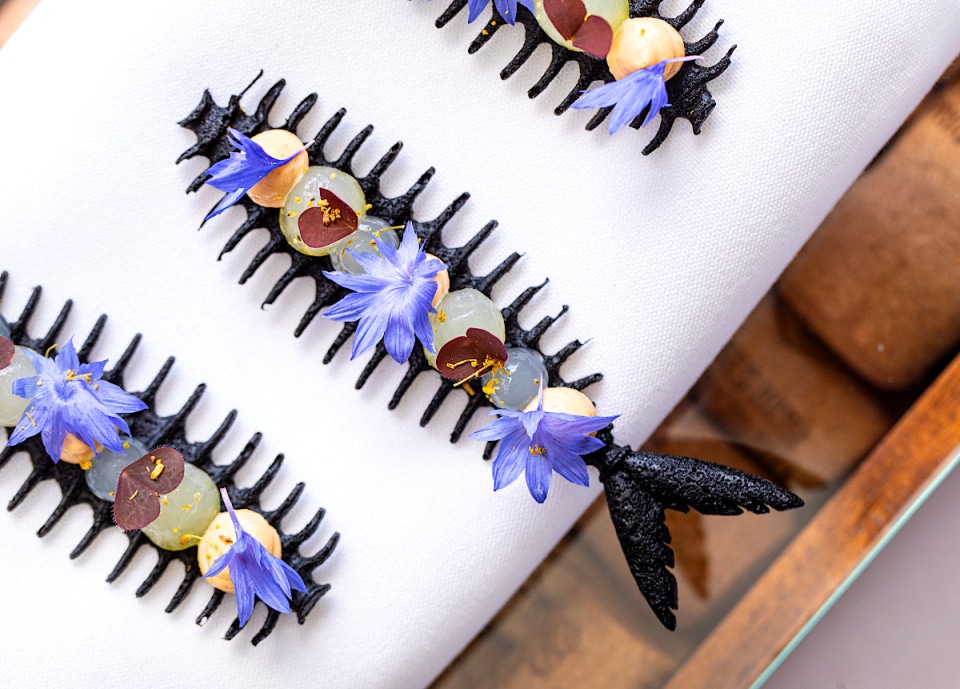
7. Is there one dish currently on the Lumière menu that best represents you as a chef? What makes it so personal, and what does it say about your approach to cooking?
The dish changes throughout the seasons, but I’d probably choose one built around ingredients from our own garden. Those dishes represent everything we believe in—seasonality, restraint and allowing exceptional ingredients to speak for themselves.
I don’t think cooking is about adding more. It’s often about knowing when to stop.
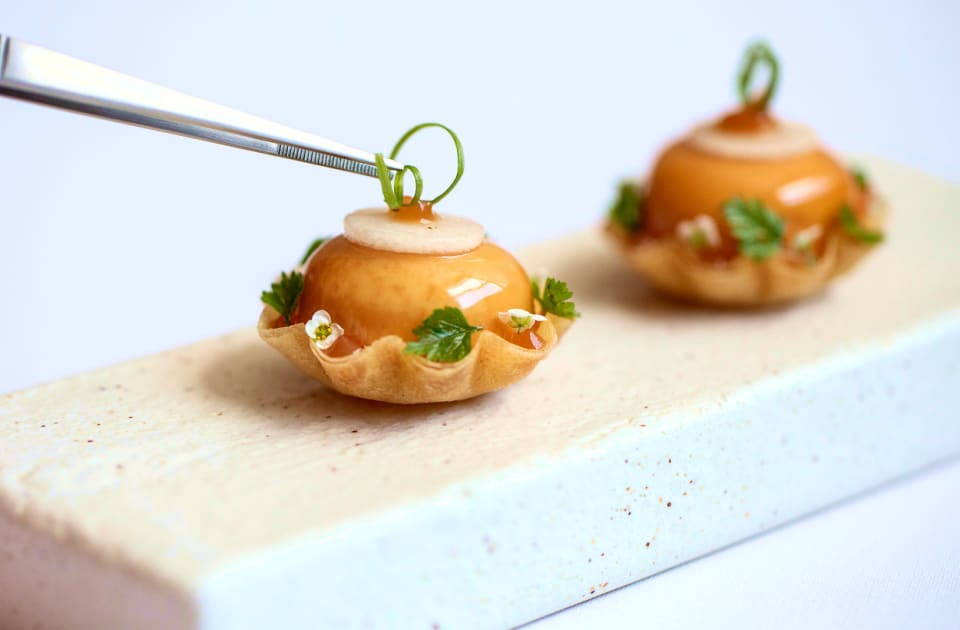
8. Your Tequila Slammer palate cleanser has become something of a signature at Lumière. In a world where fine dining can sometimes take itself very seriously, how important is it to surprise guests and inject a sense of fun into the experience?
Really important. People sometimes assume Michelin-starred restaurants have to be intimidating or overly serious, but dining should be enjoyable.
The Tequila Slammer catches people completely off guard. It creates laughter, starts conversations and reminds everyone that food should be fun as well as technically accomplished. If guests smile, relax and enjoy themselves, we’ve achieved something valuable.
9. You’ve represented Great Britain in international culinary competitions and continue to mentor young chefs. What qualities do you value most in the next generation entering professional kitchens?
Curiosity. Technical skills can be taught, but curiosity, humility and a willingness to keep learning are far more important. The best young chefs ask questions, listen carefully and never assume they’ve mastered everything.
This industry rewards people who stay open-minded.
10. Many home cooks admire the precision of Michelin-starred kitchens but assume the techniques are beyond their reach. What’s one habit, technique, or piece of advice that can immediately improve the food they cook at home?
Taste everything. Professional chefs are constantly tasting, adjusting seasoning and checking balance. You don’t need expensive equipment to cook better food—you just need to slow down, taste as you go and buy the best ingredients you can afford.
Great cooking usually starts with great produce.

11. Fine dining has evolved significantly over the past decade, with many restaurants moving toward more relaxed experiences. How do you see the future of British fine dining, and where do you think restaurants like Lumière fit within it?
I think guests increasingly want authenticity rather than formality. People still appreciate exceptional food and service, but they don’t necessarily want stiff dining rooms or unnecessary ceremony.
At Lumière we’ve always tried to balance refinement with warmth. That’s where I think independent restaurants have a real advantage—we can create genuinely personal experiences that feel unique rather than formulaic.
12. Finally, what’s next for you and Lumière? Are there any new projects, ingredients, or ideas you’re particularly excited to explore?
We’re always looking ahead. The kitchen garden continues to become a bigger part of what we do, and we’re constantly exploring new varieties, growing techniques and ways of making the restaurant even more sustainable.
Beyond that, our ambition isn’t necessarily to become bigger. It’s to keep getting better. If we can continue creating memorable experiences for our guests while building one of Britain’s most respected independent restaurants, then we’ll be very happy.
Chef Jon Howe | Instagram
Lumière
Clarence Parade, Cheltenham, Gloucestershire. GL50 3PA
