
Chef of the Week: Chef Roberto Solis, Huniik, Mexico

When Roberto Solís opened Néctar in Mérida in 2003, he hadn’t planned on becoming its chef. But when the chef he’d hired didn’t work out, Solís found himself stepping into the kitchen, learning through books, experimentation, and sheer determination. What began as an unexpected challenge would eventually set him on a path to becoming one of the most influential figures in modern Yucatecan cuisine.
Over the following two decades, Solís honed his skills in some of the world’s most celebrated kitchens, including Noma, The Fat Duck, Per Se, and Narisawa. Yet it was his time abroad that helped him appreciate the extraordinary culinary heritage of his native Yucatán. Returning home, he began developing what would become known as New Yucatecan Cuisine, combining traditional ingredients and flavors with contemporary techniques. The journey wasn’t always easy. Local diners initially resisted his unconventional approach, forcing him to rethink how he introduced new ideas without losing the connection to the food they knew and loved.
In May 2026, that persistence was rewarded when his two Mérida restaurants, Huniik and La Barra de Huniik, each earned a Michelin star, becoming the first restaurants in the city to receive the distinction.
In this week’s Chef of the Week feature, Solís reflects on his unlikely beginnings, the lessons he learned in world-renowned kitchens, and the challenges of building a culinary identity rooted in tradition while constantly pushing its boundaries. He also discusses the importance of preserving Yucatán’s Maya culinary heritage, the philosophy behind his two restaurants, and why he believes the region’s gastronomic evolution is only just beginning.
1. You grew up in Mérida and began your culinary career without formal training, opening your first restaurant, Néctar, in 2003. What first drew you to the restaurant business, and how did you develop your skills as a self-taught chef?
What led me to start cooking at my restaurant was the natural course of things and, in a way, a crisis. The chef didn’t turn out to be what he seemed, so I had to step into the kitchen myself. I started learning through books and practice. Later, as part of my training, I went on to work in different kitchens in different parts of the world.
Without a doubt, opening the restaurant in 2003 was one of the biggest challenges. It was initially a success, but as I matured professionally, continued learning, and truly got to know more about gastronomy, techniques, and what it means to be a chef, I began to develop my own identity. People had come to my restaurant for a particular reason, and one of my biggest challenges was figuring out how to keep them coming back.
I solved that by keeping the dishes people initially loved on the menu, while also introducing specials that reflected what I was creating at that time. That was how I gradually introduced people to new flavors, which they slowly began to embrace. Through this approach to cooking, I started gaining national recognition.
2. When you opened Néctar more than two decades ago, Mérida’s dining scene was very different from what it is today. What were the biggest challenges you faced when introducing a more contemporary approach to traditional Yucatecan cuisine, and how did local diners initially respond?
As I mentioned initially, the response was very negative. People didn’t want to eat what I was cooking because I had come back from traveling through Europe and the United States, among other places, applying the techniques and knowledge I had gained. People didn’t like it because I was changing the entire menu. I realized I couldn’t introduce so many changes all at once. I had to do it gradually, little by little.
Initially, the response was very negative. I realized I couldn’t introduce so many changes all at once. I had to do it gradually, little by little.
3. You’ve spent time working in some of the world’s most influential kitchens, including The Fat Duck, Noma, Per Se, and Les Créations in Japan. Which experiences had the greatest influence on your cooking philosophy, and what lessons did you bring back to Yucatán?
Yes, I have also worked in other restaurants, such as Per Se in New York, where I learned discipline. At The Fat Duck, I learned how to use technology in the kitchen and explore new possibilities. From Narisawa, I learned humility and respect. And in Denmark, at Noma, I learned that I had to be proud of my roots, my ingredients, my surroundings, and the place where I come from.
I realized that what we have at home has just as much value, if not more, than anything you can find anywhere else in the world.
4. Unlike many ambitious Mexican chefs who have built their careers in Mexico City or abroad, you’ve chosen to remain in Mérida throughout your career. What has kept you rooted in your hometown, and how has that decision shaped your cooking and the restaurants you’ve built?
Yucatecan cuisine, really, was something I started thinking about when I returned from Denmark. I realized that there was only traditional Yucatecan cuisine, and I couldn’t understand why there hadn’t been an evolution of that tradition.
That’s when the idea of New Yucatecan Cuisine was born. What I mean by that is: just as you can taste cochinita pibil and immediately feel that you’re in Yucatán, why shouldn’t you also be able to taste a dish made with Yucatecan ingredients, but using modern techniques and a fresher, newer perspective, and still feel that same connection to Yucatán.
5. You’re widely recognized as a pioneer of nueva cocina yucateca, or modern Yucatecan cuisine. How would you define this movement today? Where do you draw the line between respecting culinary traditions and reinterpreting them through contemporary techniques?
I believe Yucatán has two sides: its traditions and everything happening today, the way we experience Yucatán in the present. That’s really what it’s about: an evolution of Yucatecan cuisine, an expression of Yucatán today.
6. Yucatecan cuisine is deeply rooted in Maya culinary traditions, many of which have been preserved and passed down through generations. How do you approach incorporating this heritage into contemporary fine dining while recognizing the people and communities who have kept these traditions alive?
One way we connect with this heritage is through our main ingredient, corn, while honoring the communities that grow and cultivate it using traditional, artisanal methods.
Another way we preserve it is by sourcing native ingredients, the kind you won’t find in large stores or supermarkets, and working directly with the people who sell and produce them.
Ultimately, what we want is to preserve the essence of this heritage. We don’t want to lose it. Many times, we incorporate traditional dishes or elements exactly as they are, such as a typical Yucatecan sauce, into a new combination. We often keep these preparations unchanged. That’s how we honor our heritage.
7. Yucatán has an extraordinary range of distinctive ingredients, from recado negro and achiote to sour orange, local chiles, and native varieties of corn. Which ingredients do you find particularly exciting to work with, and are there any that you feel deserve greater international recognition?
One of my favorite ingredients is recado negro, a paste made from charred chili peppers and spices. Of course, sour orange is another one. Those are probably the two ingredients I use the most and enjoy the most.
And yes, I definitely think recado negro deserves much more recognition, both for the beautiful black color it brings to a dish and for the complexity involved in achieving that flavor without making the dish taste bitter or burnt.
8. One of the dishes closely associated with your cooking is your black onion preparation, which transforms a humble ingredient through contemporary techniques and traditional Yucatecan flavors. What inspired this dish, and how does it reflect your approach to modernizing regional cuisine?
Black onion is a very clear example of how I see Yucatecan cuisine. It’s about taking a humble vegetable, like an onion, and presenting it in a fun and unexpected way, creating a sense of surprise while still conveying the flavors of Yucatán through the recado negro, made with ashes, and a filling of xcatik chili mayonnaise. This is how I want to express and share Yucatán through the food at my restaurant.
The inspiration came from my time in Japan, where I learned the technique of tempura. I wanted to reinterpret it using Yucatecan ingredients and flavors to create something that represents where I come from.
So, in this case, the tempura incorporates corn and recado negro. That was the way I approached it and the inspiration behind the dish.
9. In May 2026, Huniik and La Barra de Huniik each received a Michelin star, becoming the first two restaurants in Mérida to earn this distinction. After more than two decades of developing your culinary vision in the city, what did this recognition mean to you personally? Has it changed anything about the way you approach your restaurants?
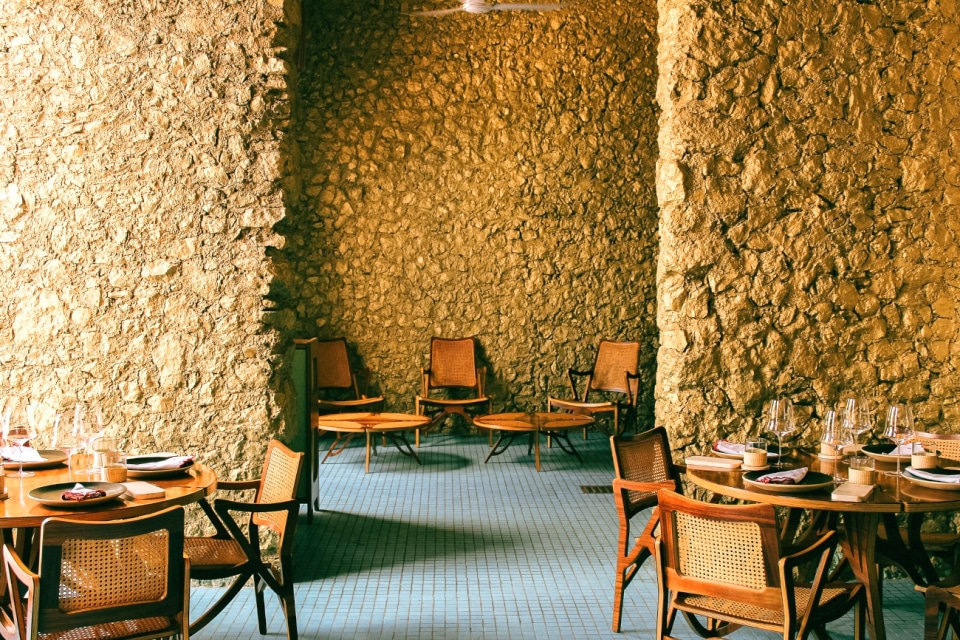
Winning the Michelin stars personally meant receiving validation for the way we work and the standards we have established. However, today, I see it as something that opened a window to a much bigger vision and a greater goal: to keep pushing ourselves further.
We know we can do more, and we haven’t yet reached the limits of what we’re capable of achieving. It made us think, ‘Wow, if we’ve accomplished this much already, imagine what we could achieve if we push ourselves even harder and give even more.’ It showed us that there are still so many possibilities ahead of us and that we can accomplish even greater things.
10. Huniik offers an intimate fine-dining experience, while La Barra de Huniik takes a different approach, with a chef’s counter and a tasting menu built around corn and inspired by the Japanese omakase format. What inspired you to create these two distinct concepts, and how do they allow you to explore different sides of Yucatecan cuisine?
Actually, the idea for La Barra came about for two reasons. First, a space that had previously housed a molino became available. And second, many people didn’t want to go to Huniik because of the price, since it’s a higher-end restaurant.
So I thought it would be a great idea to offer something for people who didn’t want to spend that much money at Huniik but still wanted to experience what we do and our philosophy, with a different approach focused on corn and at a more accessible price. I wanted to create something fun, drawing on my own experience in Japan and what I experienced there.
That’s how the Huniik bar was born. The approach is different because, at La Barra, corn is the main focus. Working with corn requires a different perspective. It’s more about comfort food, something heartier and more satisfying.
The way we approach the food is also different because we have limitations in the kitchen, so everything needs to be simple and practical. At Huniik, on the other hand, the dishes are more complex, with longer preparations and more equipment and tools involved.
So the way we approach each concept is different, but both always have to deliver on flavor and create a memorable impact.
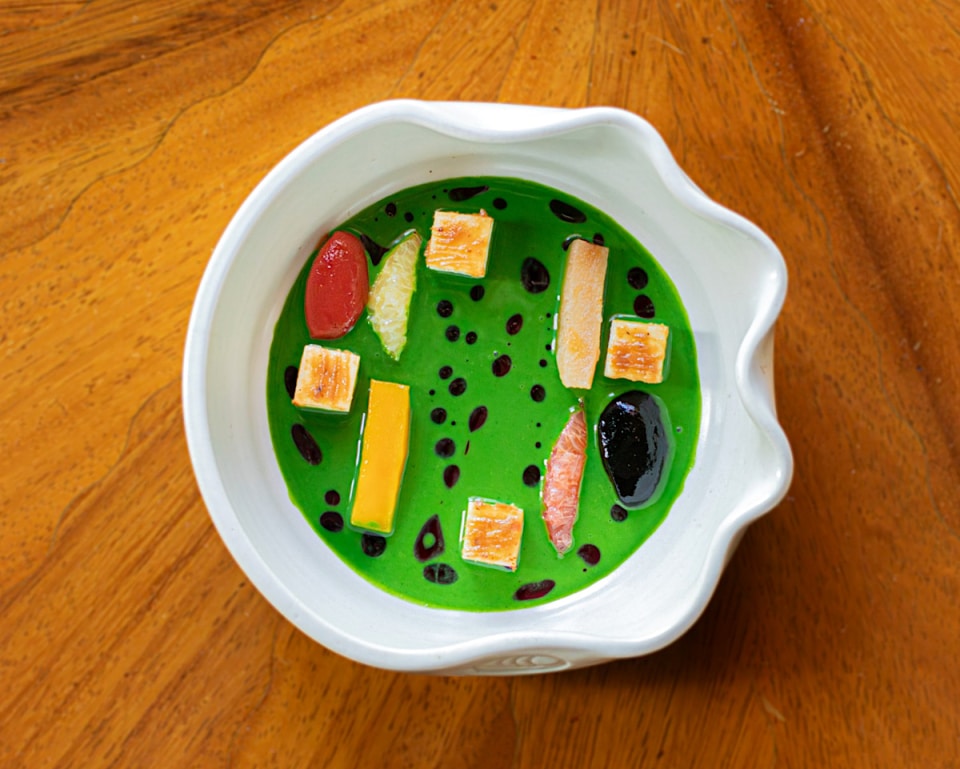
11. Huniik’s front-of-house director, Rodrigo Caltenco Núñez, also received the Michelin Guide’s Service Award in 2026. How important is hospitality to the experience you want to create, and how do you train your teams to communicate the stories behind your ingredients and dishes?
Our front-of-house team and the service they provide are extremely important to us. Hospitality is something we truly care about. And honestly, Rodrigo is a great asset to the team, someone who is truly passionate about service.
Much of the training has come from reading, observing other examples, and providing ongoing, day-to-day training. But above all, the most important thing is having a very close-knit team that feels like a family.
Travel also helps a lot, because it allows us to experience other restaurants and different approaches to service. That’s how we gradually develop our own identity.
We also taste the dishes together and explain exactly what we had in mind when creating each one: the flavors we want to convey, the concept, and the idea behind the dish. Ultimately, it all comes down to communication.
12. You’ve built and operated restaurants for more than two decades, navigating changing dining habits, rising costs, and the challenges of maintaining high standards. What have been your most important lessons about running a successful restaurant, and what advice would you give young chefs hoping to open their own establishments?
One of the most difficult things about running a restaurant, especially in my case, running one in Mérida, has been facing all the challenges along the way.
One of the biggest challenges was simply getting started, being a pioneer in a way, going out to work in different parts of the world, coming back, and then facing rejection. It was frustrating to spend so much money going abroad to learn and gain experience, only to return and find that people weren’t interested in what I had to offer. That created a lot of frustration, and there were many times when I was close to saying, ‘That’s it, I’ve had enough.’
One of the biggest challenges was simply getting started, being a pioneer in a way, going out to work in different parts of the world, coming back, and then facing rejection.
But I think tenacity, perseverance, believing in my dream and in my project, and having a tremendous amount of passion helped me get through it.
I’ve also learned that in this business, you always have to be thinking about innovation, staying up to date, and remaining relevant. It’s a difficult business that requires a lot of sacrifice. It’s exhausting, you spend long hours in the kitchen, and there’s a tremendous amount of pressure.
But at the end of the day, the challenges are always there: building a great team and learning to adapt to the times as they continue to change.
13. You’ve witnessed Mérida’s transformation into an increasingly important gastronomic destination. How has the city’s restaurant culture evolved since you opened Néctar in 2003? What opportunities and challenges do you see as Yucatán attracts more international attention and culinary tourism?
From a gastronomic perspective, things have evolved tremendously since I first opened the restaurant. One of the biggest challenges I see today is raising the standard of expectations among customers. Compared to major cities like New York or Mexico City, customers’ expectations in Mérida are still relatively low. People are still willing to settle for a lower level of quality. So one of the challenges is how to raise that level of quality and attract more customers who expect and demand a certain standard.
Another challenge, which is something we’re already seeing, is that more and more people from different backgrounds, age groups, and cultures are moving to Mérida. They bring different customs and different ways of experiencing gastronomy, and I think this enriches the local community.
Yucatecans, traditionally, can be a little more reluctant when it comes to trying new things or may not feel entirely comfortable with this type of contemporary cuisine. So it’s also a process of evolution, one that will continue over time and will probably take many years to fully develop.
14. For international diners whose knowledge of Yucatecan food may be limited to dishes such as cochinita pibil, which three traditional dishes or ingredients would you most like them to discover, and what makes each one special?
When it comes to the ingredients I would like people to discover, definitely recado negro, sour orange, and habanero chili.
Sour orange is a very special ingredient because of its acidity. It’s not like a sweet orange, and it’s not like a lemon either. It falls somewhere in between, and it’s a flavor you can’t really recreate by simply combining orange and lemon. It’s something unique. In Mexico, it’s an ingredient that is traditionally used almost exclusively in Yucatán, and it represents a very distinctive kind of acidity.
Recado negro, for me, is a very complex paste made from charred chilies and spices. It’s used to prepare a traditional seasoning called recado, and it has so many different layers and nuances. That’s what makes it so special.
And then there’s habanero chili, one of the great symbols of Yucatán, which really represents the flavors of our land. It’s an icon, but people are often afraid of it because of its heat. What we want to show people is how delicious it can be, what it brings to a dish, and that it doesn’t necessarily have to be spicy.
In fact, on our current menu, we have a dish where habanero is the main ingredient, but we prepare it in a way that removes the heat. That’s something very important to us.
15. Finally, for home cooks who want to explore the flavors of Yucatán, what’s one ingredient, cooking technique, or piece of advice that you believe can make the biggest difference in their cooking?
For home cooks, I would say the one ingredient you absolutely need to try, besides making cochinita pibil, is achiote paste.
As for the technique, you can cook it underground, but that can be quite complicated. Otherwise, you can simply make cochinita: pork marinated with achiote and sour orange, wrapped in banana leaves, and traditionally cooked underground in a pit. If that’s not possible, you can also prepare it in a conventional oven. I think that’s a great way to start exploring this side of Mexican cuisine.
Chef Roberto Solis | Instagram
Huniik
C. 60 415-B, between Calle 45 and Calle 47, Parque Santa Ana, Centro, 97000 Mérida, Yuc., Mexico
La Barra de Huniik
C. 60 417, Parque Santa Ana, Centro, Mérida, 97000, Mexico
