
Chef of the Week: Will Bee of Rosina, London
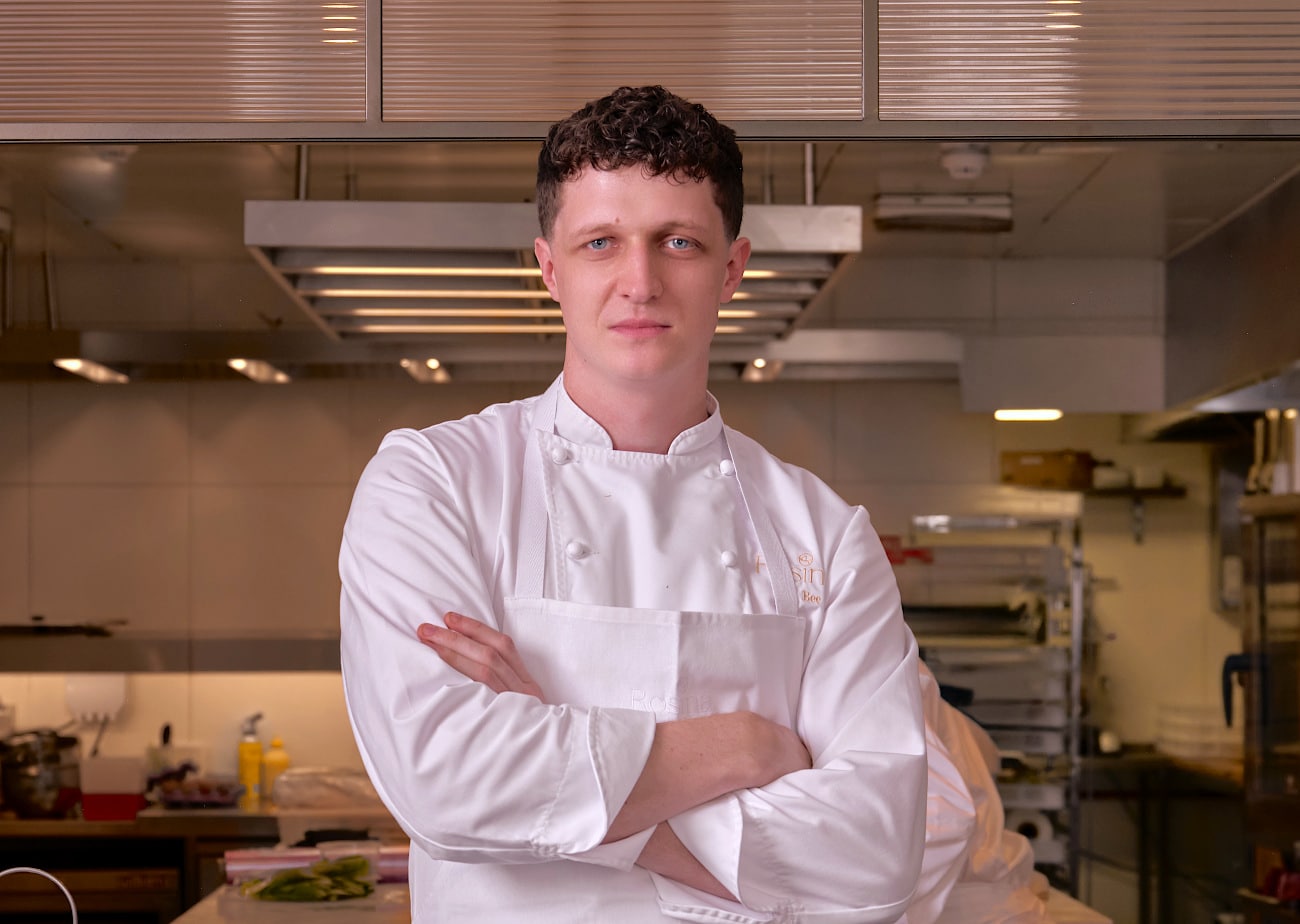
For Will Bee, becoming a better chef has meant learning not just new techniques, but also what to leave off the plate. “Simplicity is probably one of the hardest things to achieve consistently because there’s nowhere to hide,” he explains. That thinking shapes his cooking at Rosina, an Italian neighborhood restaurant near London’s Wandsworth Common, where he wants ambitious food and a genuinely welcoming atmosphere to sit comfortably together.
Bee started working in kitchens at just 13, later combining professional experience with university studies in Culinary Arts Management. His career has taken him from Paul Ainsworth at No. 6 in Padstow to Lita in London and now Rosina, with each kitchen offering lessons in produce, hospitality, leadership, and the importance of building a strong team.
At Rosina, he draws inspiration from across Italy, allowing the seasons to guide a menu that balances familiar pleasures with less expected dishes. Guests might settle in for pasta and a glass of wine or explore rabbit liver bruschetta, veal tongue with mostarda, and rabbit Milanese. The intention isn’t to surprise for its own sake, but to show how delicious overlooked ingredients can be when treated with care.
In this week’s Chef of the Week feature, Bee discusses the challenges behind seemingly simple cooking, the restaurant culture he wants to build, his ideal meal at Rosina, and the small adjustments that can make a big difference in a home kitchen.
1. You started working in kitchens at just 13 and later studied Culinary Arts Management at university. What first attracted you to cooking, and how did combining formal culinary education with professional kitchen experience shape the chef you are today?
Having started in kitchens at 13, I learnt the practical side of cooking from a young age. It allowed me to appreciate the camaraderie of a brigade and the passion of a single person to spark something inside me. Studying culinary arts management alongside working in professional kitchens gave me a broader understanding of the industry, from the creativity and technicalities of cooking to the management and leadership required to run a successful kitchen.
2.Your career has taken you from Paul Ainsworth at No. 6 in Padstow to Lita in London and now Rosina. What lessons from those very different kitchens have stayed with you most?
Every kitchen I`ve worked in has given me something different, whether that’s technical knowledge, an appreciation for produce, an understanding of hospitality or a different way of approaching food.
One of the biggest lessons I’ve taken with me is that there is no single formula for creating a great restaurant. The food needs an identity, but that identity has to be supported by the people behind it, the standards they uphold and the experience they create for the guests and that all starts in the culture of the team.
You begin to understand the value of restraint, of knowing when something needs more and, perhaps more importantly when it doesn’t.
I’ve also learnt that you never really stop learning. As you progress through your career your understanding of food changes, and things that once seemed important can become less so. You begin to understand the value of restraint, of knowing when something needs more and, perhaps more importantly when it doesn’t. I think those experiences have helped shape the way I approach Rosina, taking what I`ve learnt from different environments and applying it to something with its own identity.
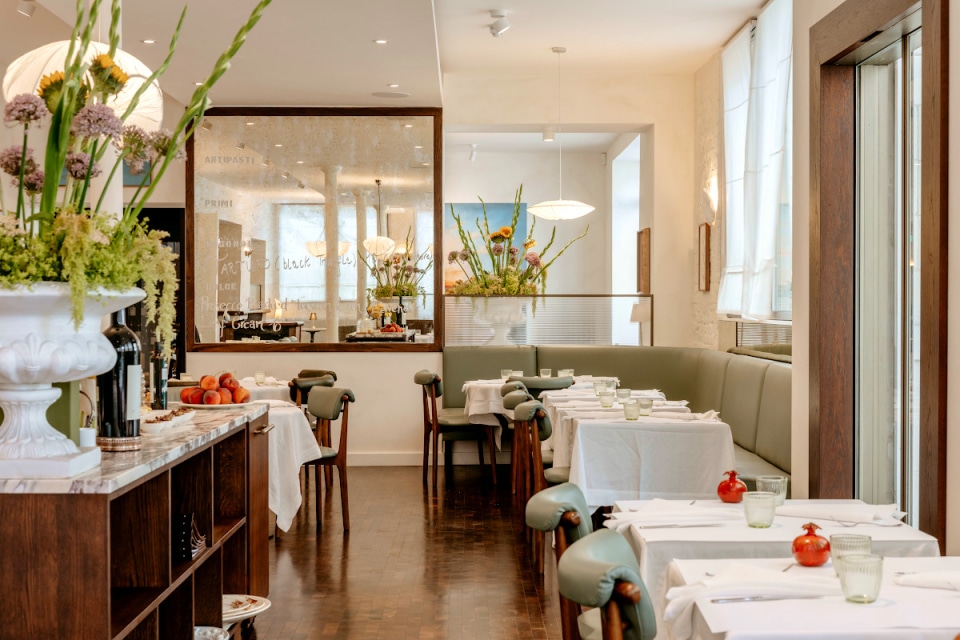
3. You’re now leading the kitchen at Rosina. What was the original vision for the restaurant, and what kind of Italian restaurant do you want it to be for the people who live around Wandsworth Common?
The original vision for Rosina has outgrown itself, and that’s happened quite organically, without us necessarily intending it to. We wanted to create a restaurant that felt incredibly accessible from the guest’s perspective, somewhere that wasn’t daunting in its approach, its food or its service, but that still offered something distinctive and exciting. For me it’s about creating something that belongs in the neighborhood while also being groundbreaking in how we interpret and present Italian food to the Wandsworth community.
It’s the marriage of exceptional producers, ambitious chefs and genuine hospitality, delivered in its purest form. We want people to feel comfortable coming in for a simple pasta and a glass of wine, but equally, we want to give them a reason to come back and explore something they might never have tried before. Ultimately, I’d like Rosina to be a restaurant that people feel belongs to them, while still challenging their expectations of what an Italian neighborhood restaurant can be.
4. Rosina draws inspiration from across Italy rather than focusing exclusively on one region. Are there particular regional Italian cuisines that you personally find yourself most drawn to?
It’s fascinating how dramatically Italian cooking changes throughout the regions. I’m particularly interested in the contrast between the northern and southern regions. In the north, you have the richness of butter, rice, filled pasta and slow cooked dishes, while further south champions reliance on vegetables, olive oil, seafood and the intensity of the ingredients themselves. It matters to me more about understanding why its food has developed the way it has, the climate, the landscape, the produce and the history all influences how people cook. It helps keep our identity clear.
5. Italian cooking often looks deceptively simple, with relatively few ingredients on the plate. What makes that simplicity difficult to execute really well in a professional kitchen?
Simplicity is probably one of the hardest things to achieve consistently because there’s nowhere to hide.
I’ve always thought of it as the same pursuit, but in reverse. Throughout your career, you learn techniques, develop new flavour combinations and explore increasingly complex ways of presenting food. Eventually you begin to realise that the real challenge can be taking all that knowledge and knowing what to leave out.
When a dish only has a few ingredients, every single one has to justify its place. The quality of the produce, the seasoning, the temperature, the texture and the timing all become much more exposed.
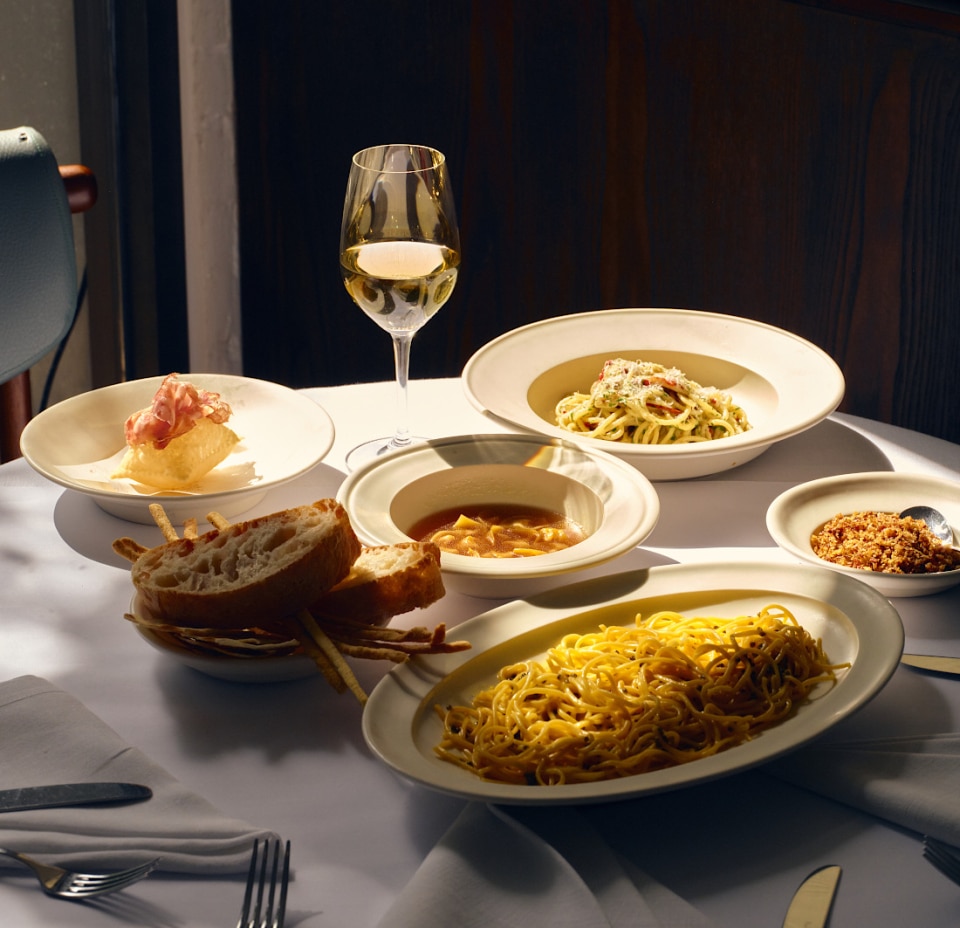
6. Rosina also features dishes that may be less familiar to many London diners, from rabbit liver bruschetta and veal tongue with mostarda to rabbit Milanese. Are there any lesser-known Italian dishes or ingredients that you would particularly like more British diners to discover?
Firstly, it’s not about serving something unusual just for the sake of it. It’s about showing people how delicious these ingredients can be when they’re treated with the same care and respect as any premium cut of meat. Italian cooking has a wonderful history of making the most of what’s available. Offal, secondary cuts and less fashionable ingredients have long played an important role in its regional cuisines, often producing some of the most flavourful and characterful dishes, so be open to eating the whole animal.
7. How important is seasonality to the menu at Rosina? Are there particular Italian ingredients or dishes you especially look forward to cooking at certain times of year?
The seasons allow us to naturally navigate through the regions of Italy, it gives the menu natural rhythm and allows us to work with ingredients when they are at their best, rather than forcing it to work all year round. If we focused on one region you would quickly run out of ideas. I love the transition into spring and equally exciting is autumn, you have two ends of the spectrum from freshness and light direction to deeper more comforting flavours in the autumn.
8. For someone visiting Rosina for the first time, what would your ideal meal look like? Which dishes would you tell them not to miss?
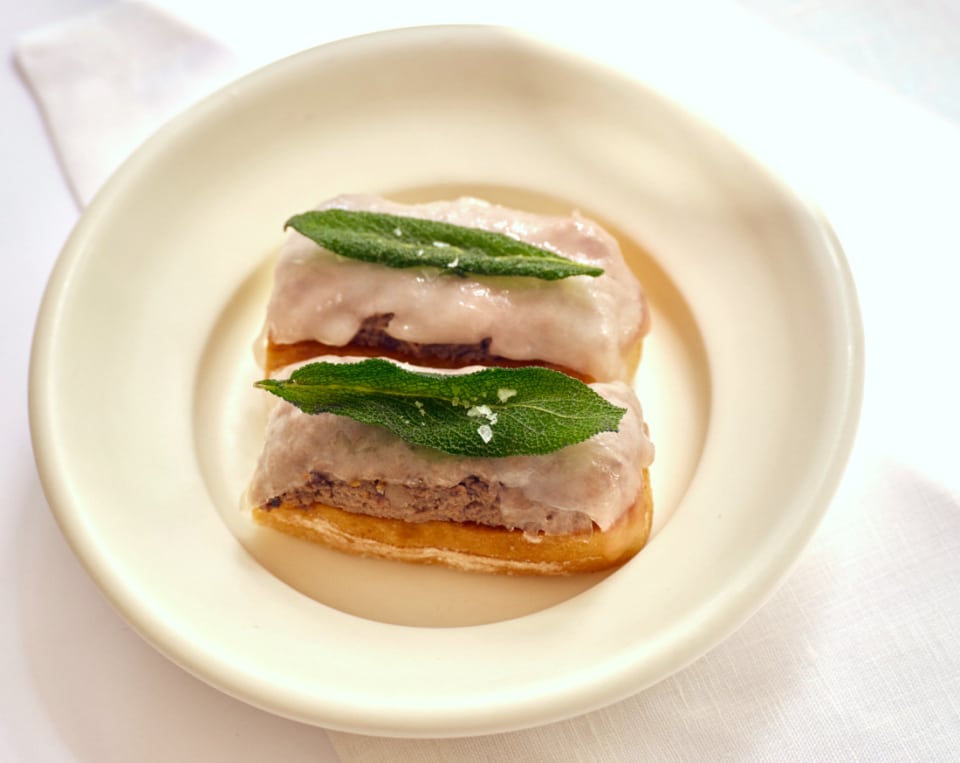
I’d want someone to experience a bit of everything that makes Rosina what it is, rather than coming in and ordering a conventional three course meal. I’d personally start with rabbit livers on bruschetta and gnocco fritto. Then I’d have fried sardines and vitello tonnato. It’s hard to come to Rosina and miss out on the risotto, but I’m going to have pumpkin agnolotti as my pasta and then the rabbit Milanese as my main. Once you have navigated your way through that you can’t leave without a scoop of tiramisu and a double espresso to finish it off.
9. For home cooks who want to improve their Italian cooking, what is one technique you think makes a bigger difference than people realize?
People often focus on the ingredients or the recipe itself, but knowing how to balance salt, acidity, fat and texture is what brings everything together. Taste as you go, adjust the seasoning and pay attention to the consistency. Small adjustments can make a considerable difference to the final product.
I tell my chefs to cook using all their senses, listen to the sounds of the pan, the look of its colour consistency and temperature, the smell of flavours combining, the feeling of fluidity in a pan.
I tell my chefs to cook using all their senses, listen to the sounds of the pan, the look of its colour consistency and temperature, the smell of flavours combining, the feeling of fluidity in a pan. It all requires full attention to create the best outcome.
10. And is there one Italian ingredient you think home cooks should spend a little more on (or simply learn how to use properly) because it can transform otherwise very simple dishes?
High quality extra virgin olive oil, one for cooking and one for finishing. Your preferences will be different, but I like a nice fresh one that isn’t too peppery or grassy in its tasting notes. Small harvests are usually the purest. A final drizzle can make all the difference.
11. Finally, what are you most excited to explore next at Rosina? Are there particular dishes, regions of Italy, ingredients, or techniques you’d like to bring onto the menu?
I’m excited to keep developing Rosina’s identity and to see how far we can take the restaurant without losing the qualities that make it accessible and welcoming. I think there’s still so much to explore within Italian cooking, particularly when you look beyond the dishes that have become familiar internationally and start discovering the regional traditions, ingredients and techniques that people might not know as well.
Ultimately, I want us to keep pushing ourselves creatively while remaining grounded in the things that matter most; exceptional produce, thoughtful cooking, consistency and hospitality. If we can continue to make food that feels both distinctive and comforting, while giving people a reason to return to Rosina, then I think we are moving in the right direction.
Chef Will Bee | Instagram
Rosina
35 Bellevue Rd, London SW17 7EF, United Kingdom
