
Chef of the Week: Felipe Riccio of MARCH, Houston
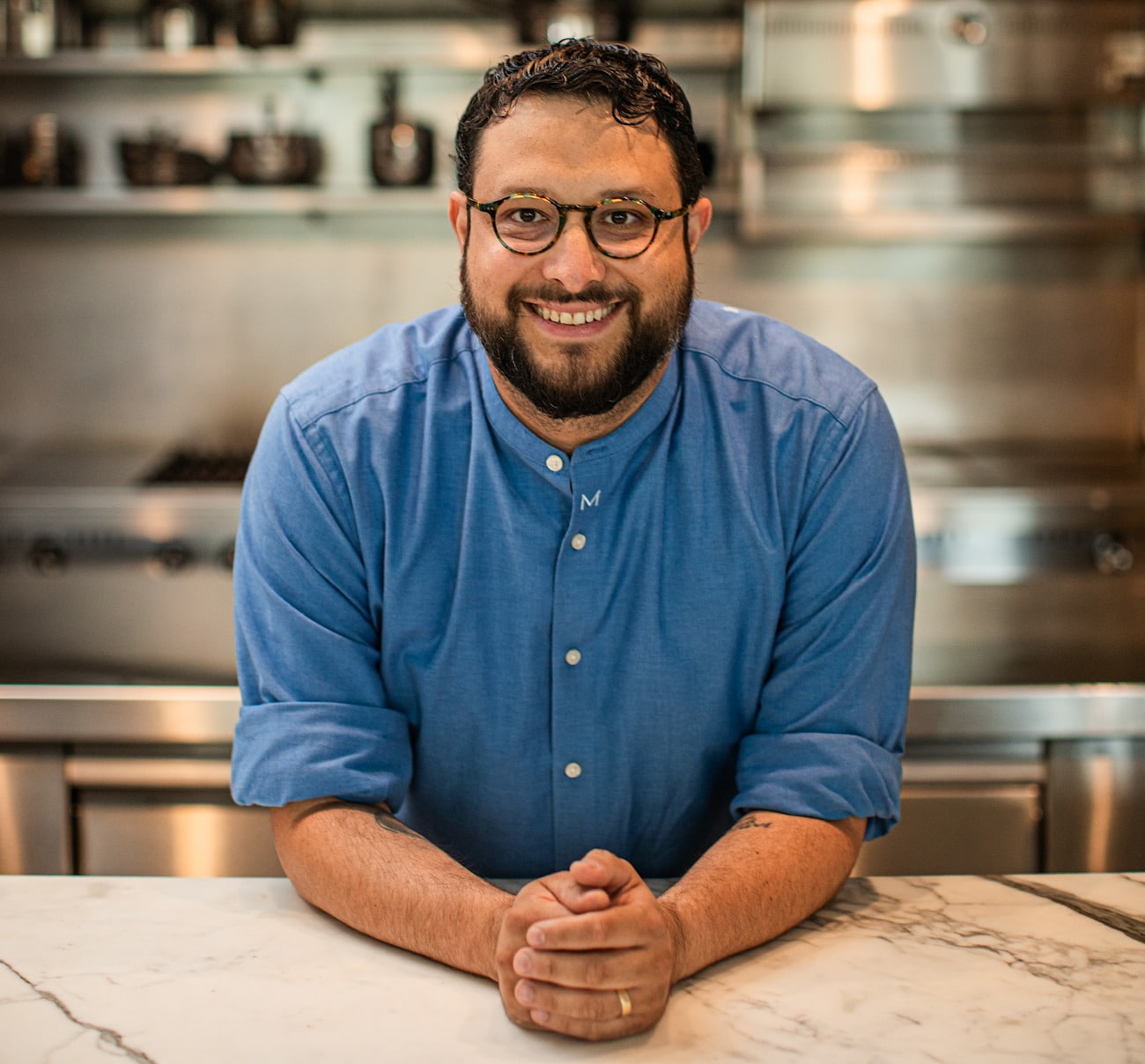
For Chef Felipe Riccio, food has always been about connections between cultures, places, people, and history. Born in Mexico City, raised on the coast of Veracruz, and shaped by Mexican, Spanish, and Italian roots, Riccio brings that same curiosity to MARCH, the acclaimed Michelin-starred Houston restaurant where each menu explores a different region, period, and culinary story from across the Mediterranean.
As Chef and Partner, Riccio approaches cooking with an unusually deep commitment to research. Months before a new MARCH menu reaches the dining room, his team dives into everything from migration, agriculture, and trade to historical recipes, contemporary cooking, and travel, gradually distilling that research into dishes that still have to pass the most important test: they must be delicious.
We spoke with Riccio about the kitchens and mentors that shaped him, his multicultural identity, the extensive research behind MARCH, why spices deserve far more attention, Houston’s remarkable food culture, and what earning a Michelin star has meant for the restaurant and its team.
1. Looking back, what experiences have had the greatest influence on the chef and leader you have become today?
There have been many, but I think about three periods in particular.
My time at Aura and then REEF really built my foundation. Aura was the first time I worked for what, at that age, I thought of as a real “Chef Chef.” Frédéric Perrier was a Master French Chef and ran a kitchen rooted in a very classical European tradition. There was hierarchy, discipline, repetition, organization, and very clear standards. I also worked closely with the adjoining butcher shop, so from very early on I was learning that understanding ingredients and how they are handled is just as important as what eventually happens on the plate.
REEF took that foundation and accelerated everything. I started as a cook and eventually became Executive Sous Chef, learning how to lead a large team, manage costs and labor, solve problems during service, and take responsibility for much more than my own station.
That traditional kitchen model has evolved tremendously during my career, and some parts needed to. But its discipline, standards, respect for craft, and sense of responsibility remain fundamental to the way I work today.
Camerata changed me in a completely different way. Learning wine from the ground up and going through the Court of Master Sommeliers process forced me to slow down. You taste something, stop, think about what you are experiencing, rationalize it, and begin connecting the dots between geography, climate, farming, production, history, and flavor. Kitchens rarely give you that kind of space because they are so fast and chaotic. That process had an enormous influence on the way I research and tell stories through food today.
Camerata also put me in much closer contact with guests. Understanding wine service and hospitality from the dining room side changed my ethos in the kitchen. Making technically good food is only one piece of the experience. How it reaches someone and how you make them feel matter just as much.
I realized that part of understanding your audience is knowing which part of your own experience has the most to offer them.
Then there was my time in Europe. I saw an enormous amount in a relatively short period, and every kitchen gave me something different. One memory I return to often is making staff meal at Osteria Francescana. I made cochinita pibil, which is not something I would normally cook professionally since most of my work has focused on Europe and the Mediterranean. They genuinely loved it, and it helped me realize something very simple. The audience you cook for matters. Those cooks did not need me to impress them with flavors they already understood. In that moment, I realized that part of understanding your audience is knowing which part of your own experience has the most to offer them.
All of those experiences taught me that cooking goes far beyond technique. It is discipline and knowledge, but it is also context, communication, and understanding the people you are cooking with and for.
2. You were born in Mexico City, grew up on the coast of Veracruz, and come from a family with Mexican, Spanish, and Italian roots. How has that multicultural background influenced the way you interpret the diverse, interconnected cuisines of the Mediterranean at MARCH?
I have never really known what it is like to belong to only one culture.
Christmas dinner is probably the easiest way to explain it. We could have romeritos con mole, bacalao a la vizcaína, and a Neapolitan lasagna on the same table. Nobody was trying to make some kind of multicultural statement. That was simply dinner.
I was enamored with my father being Italian and with the Spanish side of my mother’s family, but never in rejection of being Mexican. If anything, those things enriched my understanding of being Mexican and made my world feel bigger. Food made those connections incredibly tangible from a very young age.
I think that is why I have always been more interested in connections than borders. At MARCH, we look at the Mediterranean through migration, trade, religion, language, agriculture, conquest, and geography. The political borders we recognize today rarely explain the full story of how a cuisine came to exist.
I have never not lived between cultures, so the idea that food can belong very deeply to one place while also carrying evidence of everywhere it has been feels completely natural to me. That is a large part of what interests us at MARCH.
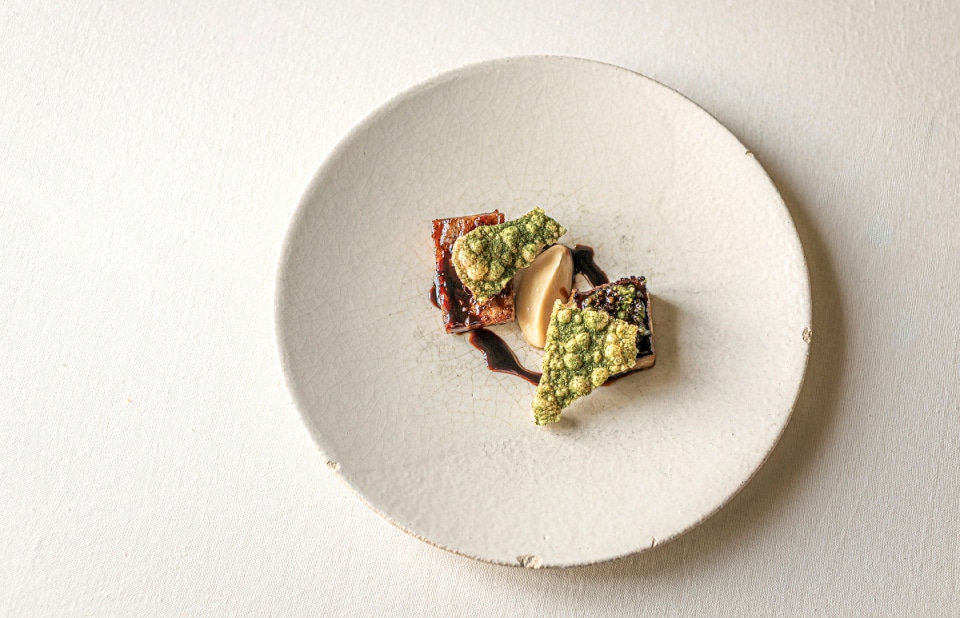
3. MARCH completely reinvents its menu every six months, exploring a different region and era of the Mediterranean. Can you walk us through the research process? How much historical research, travel, and kitchen experimentation takes place before a new menu is ready for guests?
I usually describe the process as a funnel.
At the very top is everything that could possibly help us understand a place: history, migration, agriculture, climate, religion, trade, language, ingredients, techniques, books, academic papers, old recipes, contemporary cooking, and, when possible, travel. As we move through the process, that information keeps narrowing. Some makes the research guide, some inspires ideas, fewer ideas ever get cooked, and fewer still survive R&D until eventually all of that work becomes the menu.
A MARCH season runs for about 23 weeks, and we usually begin working on the next one only three weeks after a new menu opens. I spend about three and a half to four weeks researching and writing the guide. The culinary team then gets roughly three weeks to absorb it, conduct their own research, and meet weekly to ideate. We intentionally do not cook during that period. We want to understand what we are looking at before immediately trying to turn it into a dish.
Then we begin about eight weeks of R&D with two tastings a week, moving only a few savory and pastry ideas forward at a time. We first taste with the culinary team, then bring in front of house leadership and the wine team for another perspective. The final weeks are spent revisiting dishes that still need work.
Before we close, we taste the entire experience over two days with the culinary team, front of house leadership, wine team, and captains. Then the team gets two weeks completely off. That rest matters. We come back for about a week and a half of training, the entire front of house team tastes the menu, and we finish with a Friends & Family service before reopening.
Travel is incredibly valuable, although it is not possible before every season. I look for those opportunities whenever I can, both for myself and for our team. We recently traveled to Georgia (in the Caucasus). Geographically it falls outside the Mediterranean, but the Caucasus is another extraordinary crossroads, sitting between the Black and Caspian Seas and shaped by centuries of movement and encounter. The trip reinforced how much you can learn by looking beyond modern borders and understanding what happens in the spaces between them.
Travel also reinforces something I believe very strongly: food is circumstantial. Where you are, who you are with, what you are celebrating, even what happened earlier that day can change how something tastes. Eating a dish in its place of origin can make it feel incredibly vivid because you are experiencing the landscape and culture that produced it at the same time.
We cannot recreate those circumstances in Houston, and I do not think we should pretend that we can. What we can do is try to understand them.
The funnel continues all the way through training. Our team usually knows far more about each dish than we would ever communicate to a guest. That is intentional. We do this much research not to prove how much we know, but to give ourselves enough understanding to make better decisions and, ultimately, more delicious food.
4. If you could create your ultimate four course meal by choosing a starter, main course, dessert, and wine or beverage from different regions you’ve featured, what would you serve and why?
After twelve seasons, this question immediately makes me think about both where we have been and how much is still left to explore. We have talked about doing a kind of MARCH greatest hits menu one day, but we have never quite committed to it because I still feel like we have barely scratched the surface of the Mediterranean. I find it hard to just pin point one dish so my ideal meal would be:
España Verde
A table overflowing with pintxos. Very seafood heavy, with whatever shellfish and fish are best that day, great seasonal vegetables, salumi, cheeses, anchovies, and a lot of little things to share. Straightforward food, but obsessive about quality. I would want this part of the meal to stretch out for a while, with everyone reaching across the table and finding one more bite to try.
Campania, still unexplored at MARCH
Pasta e patate alla Napoletana. Campania is a region we have not explored at MARCH yet, but it is deeply personal to me because of my family heritage and enormously important to the larger story of the Mediterranean. Pasta e patate is such a simple, comforting dish, and one I would happily build a meal around. There would definitely be mozzarella di bufala somewhere on the table too, probably with great olive oil and bread. Spaghetti alla Nerano would be a very close second.
The Mediterranean Coast
For the main, I would move around the coast of Southern Spain, Southern France, Greece, and North Africa. Whole fish cooked over fire, a few simply grilled meats, beautiful vegetables, olive oil, herbs, and a handful of sauces or condiments. Nothing overly composed. Just exceptional ingredients, fire, seasoning, and enough restraint to let everything taste like itself.
The Levant
I would finish with the knafeh from our Levant menu. Akawi cheese, limon omani, pistachio, followed by a platter of beautiful fruit. I love the combination of warm cheese, sweetness, acidity, perfume, and texture, and fruit feels like the right way to let a meal like this slowly come to an end.
To Drink
Vermouth to begin, then wine moving with us around the Mediterranean as the meal progresses. An old Madeira toward the end, followed by an amaro after dessert. So I suppose my ultimate four course meal is actually a very long lunch with far too much food on the table.
And now that I have said all of this out loud, June, one of my business partners, is probably going to make me do the greatest hits menu sooner rather than later.
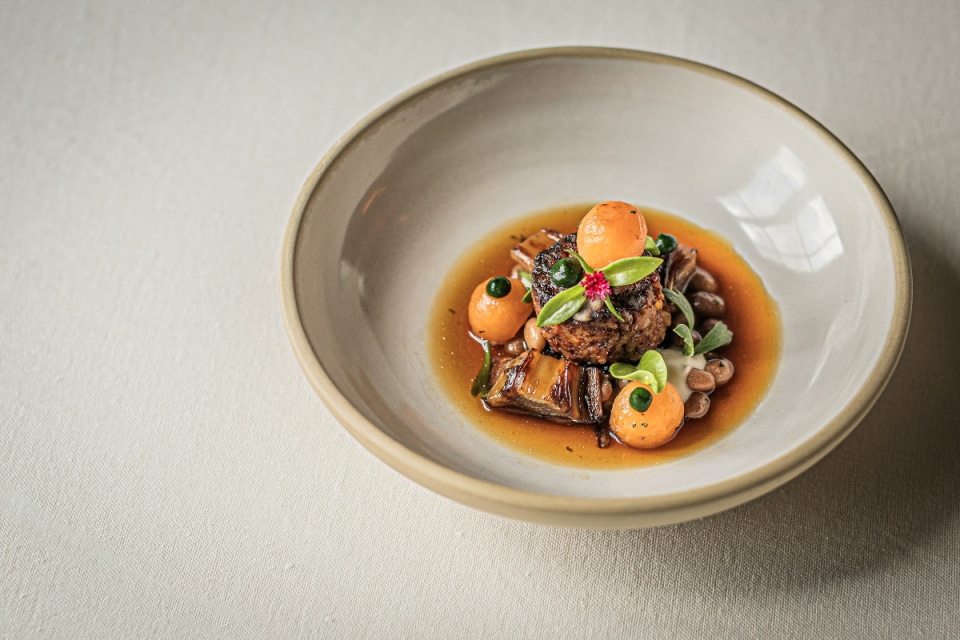
5. After exploring so many corners of the Mediterranean, have you discovered an overlooked ingredient or cooking technique that you believe deserves a much wider audience today?
Spices.
That sounds almost too obvious because they are in every kitchen, but I think we have forgotten how extraordinary they can be. So much of ancient trade revolved around spices. They moved across continents, shaped economies, and changed the way people cooked, yet today we often treat them as commodities.
We obsess over the provenance of coffee, vegetables, meat, wine, and olive oil, then reach for a generic jar of black pepper without thinking twice. The world of pepper alone is enormous. Kampot pepper does not taste like Sarawak. Fresh green peppercorns are completely different from dried black or red ones. The differences can be floral, fruity, resinous, spicy, or almost citrusy depending on where and how they are grown and processed.
There is a huge opportunity for cooks to approach spices with the same attention we already give wine, olive oil, cheese, or meat.
The same thing happens with ingredients we think we already know. Taste really beautiful turmeric from a producer like Diaspora Co. and it can completely change your understanding of what turmeric tastes like. Their Dhania coriander is incredibly floral. We also work with La Boîte and Rare Tea Cellar, suppliers that constantly remind us how much complexity can exist in ingredients we often think of as background seasoning.
I think there is a huge opportunity for cooks to approach spices with the same attention we already give wine, olive oil, cheese, or meat. Think about provenance, variety, harvest, freshness, and how you treat them in the kitchen. A spice should not always disappear into a dish. Sometimes it deserves to be the thing you are actually tasting.
6. Storytelling is central to the dining experience at MARCH. How do you ensure that the narrative enhances the food without overshadowing it?
The dish has to be delicious even if the guest never hears the story.
We do an enormous amount of research, but very little of it should ever arrive at the table as information. By the time a dish reaches a guest, months of research, R&D, discussion, and training have already been distilled into a few bites and perhaps a few sentences.
Our service team is incredibly curious and often knows far more about a dish than they could reasonably say during service. The challenge is deciding what piece of information will actually make the next bite more meaningful. Sometimes that might be history. Sometimes it is a technique or an ingredient. Sometimes the right thing is to say almost nothing.
That also connects to something I believe strongly, which is that food is circumstantial. A guest does not walk into a restaurant as a blank slate. Maybe they are celebrating an anniversary. Maybe they had an awful day. Maybe they are nervous about a tasting menu, or maybe they have eaten in restaurants like ours all over the world. All of those circumstances affect how they experience what we cook.
The lounge at MARCH is a physical expression of that idea. Before guests enter the dining room, they spend time in the lounge with drinks and snacks. It gives them a chance to leave some of the outside world behind and settle into the experience. In a way, it becomes their last memory before the tasting menu begins. It also gives our team time to understand where that particular table is that evening.
That is where hospitality becomes more important than storytelling. We can have the most interesting research in the world, but if we are not paying attention to the person sitting in front of us, then we have missed the point.
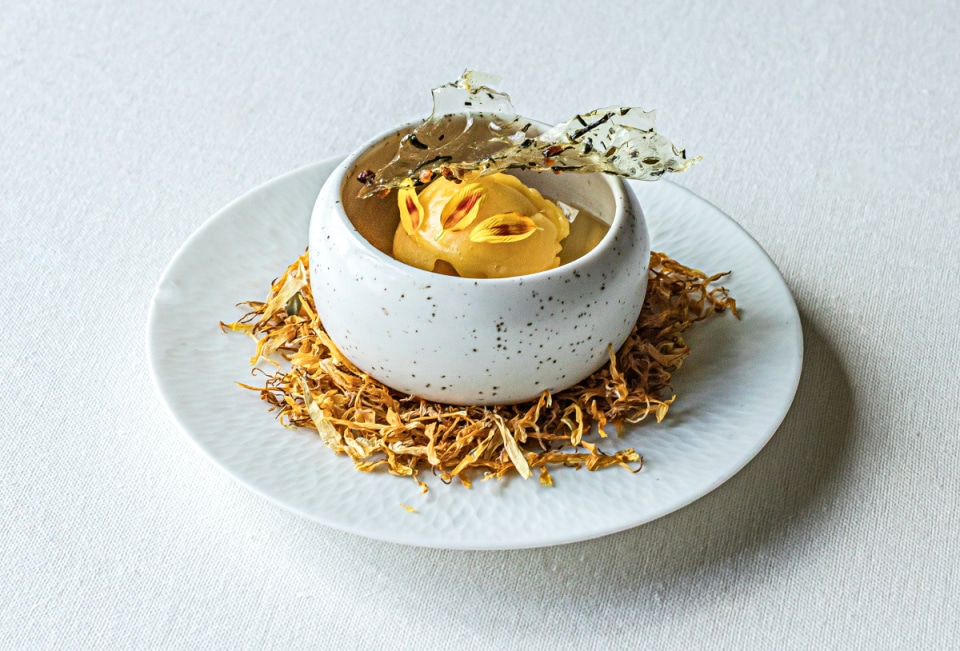
7. Houston is one of the world’s most culturally diverse food cities. How has living and cooking there influenced your own culinary identity, and what do you think makes Houston’s dining scene so special?
Houston is where I became a cook, so it is impossible for me to separate my culinary identity from the city. Most of my professional foundation was built here, long before I went to Europe.
What I love about Houston is that diversity is not something you have to seek out. It is part of everyday life. You are constantly exposed to ingredients, cuisines, traditions, and people with completely different relationships to food. As a cook, that is an incredible education.
[In Houston], there is less pressure to fit neatly into someone else’s definition of what a cuisine is supposed to be.
We are also very lucky to have great diners with remarkably diverse and curious palates. I think that gives restaurants permission to take chances. There is less pressure to fit neatly into someone else’s definition of what a cuisine is supposed to be. That has certainly benefited MARCH. We can ask guests to spend an evening exploring a very specific place or period of the Mediterranean, and there is an openness to that.
Houston has also taught me that a city’s cuisine does not need one identity to have a strong identity. So many cultures are allowed to exist next to one another here, and for someone like me, who has always lived between cultures, that feels very natural.
8. MARCH earned a Michelin star when the guide arrived in Texas. What did that recognition mean to you and the team, and has it changed the way you approach the restaurant or your role?
I was at the ceremony with my wife and June when they announced the star. I was thrilled, but one of my first thoughts was that I could not wait to get back and celebrate with the team.
There are so many people behind a restaurant like MARCH. The cooks and captains are the most visible, but there are also dishwashers, front servers, sommeliers, managers, farmers, fishermen, artisans, and countless others whose work eventually reaches the guest. The recognition belonged to all of them.
It has had a very real impact. It has brought new guests to Houston and to MARCH, helped us recruit people who want to be part of what we are building, and given the team an enormous sense of pride. But I do not think it changed the philosophy of the restaurant. We were already asking ourselves to work with intention and pursue excellence before Michelin arrived.
What it did add was another layer of responsibility. It is still surreal to say that MARCH has received that recognition, but we cannot live on the memory of receiving it. We have to earn it again every day and every year.
9. You’ve worked in kitchens renowned for both precision and creativity. Was there one chef or mentor who fundamentally changed the way you think about cooking or leadership, and what did they teach you?
One of the most important people in my career is actually my culinary school instructor, Christy Sykes. We are still close friends today. What she taught me was care. That sounds simple, but she cares deeply about everything she does. About the food, about teaching, about the people around her, and about doing things properly. She ingrained that in me very early in my career.
Technique changes. Restaurants change. The way we lead kitchens has changed enormously since I started. But caring deeply is still at the center of all of it. If you care, you notice things. You ask questions. You hold yourself accountable. You want the person next to you to succeed. You do not accept something simply because it is good enough.
I have had many mentors since then, and June has taught me an immeasurable amount about restaurants, hospitality, wine, business, and leadership as we have built Goodnight Hospitality together. But I think Christy gave me something foundational before I had enough experience to understand how important it would become.
10. As Chef and Partner, mentoring young cooks is an important part of your role. What qualities do you value most in chefs who join your team?
I look for people who are hungry to learn, humble, and curious. Technique matters, but we can teach technique. It is much harder to teach someone to genuinely want to understand why something works.
And when I say curious, I do not mean only curious about food. I want people who wonder how the whole restaurant works. Why does this plate arrive at this exact moment? Why did the sommelier choose that wine? How do purchasing and labor affect what we do? Why does the dining room feel the way it does?
I value cooks who want to become excellent at their craft, but who are humble enough to understand that their craft is one part of something much larger.
The further I have gone in my career, the more I have realized that no one person holds every piece of the puzzle. June and I certainly do not. A restaurant at this level only works because a large group of people possess different knowledge and trust one another enough to put it together.
So I value cooks who want to become excellent at their craft, but who are humble enough to understand that their craft is one part of something much larger.
11. Many home cooks are intimidated by restaurant level cooking. What’s one technique, ingredient, or habit that can immediately elevate the food they prepare at home?
Taste, taste, taste. It sounds obvious, but a lot of people cook a recipe from beginning to end and only really taste the food when they sit down to eat it.
Taste the ingredient before you cook it. Taste as you season. Taste throughout the process and ask yourself what changed, what is missing, and whether the thing you just added actually made it better.
Start with the best ingredients you can reasonably find and do not be afraid to make mistakes, but learn to trust your palate. Cooking gets much easier once a recipe becomes a series of decisions rather than instructions you are afraid to break.
12. Finally, what’s next for you and MARCH? Are there any upcoming regions, ideas, or projects that you’re particularly excited to explore?
One of the things I am most excited about is returning to Italy with June in Spring 2027 for a research trip through Bologna and Liguria with Modern Adventure.
Those trips are exciting because they are not just about finding dishes we might want to cook. I want to understand why people cook the way they do, how ingredients are produced, what has survived, what has changed, and what the landscape tells us that a recipe cannot.
That research will eventually find its way back to MARCH for the second 2027 season, but the learning never stays inside one restaurant. What we discover at MARCH influences Rosie Cannonball, Montrose Cheese & Wine, and The Marigold Club, and the opposite happens as well. Ideas, techniques, ingredients, and hospitality lessons move between all of them.
That exchange is one of the things that excites me most about what we are building at Goodnight Hospitality.
Chef Felipe Riccio | Instagram
MARCH
1624 Westheimer Rd, Houston, TX 77006, United States
