
Chef of the Week: Djordjo Cetkovic, Executive Chef, Pano Kato, Singapore
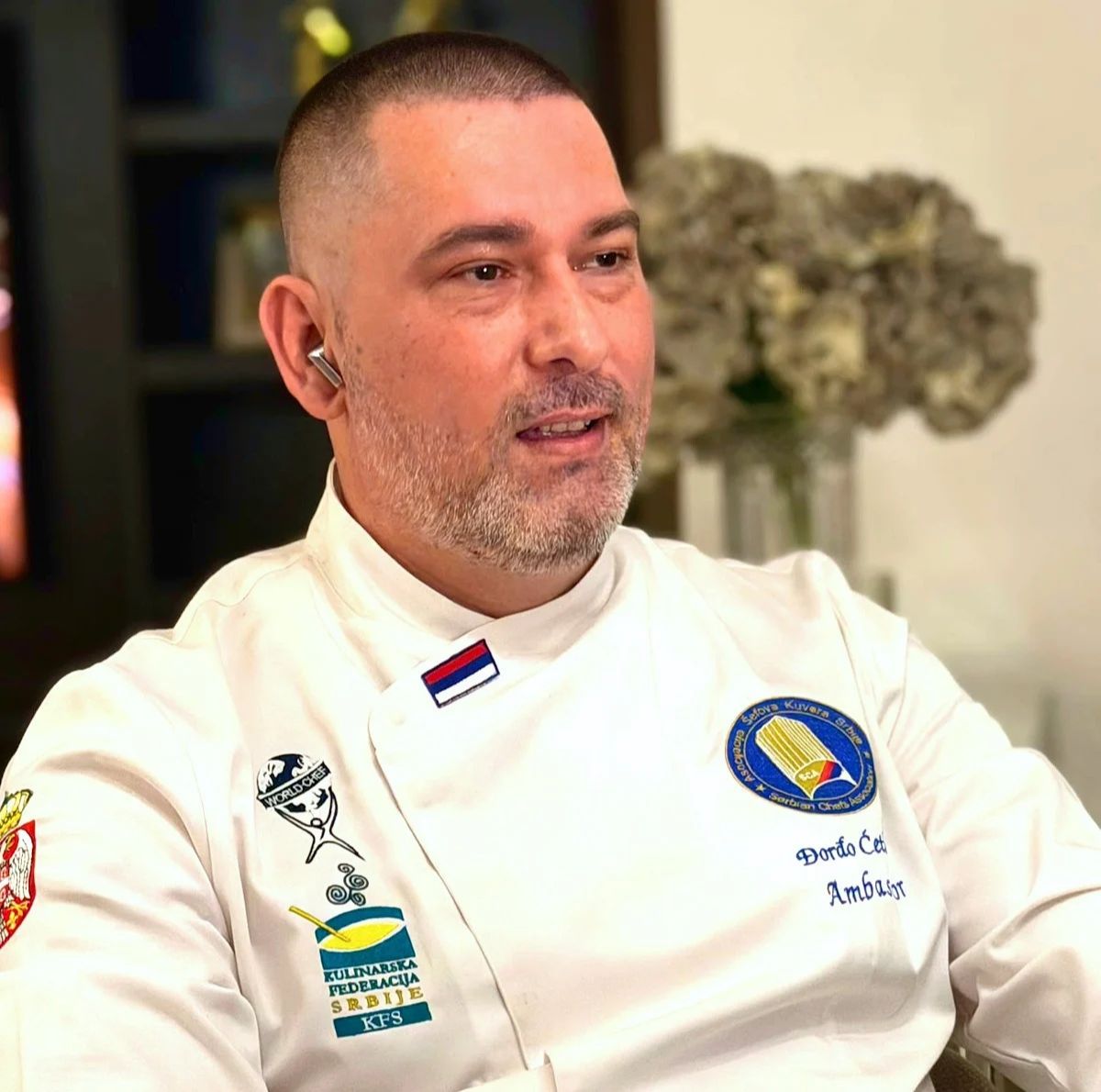
For Serbian-born chef Djordjo Cetkovic (Đorđo Ćetković), great cooking begins with good ingredients, patience, and respect for tradition. Those early influences have stayed with him throughout a career spanning more than two decades and professional kitchens across Europe and Asia.
Now Executive Chef at Pano Kato, a Greek and Mediterranean restaurant in Singapore, Djordjo draws on his Serbian roots and years spent cooking in Greece to create food that is both comforting and deeply rooted in tradition. But his expertise extends well beyond the plate. As a restaurant consultant, he helps hospitality businesses develop successful concepts, improve kitchen operations, and manage costs without compromising quality.
His passion for culinary heritage is also reflected in The Grand Heritage Cookbook, a collection of 145 recipes exploring Serbian and Greek traditions, monastic cooking, historical dishes, and contemporary fine dining.
We spoke with Djordjo about his culinary journey, the challenges of running a profitable restaurant, why Serbian cuisine deserves more international recognition, and the lessons he has learned from more than 20 years in professional kitchens.
1. You were born in Bosnia and grew up in Loznica, Serbia. What are your earliest food memories, and what first inspired you to pursue a career as a chef?
I was born in Tuzla and grew up in Loznica, on the Drina River, in a part of the world where guests are welcomed with bread and salt. My earliest food memories aren’t about restaurants. They’re about a family table: freshly baked bread, kajmak, homemade cheese and wine, and a family gathered together.
My cousin first inspired my love of cooking. Through him, I understood that food could be a craft, not just a meal. I worked in kitchens while I was still at school and taught myself much of the trade by watching, asking questions, and practicing. In 2003, I cooked my first dish for paying guests: hunter’s schnitzel with veal (lovačke šnicle). It’s a traditional home-style dish that requires patience and doesn’t allow for shortcuts. The sauce needs to simmer slowly, and guests can immediately tell if you’ve rushed it. I still remember waiting for that plate to come back empty.
2. You’ve spent more than two decades in professional kitchens, working across Serbia, Austria, Switzerland, Germany, Portugal, and now Singapore. Which experiences have shaped you most, both as a chef and as a hospitality professional?
Three things shaped me most.
The first was starting as a sous chef straight after school. When others were just starting out in professional kitchens, I already had years of experience behind me. A sous chef has nowhere to hide, so you quickly learn that running a kitchen isn’t just about recipes. It’s about organization.
The second was my time at Hotel Daniel in Graz, Austria, in 2004 and 2005, working under my first real mentor, Chef Kristijan Kohner. He was an old-school chef, and from him I learned that working in a kitchen isn’t a nine-to-five job but a way of life. Mise en place finished before service, cleaning as you go, everything labeled and dated, one voice at the pass. I still run my kitchen according to those principles.
The third was running a business. In 2015, I ran a catering company, Gladni Patak (Hungry Duck), with my kum (best man), Vladimir Birčaković. When it’s your own business, every wasted ingredient and every late delivery comes straight back to you. Through Gladni Patak, I developed the menu and cooked for the birthday celebration of Ivica Dačić, then First Deputy Prime Minister and Minister of Foreign Affairs. Over the years, I also cooked for actor Viktor Savić at Detlić restaurant in the Banovo Brdo neighborhood of Belgrade. My experiences in Switzerland, Germany, Portugal, and a year and a half on the Greek island of Thasos added to that foundation. Altogether, I spent almost nineteen years working in European kitchens before moving to Singapore.
3. What originally brought you to Singapore, and what have you learned from working in such a diverse and competitive dining scene?
I came to Singapore in 2018 through the Culinary Federation of Serbia to open Zorba’s for 1Group. That New Year’s Eve, I cooked for Slobodan Stefanović at Zorba’s on Sentosa, and it felt like a piece of home had traveled with me.
Pano Kato is my ninth restaurant in Singapore. Before that, I worked at Zorba’s, Hannibal at Robertson Quay, a small restaurant in the Botanic Gardens, and The Black Hole Group.
You cannot hide a weak kitchen behind a beautiful story.
Singapore has taught me three things. First, speed and standards must go hand in hand; you cannot hide a weak kitchen behind a beautiful story. Second, teams are multinational, and the real problem is rarely language but unclear expectations. Third, the climate changes everything. The heat and humidity are still the hardest part for me. Dough behaves differently, herbs wilt faster, and dairy products require more careful storage. That’s why I cook in smaller batches, more frequently, and check textures throughout the day.
Singapore is also home in the deepest sense. My wife, Masziana, is Singaporean, and to me, this island is paradise on e
4. You’re currently Executive Chef at Pano Kato, a Greek and Mediterranean restaurant in Singapore. How would you describe the restaurant’s culinary philosophy, and what sets it apart from other Mediterranean restaurants in the city?
Pano Kato is located in Tanglin Mall and is run by House of AnLi. I’ve been Executive Chef since May 2026, leading a kitchen team of nine people from different nationalities. Our philosophy centers on generous Greek and Mediterranean food that lets the ingredients speak for themselves: olive oil, lemon, and herbs used generously but thoughtfully, simple, honest grilling, and meze made for sharing.
What I bring is a cook’s understanding of the Greek table from the inside. I lived and cooked on Thasos (i.e. an island in the northern part of Greece) for a year and a half, and the Balkan and Greek kitchens are close cousins, both built around shared plates, seasonal produce, and slow-cooked meats. My rule is that every dish is built for the pass: if the team can’t reproduce it consistently on the busiest Saturday night, it isn’t ready for the menu, no matter how good it tasted during testing.
5. Is there a particular dish on the Pano Kato menu that you’re especially proud of? What makes it special?
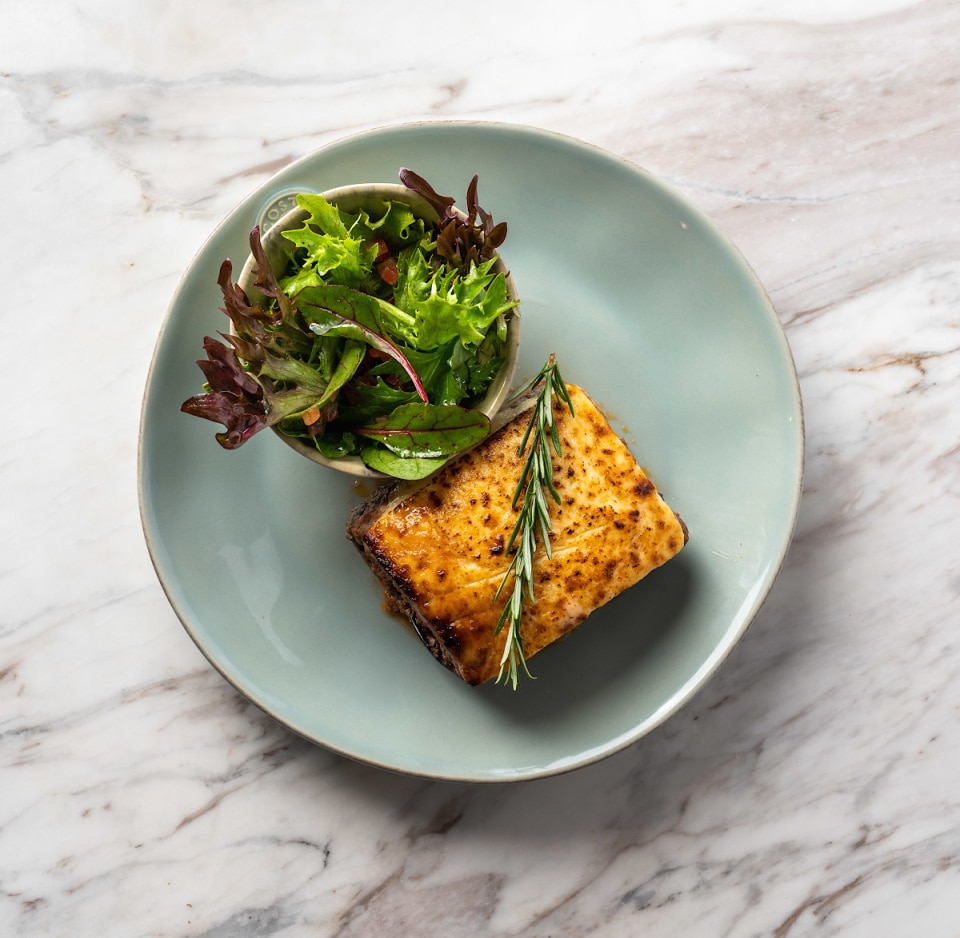
Yia Yia’s Moussaka. Yia yia means grandmother in Greek, and that’s exactly the spirit of the dish: something that should taste like someone cared for it all afternoon. We roast the eggplant and potatoes, cook the Wagyu beef and ground lamb in a tomato sauce, then layer everything with béchamel and Parmesan before baking until golden brown and set. Then comes the step people often skip at home: letting the moussaka rest before cutting it, so each slice holds its shape and the layers remain distinct.
I’m proud of it because it’s a dish that requires patience but delivers consistent results. Every portion is weighed and every step documented, so the moussaka a guest enjoys on a quiet Tuesday is exactly the same as the one served on a busy Saturday night.
6. Beyond your work as a chef, you also advise restaurant owners on everything from concept development to kitchen operations. What are the most common mistakes you see first-time restaurant owners make, and what advice would you give someone preparing to open their first restaurant?
The most common mistakes are always the same. Owners buy equipment before they’ve finalized the menu. They create menus that their kitchen teams can’t execute consistently at eight o’clock on a busy Saturday night. They treat food costs as something to worry about after opening. And they build the entire kitchen around one talented person, so when that person leaves, the restaurant falls apart.
[First-time restaurant owners] create menus that their kitchen teams can’t execute consistently at eight o’clock on a busy Saturday night.
My advice is simple: know your menu first, then design the kitchen around it. Keep the menu short and focused; a clear menu is easier to execute consistently than a long one that tries to please everyone. Document everything, using precise measurements in grams rather than handfuls. Develop a strong second-in-command. And treat the opening week as a rehearsal with real guests—a soft opening—before officially opening your doors.
A memorable restaurant is built when its identity, people, and discipline all work together.
7. With rising food, labor, and operating costs putting pressure on restaurant margins, how can chefs and restaurant owners keep their menus profitable without compromising food quality or the guest experience? Are there any practical strategies you’ve found particularly effective?
Profit is protected in grams, yields and waste control, never by making the plate smaller and sadder. If you shrink portions, you haven’t controlled costs; you’ve only hidden the problem from the guest for one service.
Profit is protected in grams, yields and waste control, never by making the plate smaller and sadder.
Here’s what works in practice: calculate the cost of every component of every dish. Weigh portions using a calibrated scale. Track waste daily, not monthly. Use the whole product, turning trimmings into stocks, sauces, or staff meals. Buy smart and keep the menu focused, because fewer ingredients mean less spoilage. Store ingredients properly, label and date everything, and follow the first-in, first-out principle. In a tropical climate, opening the refrigerator too often during service can compromise quality first and cost you money later.
And train your team well: a well-trained cook wastes less than any clever purchasing trick can save.
8. When you’re brought in to help a struggling restaurant, whether it’s dealing with inconsistent food quality, slow service, or high costs, what are the first things you look at? What changes tend to make the biggest difference?
I start at the pass and in the walk-in, not in the office. I watch a full service. Where do tickets get stuck? Is the mise en place finished before service, or are ingredients still being prepped during it? Are the recipes written down, or do they exist only in one cook’s memory? Then I check the refrigerators: labeling, dates, stock rotation, and what’s being thrown away.
The changes that make the biggest difference are rarely glamorous. A written plan for every station: what must be ready, in what quantity, in which container, and by what time. Recipes with precise measurements in grams. A reference photo of every dish at each station. Tasting sauces, marinades, and dressings before every service. And simplifying the menu to what the team can consistently execute on its busiest night. Within weeks, service becomes calmer, the dishes become more consistent, and costs follow.
9. You’ve spent much of your career working with different culinary traditions, but Serbian cuisine remains particularly close to your heart. What do you think makes Serbian food special, and what do international diners often overlook or misunderstand about it?
Serbian food is special because it’s honest. It’s built on simple, authentic ingredients: freshly baked bread, kajmak, homemade cheese and wine, peppers roasted in autumn, and cabbage fermented at home for the winter. It’s food prepared with care and meant to be shared.
What people often overlook is its depth. Many think Serbian cuisine is all about grilled meat. Grilled dishes are certainly part of it, but there’s so much more: slow-cooked specialties like sarma that simmer for hours, a rich tradition of fasting and Lenten cooking rooted in the Orthodox calendar, and a culinary heritage that stretches back to medieval and monastic kitchens. Serbian cuisine sits at the crossroads of Central European, Mediterranean, and Ottoman influences, blending them into a culinary identity of its own.

10. In a previous interview, you criticized the expectation among many diners in Serbia and Republika Srpska that restaurant meals should arrive within five or ten minutes. How do you think this emphasis on speed has shaped restaurant culture and people’s appreciation of food? What would you like to see change?
Good food takes the time it takes. When guests expect every dish to arrive within five or ten minutes, the kitchen has only two options: cook everything in advance and reheat it, or cut corners. Either way, the food loses its soul, and dishes that require patience slowly disappear from menus. Some of our region’s most traditional dishes simply cannot be rushed. Sarma needs to simmer gently for about two hours. A proper sauce for hunter’s schnitzel cannot be hurried.
I work in Singapore, one of the world’s fastest-paced restaurant markets, so I’m not against speed. Speed should come from preparation and organization, not from shortcuts on the plate. What I’d like to see is a little more trust between guests and the kitchen: if a dish takes twenty minutes because it’s cooked fresh, that’s something to appreciate, not complain about.
11. If you could introduce international diners to just three Serbian dishes or ingredients, which would you choose, and why?
First, kajmak. It’s the soul of the Serbian table: a rich, slightly tangy dairy cream that turns warm bread or grilled meat into something unforgettable.
Second, punjene paprike, or stuffed peppers. In Singapore, this is the Balkan dish guests love most, and it shows how Serbian home cooking transforms simple ingredients into comforting food.
Third, sarma, cabbage rolls wrapped in sauerkraut leaves. It’s a staple of our family celebrations and slava, the traditional Serbian celebration honoring a family’s patron saint. Ours is Aranđelovdan, the feast of St. Michael the Archangel. Sarma teaches patience: the cabbage leaves are fermented, the filling simmers slowly, and the dish needs time to rest before serving.
A close fourth would be our Serbian-style sausage seasoned with garlic and paprika, which has also proved very popular with guests in Singapore.
12. Your Grand Heritage Cookbook explores Serbian and Hellenic culinary traditions, monastic-inspired dishes, historical recipes, and contemporary fine dining. What inspired the project, and what did you discover about Serbia’s culinary heritage that particularly surprised or fascinated you?
After more than twenty years in professional kitchens, I felt it was time to properly document the craft, with the kind of practical details a cook needs: how to tell when an onion is soft enough, why a dish should simmer rather than boil, and how long a pie needs to rest.
The book spans 299 pages and features 145 recipes organized into five sections: Serbian Heritage (40 recipes), Hellenic Heritage (40), the Hilandar-Inspired Table for Great Lent (25), the Table of Stefan Nemanja (15 historical reconstructions), and my own Djordjo Fine Dining (25).
What fascinated me most was the Hilandar chapter, inspired by the Serbian monastery on Mount Athos. Monastic Lenten cooking strips away everything that isn’t essential, sometimes even oil, yet the food is still full of character. It taught me that patience gives simple food its depth.
Working on the Table of Stefan Nemanja also reminded me just how deep the roots of our culinary traditions run. The medieval Serbian table and the Lenten cooking traditions of the monks still influence what Serbian families prepare today.
13. As the Culinary Federation of Serbia’s Ambassador for Asia, how are you working to promote Serbian gastronomy in the region? Have you noticed growing interest in Serbian or Balkan cuisine among chefs and diners in Singapore and elsewhere in Asia?
It’s culinary diplomacy carried out in kitchens, not at receptions. I represent the Culinary Federation of Serbia, whose president is Zoran Mišković, and work to build practical connections between chefs and hospitality professionals in Singapore and across the region. In October 2024, when the Worldchefs Congress and Expo was held in Singapore, I hosted the Serbian delegation at the event. I’m also an ambassador in Serbia for Best of Gastronomie International.
As for the growing interest, I see it firsthand at the table. Asian guests are curious and well-traveled, and when they taste stuffed peppers or a well-made Balkan sausage, the reaction is immediate. They want to know where the food comes from. Serbian cuisine doesn’t need to be explained with romantic descriptions. It needs to be tasted, and the questions will follow naturally.
14. You’ve worked in professional kitchens for more than 20 years. How has your approach to leading and training kitchen teams evolved, and what qualities do you value most in young chefs today?
As a young sous chef I thought leading meant being the best cook in the room. Today I believe the station must be stronger than the individual. I build the kitchen so it works well even when I am not standing in it: written station plans, recipes in grams, reference photos, and a strong second-in-command. At Pano Kato that is my sous chef Kenji, and our goal is simple: the plate must look and taste the same whether he or I am at the pass.
I have also learned to explain, not command. Telling a cook a dish is “not good” teaches nothing. Putting the reference photo next to his plate, tasting together and explaining why the sauce needs more acidity teaches a lot. In young chefs I value discipline, curiosity and humility: people who finish their mise en place, ask questions and taste everything. Talent is common. Consistency is rare.
15. Finally, for home cooks looking to improve their cooking, what’s one technique, ingredient, or piece of advice you believe can make the biggest difference?
Patience, and tasting as you go. Season in layers while you cook, so the final correction is small. Let the onion take its time: soften it slowly over low heat until it is sweet and golden, and almost every dish you build on it will be better. Let a stew simmer instead of boil, and let a pie, a moussaka or a roast rest before you cut it. And start with good bread, good cheese and good oil, because simple things done properly are the whole secret of the Serbian table.
Djordjo Cetkovic | Chef and Restaurant Consultant
Pano Kato
163 Tanglin Rd, #02-142/144 Tanglin Mall, Singapore 247933
