
Chef of the Week: Bomee Ki, Head Pastry Chef, Sollip, London, UK
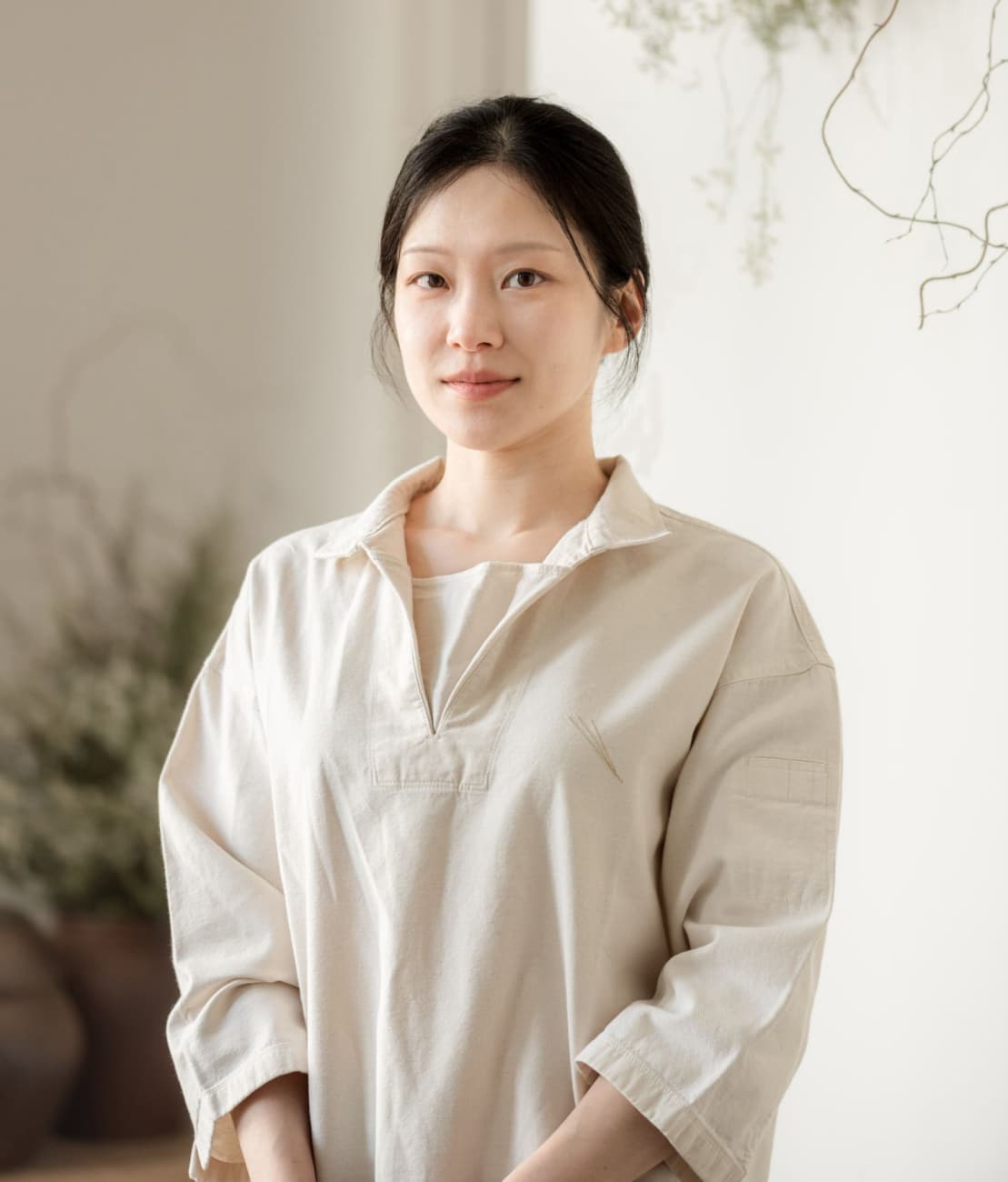
Bomee Ki’s path to becoming one of London’s most exciting pastry chefs began almost by accident. What started as a home-baking hobby eventually led her to Le Cordon Bleu London, where she discovered not only the precision and artistry of French pâtisserie but also the world of fine dining. Today, as Executive Pastry Chef and co-founder of the Michelin-starred Sollip, she creates elegant desserts that weave together classical French technique with the flavors, memories, and traditions of her Korean upbringing.
In this week’s Chef of the Week, Bomee shares how childhood memories continue to shape her desserts, why pastry is as much intuition as science, what it’s really like running an independent Michelin-starred restaurant in London alongside her husband, Chef Woongchul Park, and the philosophy of simplicity, purpose, and balance that defines every plate leaving the Sollip pastry kitchen.
1. Can you tell us about your journey into pastry and what eventually led to the creation of Sollip?
My journey into pastry didn’t start with some grand plan. Around graduation, I was really unsure about my future, but I loved desserts and enjoyed making things with my hands, which naturally drew me to this path. I’m usually the type of person who gets intensely into something but quickly loses interest, but baking was strangely different. What began as a light home-baking hobby grew into a deep desire to truly learn the craft, and that eventually led me to study at Le Cordon Bleu London.
It was there that I was first introduced not just to pastry, but to the whole world of fine dining. I was completely captivated by the dedication and intense passion of the chefs, and it became my clear goal to become a restaurant pastry chef.
During my studies, I met my husband, Chef Woongchul. Sharing the same passion and values, we decided to marry early to support each other’s careers. Having our own restaurant wasn’t our initial dream; we just wanted to learn as much as possible and become great chefs in our fields. After gaining experience in both London and South Korea, the idea of creating a space that reflects our own identity came naturally. Ultimately, we returned to London, a city we had always deeply missed, with our two kids in tow, and opened Sollip.
2. As both co-owner and pastry chef, how do you balance the creative side of the kitchen with the operational realities of running a restaurant?

I don’t really see them as separate things. They should be woven into every part of the process, just as natural as breathing. After all, being a good chef means focusing on both, even if you aren’t the owner.
Naturally, as an owner-chef, I feel the business side of things much more closely, but I try to view these operational realities as a creative framework rather than limitations. Overcoming these practical boundaries forces you to keep thinking and problem-solving, which is exactly how you grow as both a chef and an owner.
3. Sollip has developed a very distinctive identity that blends Korean influences with modern fine dining in London. How would you describe the philosophy behind your desserts?
I’d say my dessert philosophy comes down to three things: Simplicity, Purpose, and Balance. I really focus on simplicity by stripping away anything that isn’t absolutely needed, and I make sure every single ingredient has a clear purpose for being on the plate.
When creating a dish, I try to find those subtle, natural connections between classic European structures and Korean flavours. In the end, it’s all about finding that perfect balance, something that feels excitingly new, but deeply comforting at the same time.
I’d say my dessert philosophy comes down to three things: Simplicity, Purpose, and Balance.
4. Your husband, Woongchul, has joked in interviews that he didn’t have the patience for baking, which is why he respects your craft so much. What is it about the exactness and science of pastry that appeals to your personality more than the fluidity of the savoury kitchen?
Yes, Woongchul always says that! And it’s true that the exactness of pastry suits my structured nature and gives me a sense of comfort. But that precision isn’t the whole story. I often tell my team, “Don’t just trust the machines.” For example, even if you set the oven to 180°C for exactly five minutes according to the recipe, the result is never exactly the same. It changes depending on where you place the tray, how long it was preheated, or how often the door stays open.
It’s the same with weighing ingredients. You can measure down to 0.1 grams, but a machine can’t control the humidity in the flour or the changing moisture in the butter from season to season. In the end, while you follow the exact numbers, you have to rely on your own eyes and senses to read those tiny shifts and adapt to them. If everything just clicked into place perfectly like a math formula, I would have lost interest out of pure boredom long ago.
I love the careful planning and the science of it, but navigating and controlling all those live variables to create endless possibilities is what makes it exciting. It’s scientific, yet deeply intuitive, and that’s what makes it so beautifully distinct from savoury cooking.
5. Your signature desserts, like the Black Pain Perdu served with seoritae ice cream, take rustic European comfort food and filter it through a Korean childhood lens. When you are developing a new dessert, are you starting with a childhood flavour memory from South Korea, or are you starting with a classic French pastry technique?
It really depends every time. In the end, to actually bring a dessert to life, you need that foundation of French pastry technique. So when a childhood memory, a comforting flavour, or a specific Korean ingredient sparks an idea, my mind naturally goes straight to the technical framework needed to execute it.
On the flip side, sometimes a project starts from a desire to rework a specific classic French dessert or pastry item. I like to keep my thinking fluid and free, but most of my ideas are closely tied to the seasons, or whatever ingredient I’m loving at the moment.
And occasionally, I’ll deliberately introduce an ingredient or a technique that I don’t usually prefer, just to give myself a challenge. It’s a way of giving myself homework so I can keep learning and growing; otherwise, I’d only ever stick to what I’m comfortable with and what I already like. Giving myself those kinds of boundary-pushing challenges is often when the most unexpected and exciting results come out.

6. Are there any Korean ingredients, flavours, or childhood memories that continue to inspire your work today?
For me, the biggest inspiration comes from my childhood memories of gathering with family to share traditional food during holidays, solar terms, and the changing seasons. Korea has very intense seasons and a rich holiday culture like Lunar New Year or Chuseok. There’s a deep-rooted custom of coming together to prepare heartfelt, comforting dishes to take care of each other throughout the year. Bringing those warm, nostalgic flavours from my childhood into modern desserts here in London keeps me inspired.
7. How closely do the savoury and pastry sides of the kitchen collaborate when building a tasting menu at Sollip?
At Sollip, the savoury and pastry sides of the kitchen work tightly together. Even though they are different sections, we try never to think of them as separate entities. Of course, part of that is because I’m a co-owner, but pastry definitely holds a very high priority at Sollip. Woongchul genuinely loves desserts and deeply values their importance within the tasting menu.
We talk a lot in our daily lives and are constantly discussing the restaurant like it’s second nature. Before labeling something as savoury or sweet, we always approach it and solve it within the bigger picture of Sollip’s identity. We aren’t looking to create one standout showstopper; what we truly care about is a seamless, harmonious progression throughout the entire menu. That balance is what we focus on the most.
8. What have been some of the biggest challenges and rewards of building and operating an independent fine dining restaurant in London?
The London fine dining scene is incredibly competitive, heavily dominated by big money and global hospitality groups. As an independent restaurant, the biggest practical challenge we face is handling every single issue that stems from tight budgets. Marketing, recruitment, PR, and crisis management, we have to resolve all of it on our own. This pressure becomes even more intense during tough economic climates, severe staffing shortages like we see today, or unpredictable crises like the pandemic.
To be completely honest, when the lockdown hit right before our opening, if it weren’t for the UK government’s support at the time, we would probably be back in Korea right now. We simply didn’t have a corporate buffer to absorb that kind of shock. On the flip side, the greatest reward is undoubtedly the pure freedom to do exactly what we believe in. We can show the real heart of Sollip through our food and space with 100% honesty. We can freely organise collaborations and various pop-up events, which allows us to constantly broaden our creative spectrum through those unique experiences. Connecting with our guests alongside our team members through a sincerity that is entirely our own, that is the ultimate reward.
9. You’ve mentioned that you chose Le Cordon Bleu London early in your career partly because you spoke English but not French, yet you wanted to master French patisserie. Do you feel that pastry techniques serve as a universal language that transcends cultural barriers?
Yes, absolutely. However, rather than defining it purely as technique, I want to say that it really happens through the food itself. In the end, technique is simply a vehicle, a means to create the final dish. When a dessert that I, as a Korean chef, have crafted using classical French techniques resonates with our guests in London, despite our differences in language and culture, and they truly enjoy it, I feel it every single moment.
What truly breaks down barriers is the food itself, and the genuine care poured into it, which goes far beyond just technical skill.
10. Sustainability and seasonality are becoming increasingly important in modern restaurants. How do those principles influence both your pastry program and the broader decisions you make as a co-owner?
To be honest, seasonality and sustainability are such foundational, everyday principles for us that they are basically second nature. They don’t suddenly change our decisions or heavily dictate our direction. Even if you aren’t an owner-chef, I believe respecting your ingredients, packaging materials, tools, machinery, the space you work in, and your colleagues is a basic virtue every chef should possess. It’s something you must constantly think about and care for until it simply becomes a habit.
If we are being completely honest, running a restaurant isn’t exactly something that helps protect the planet. In fact, the industry generates a lot of waste and byproducts. That’s why we as chefs must remain deeply aware and responsible, constantly seeking out ways to pursue sustainability in our daily operations.
To share a few of our daily practices at Sollip, we use eco-friendly paper made from wheat and hemp for our menus. We also dry left-over tea leaves, kitchen herbs, and citrus peels to repurpose them into our own packaged bath salts. When a plate gets chipped, we repair it using the Kintsugi technique to give it new life, and we recently even hosted a Sollip Flea Market to sell unused tableware to our guests at a low price. Being able to work with the beautiful seasonal produce of the UK and Europe is an absolute privilege. The reason we consistently change our menu with every changing season is our way of showing the utmost respect to what nature provides.
11. Is there one dessert on the menu that you feel best represents your style and philosophy as a pastry chef?

I would definitely choose our signature Black Pain Perdu. Pain perdu is one of my personal favourite desserts.
For this dish, I infused it with the deep, comforting flavour of Seoritae (Korean black bean) and built a black visual theme inspired by the black basaltic rocks of Jeju Island, where I lived right before moving to London. It’s a winter dessert featuring caramelized brioche and caramelized pecans, paired with a nutty seoritae ice cream, a thin seoritae gavotte that mimics the texture of volcanic rock, and a burnt vanilla sauce.
Rather than just mixing ingredients, it naturally connects my Korean identity and memories of Jeju with classic French techniques here in London. It tells a very clear, comforting, yet sophisticated story of who I am as a pastry chef.
12. What is one simple tip home cooks can use to instantly improve their desserts or baking at home?
From a scientific standpoint, I highly recommend using a digital kitchen scale for precise measurements in grams, rather than relying on measuring cups. Since home baking usually involves smaller batches, even a tiny discrepancy in numbers can make a massive difference in the final outcome.
Baking is all about respecting the time it takes, whether it’s letting the dough rest or waiting for it to bake completely in the oven.
Along with that, I want to emphasize the importance of always having patience throughout the process. Looking back at my own early days of home baking, I remember how I just couldn’t wait for things to finish and would constantly get anxious, which often ruined the final result. Baking is all about respecting the time it takes, whether it’s letting the dough rest or waiting for it to bake completely in the oven. Just by giving it that quiet patience, the quality of your homemade desserts will instantly improve.
13. Looking ahead, what excites you most about the future of Sollip, both creatively and as a business?
Creatively, my focus is to continuously evolve and refine the unique culinary voice of Sollip. Both my husband and I are still studying and learning more about Korean flavours deeply every single year. Watching our team members grow alongside our deepening cuisine is something that always brings me immense excitement. From a business perspective, my goal is to guide Sollip toward a more stable and solid growth within London’s ever-changing dining scene.
However, rather than just settling into stability, I want Sollip to remain a place that is always fresh, progressive, and evolving, a beautifully crafted space where Korean culture and exceptional food come together.

Bomee Ki, Executive Pastry Chef and Co-founder Sollip | Instagram
Sollip
Unit 1, 8 Melior Street, London SE1 3QP
